Hex Drone Build
Hex Drone Build
This drone is built around 6 motors running 10" props. Built from carbon fiber cut on a CNC router. It folds up into a carrying case for easy transport. Using ardupilot firmware on its flight controller, it does autonomous waypoint missions and can be piloted manually with an FPV camera. Designed to maximize endurance over speed. It weighs 4.8lb including its battery. all CAD/Code/complete BOM are available on github.
Build and Flight Demo Video
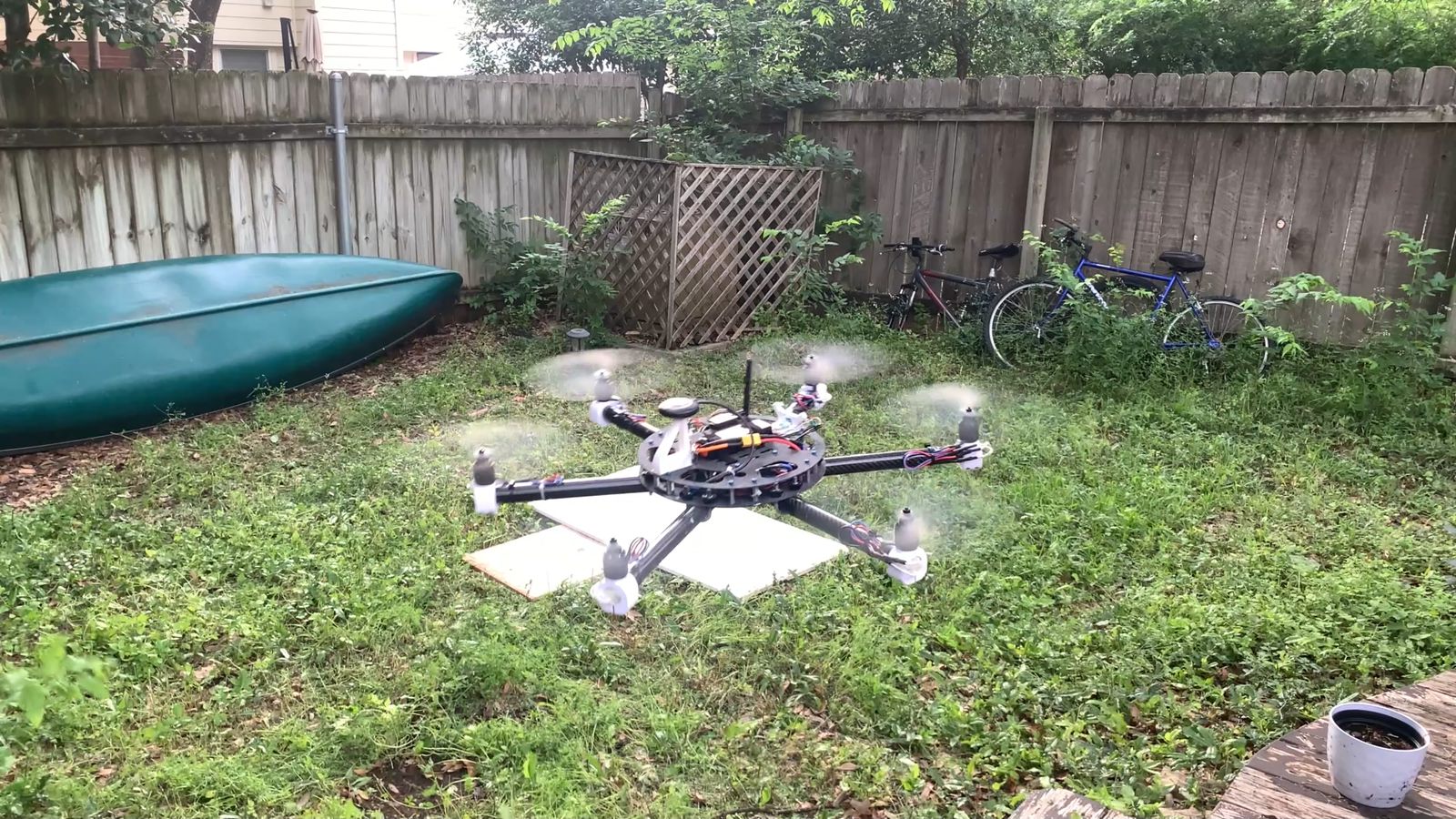
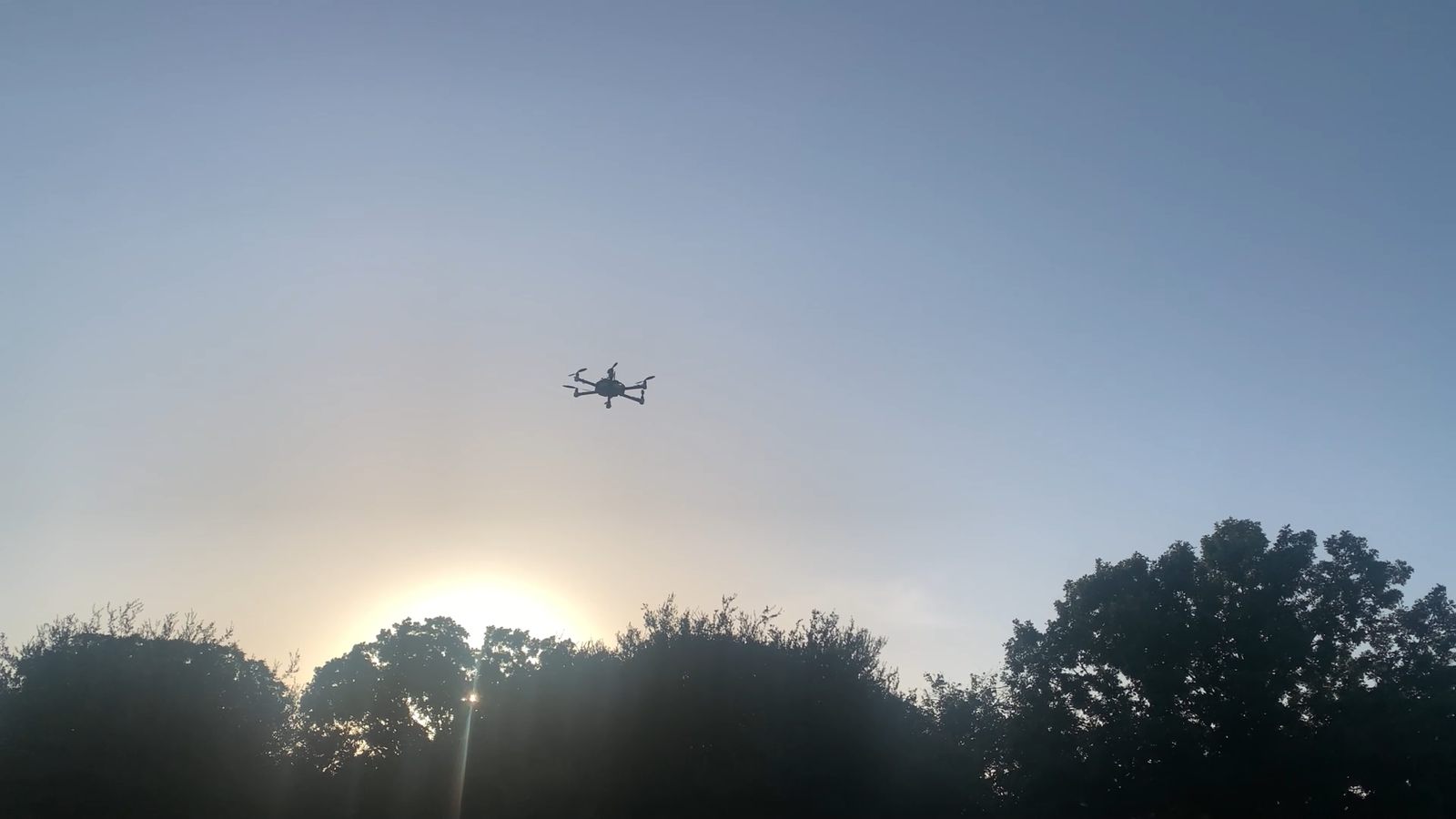
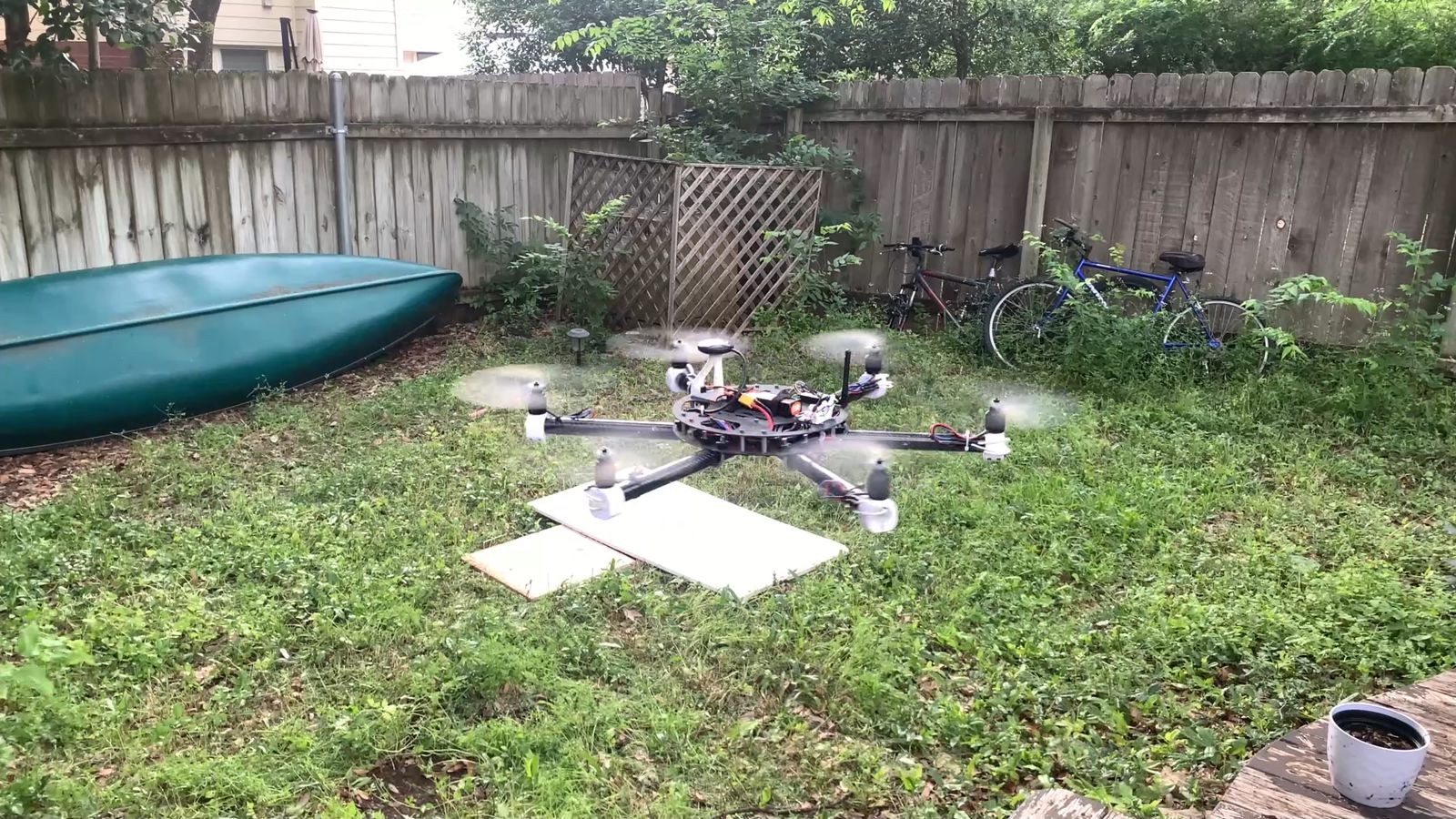
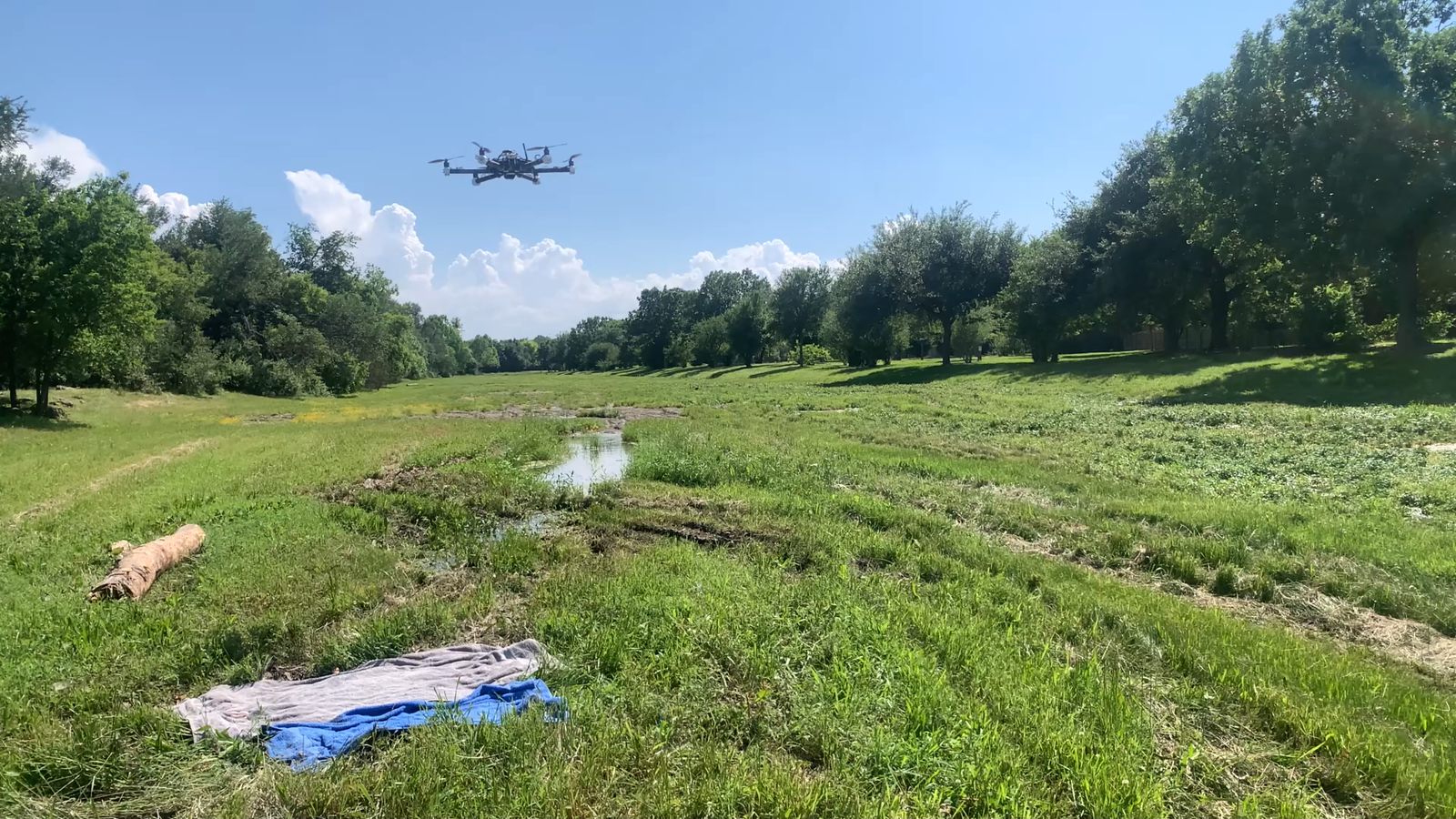
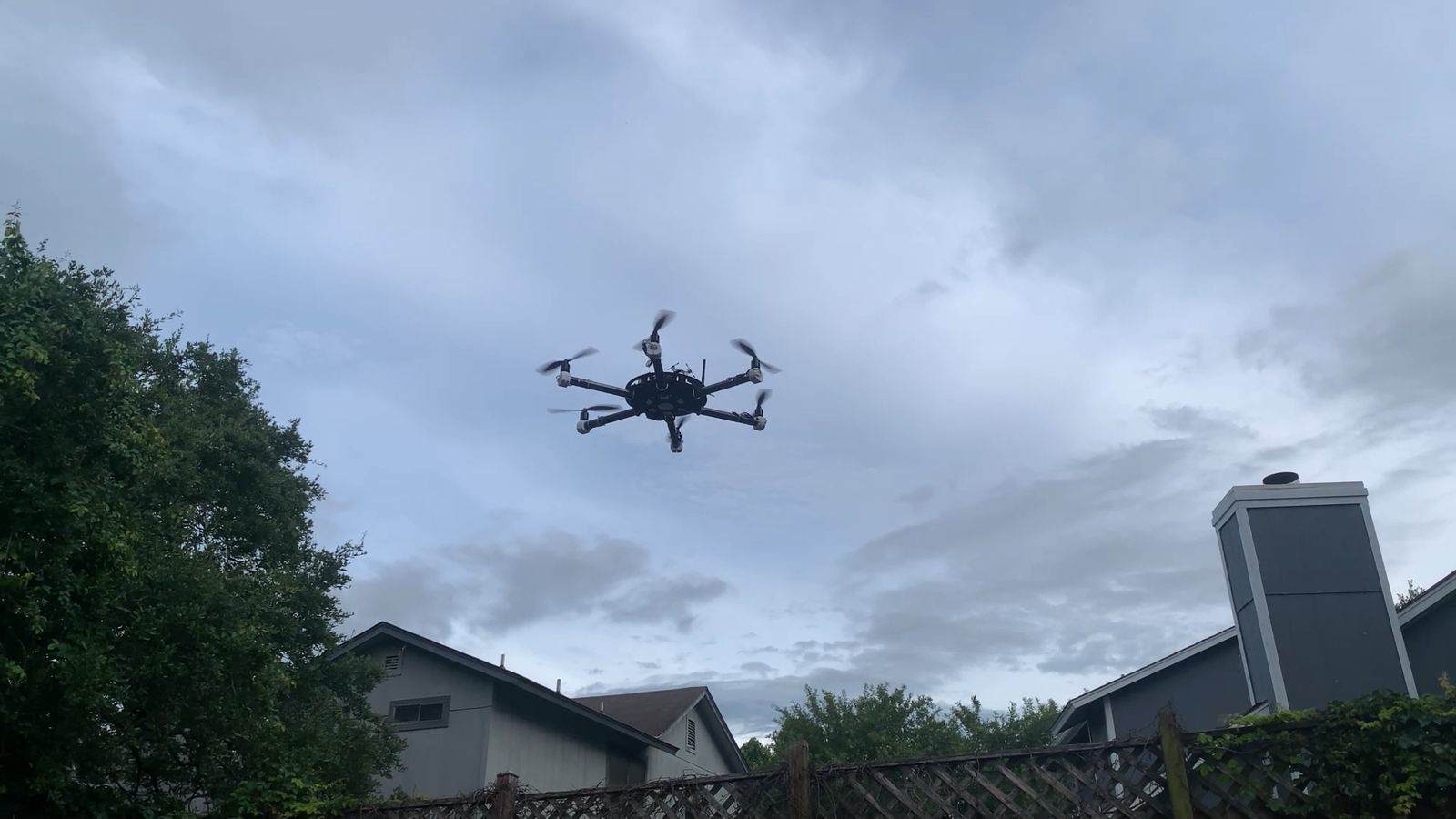
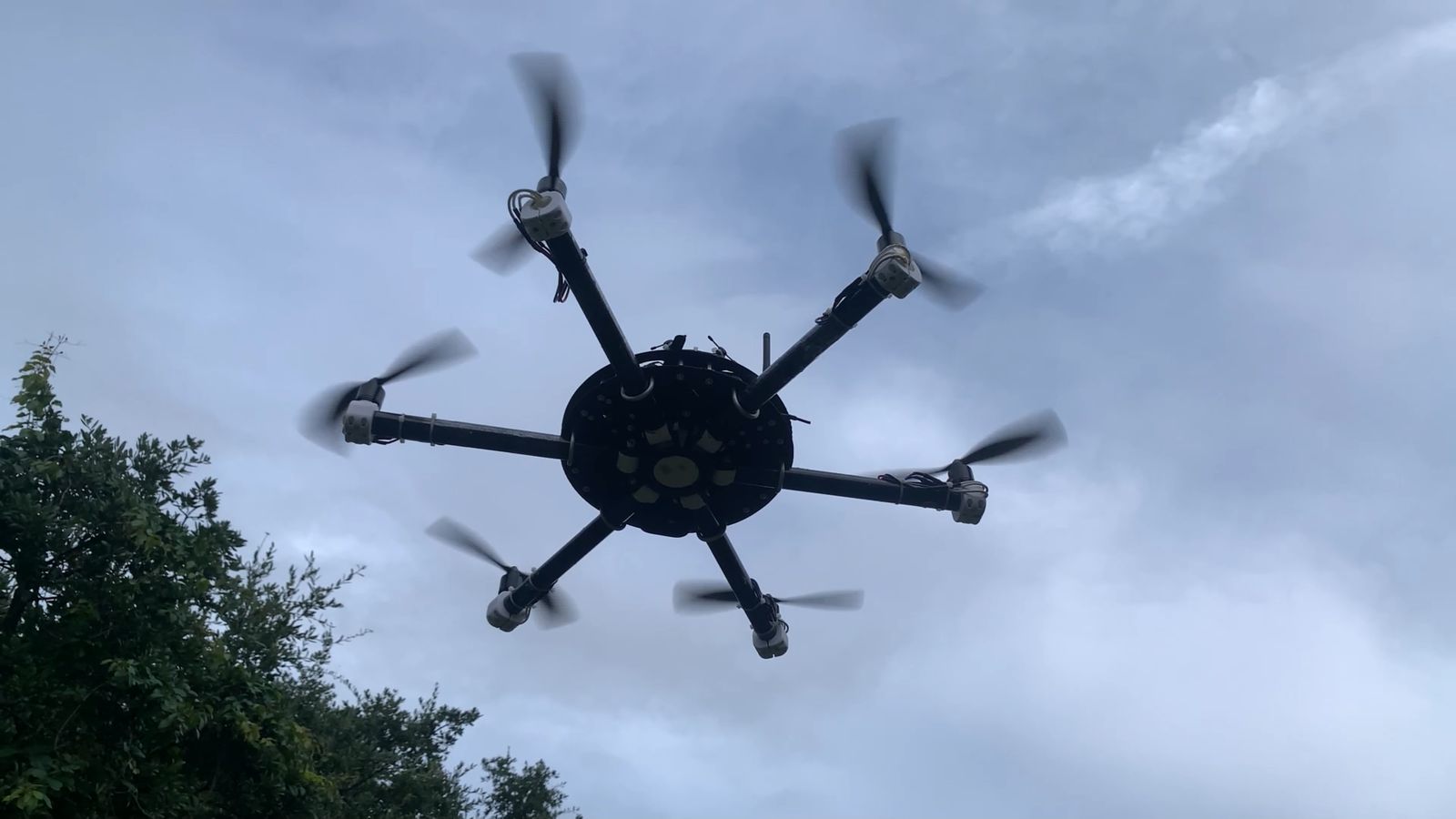
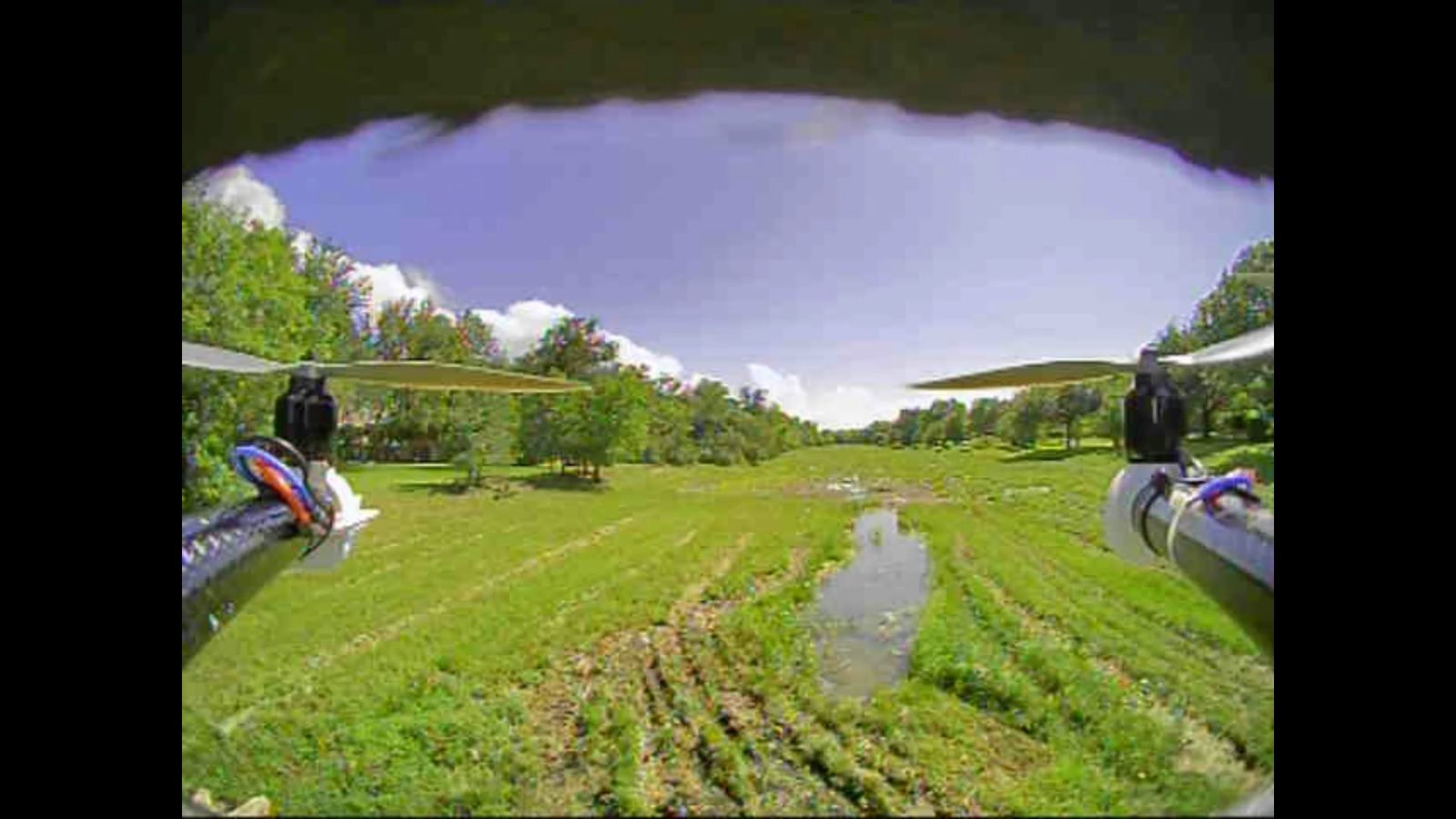
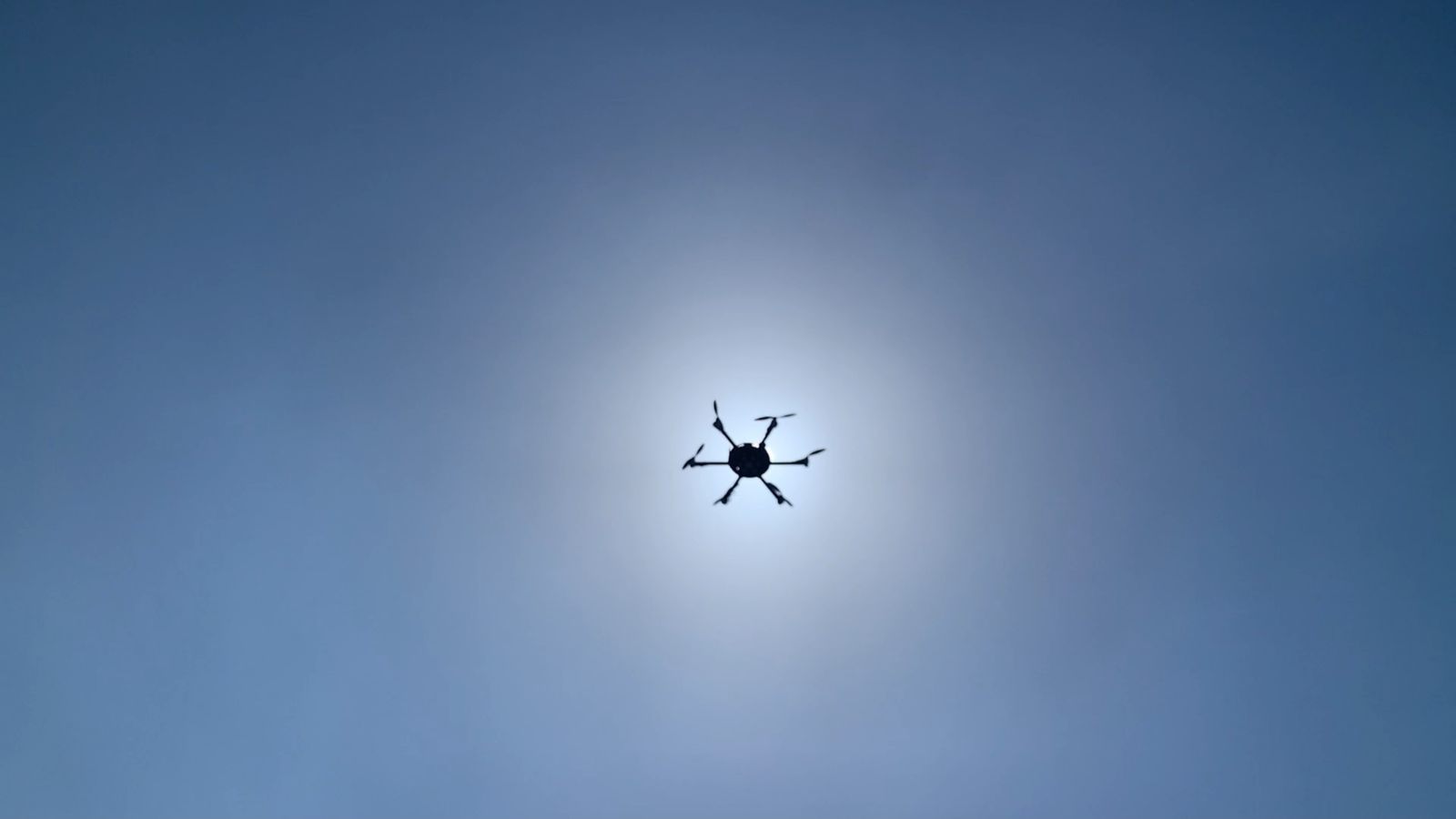
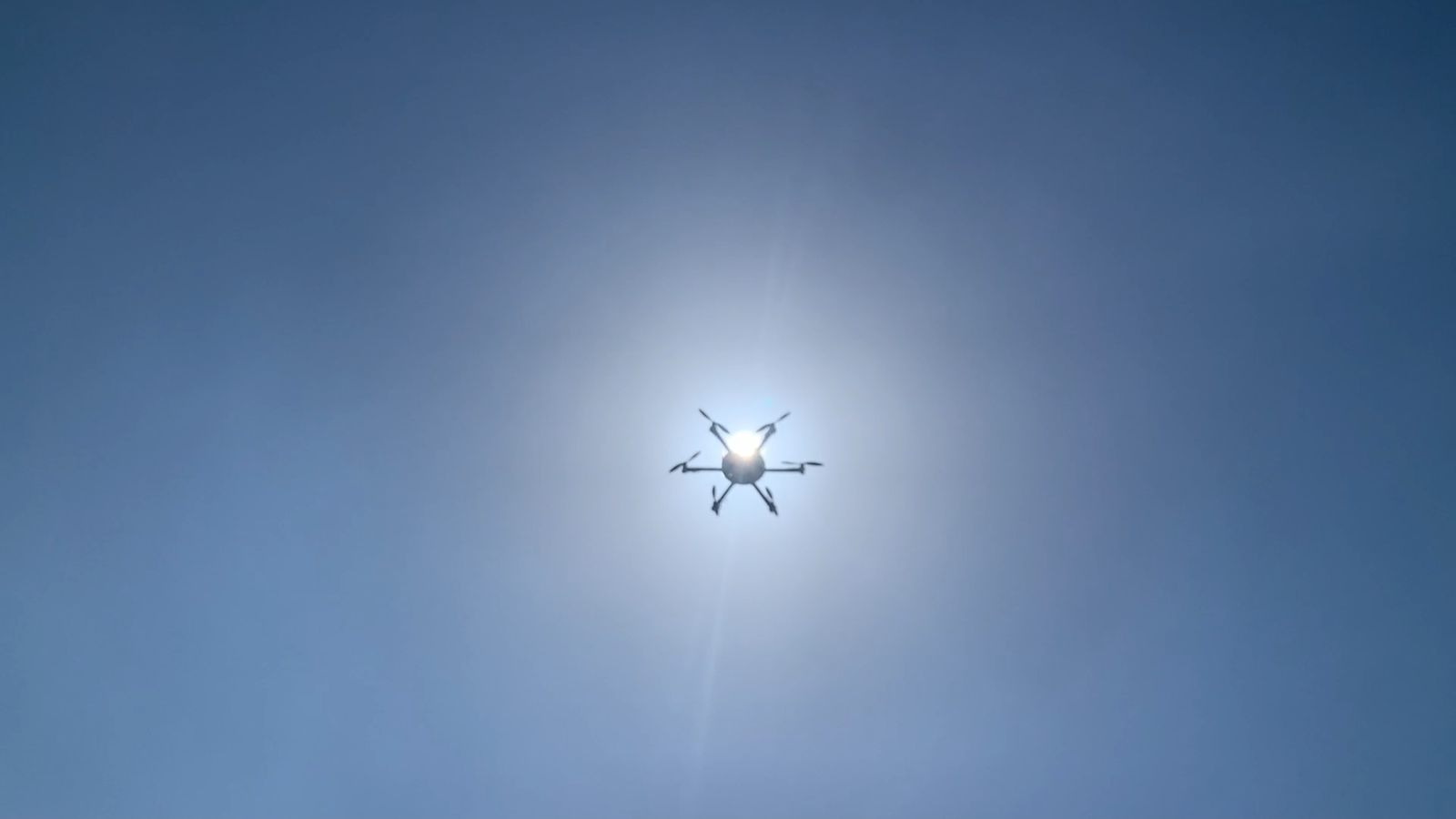
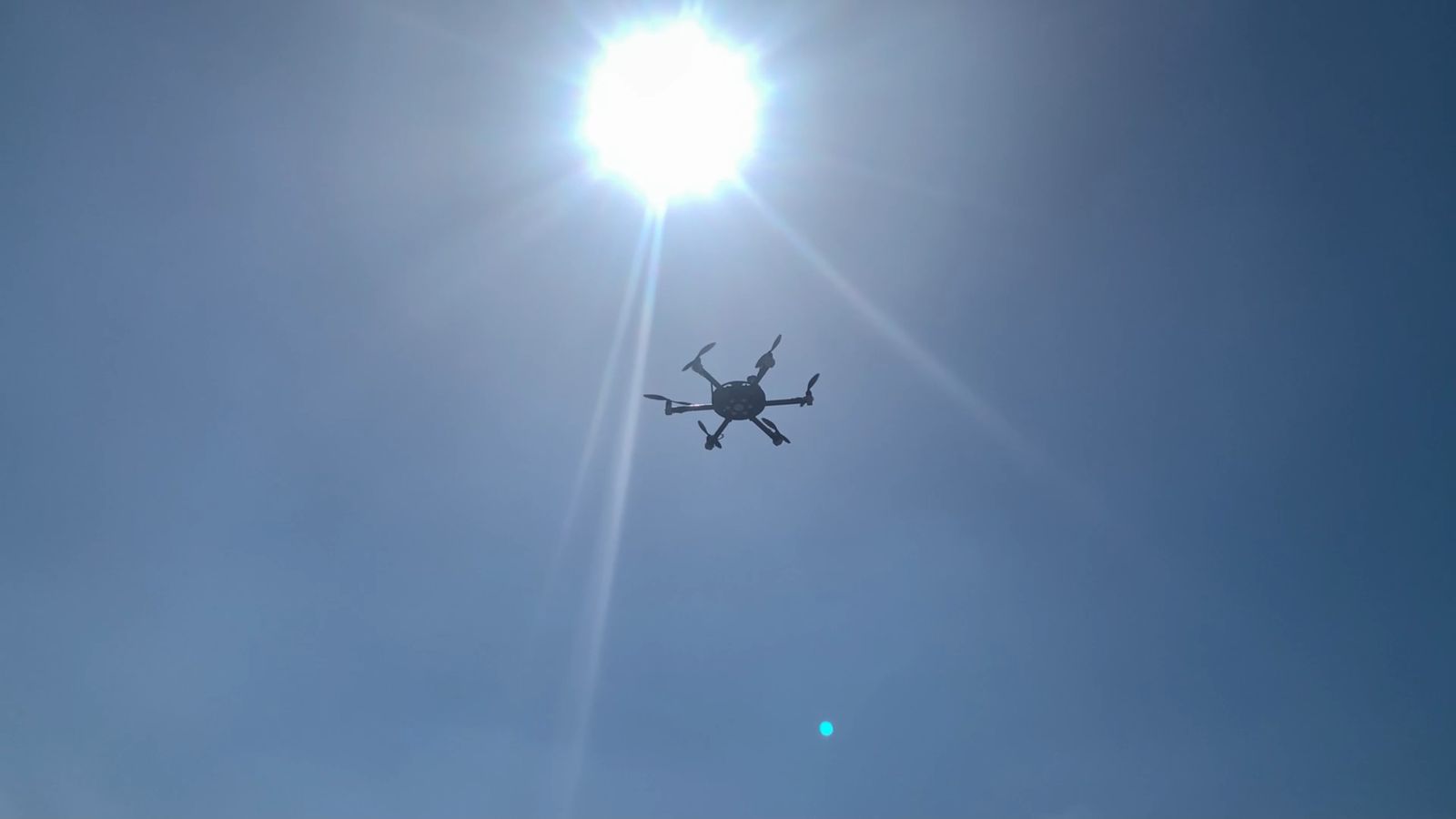
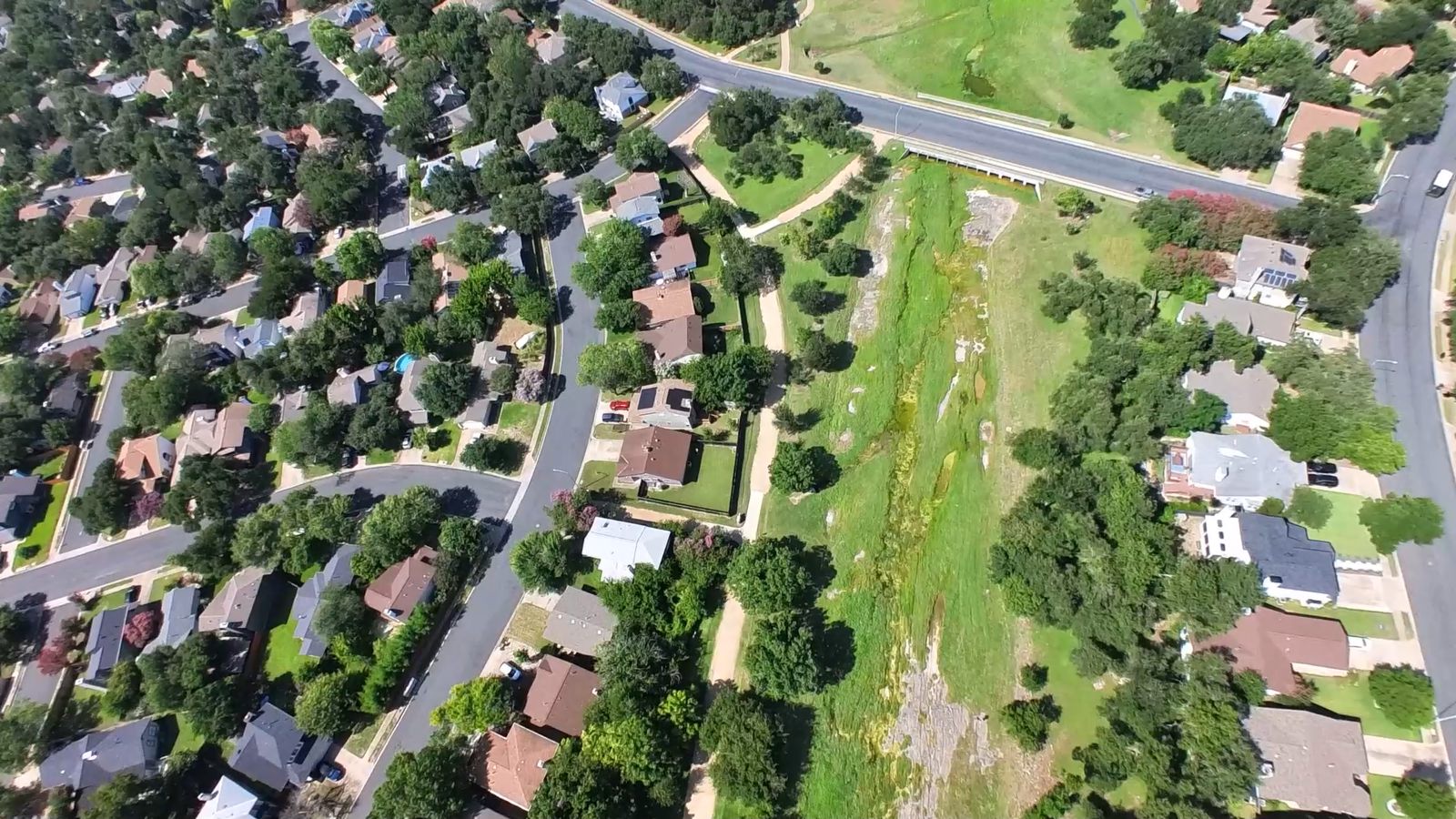
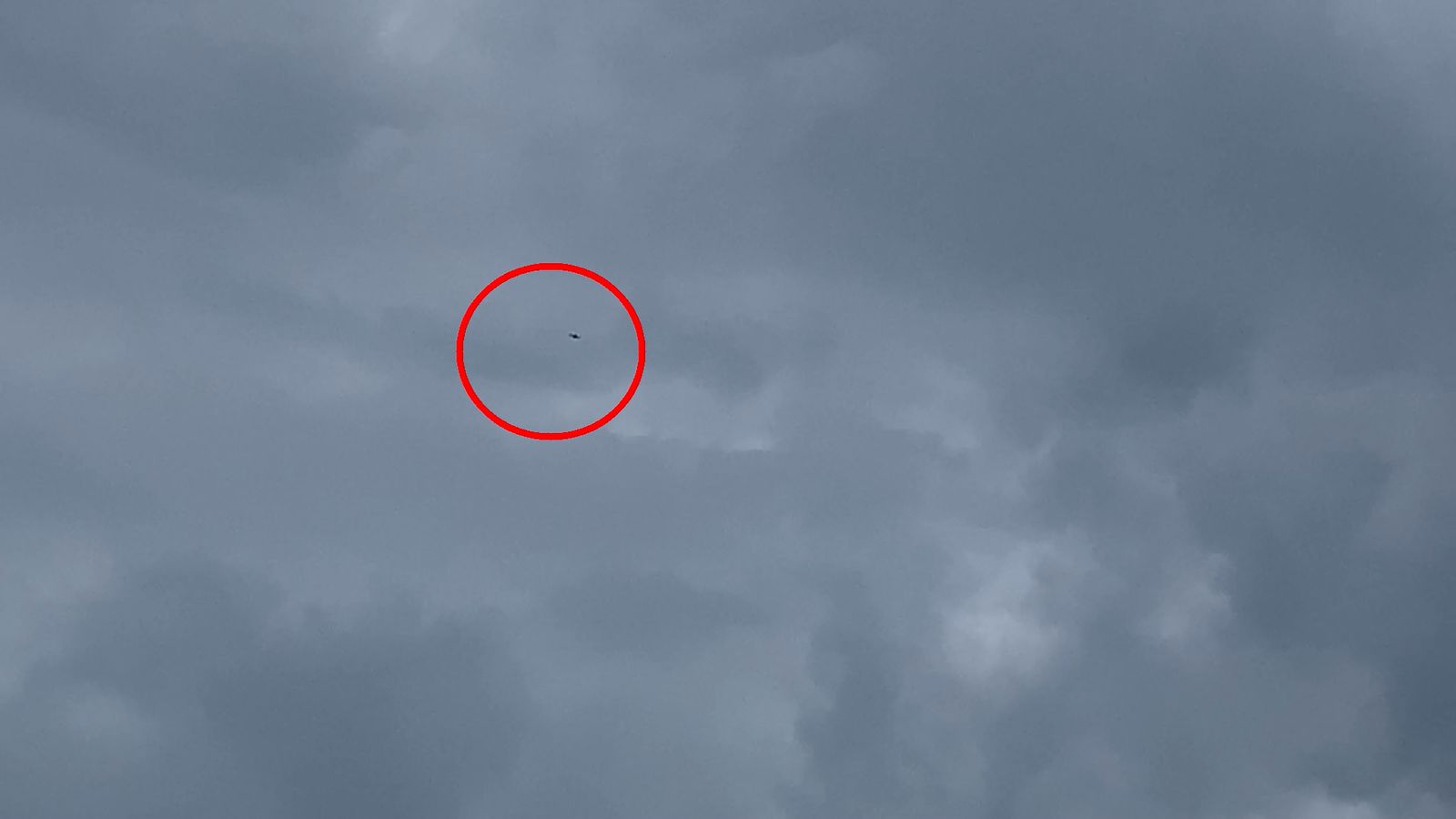
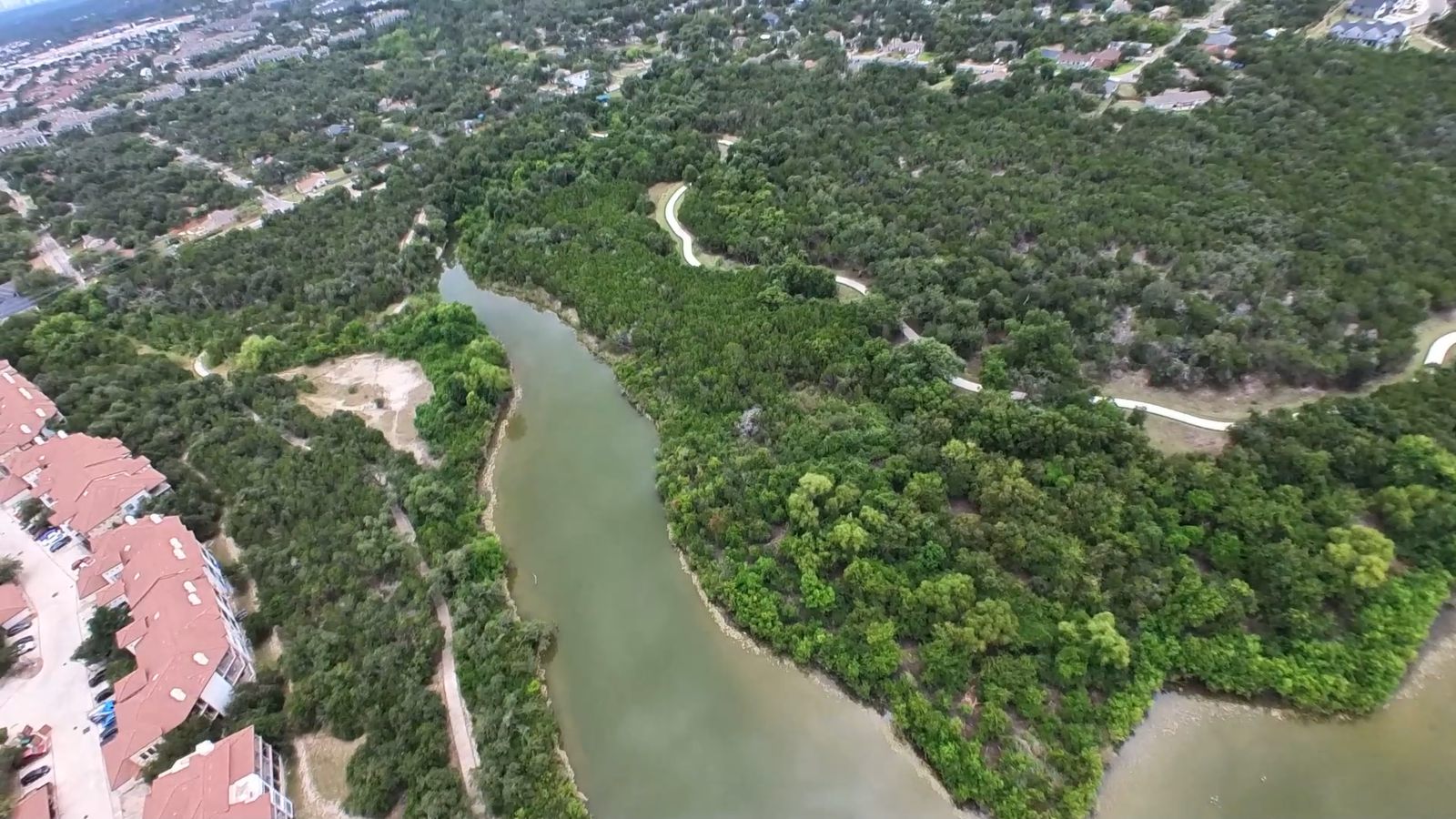
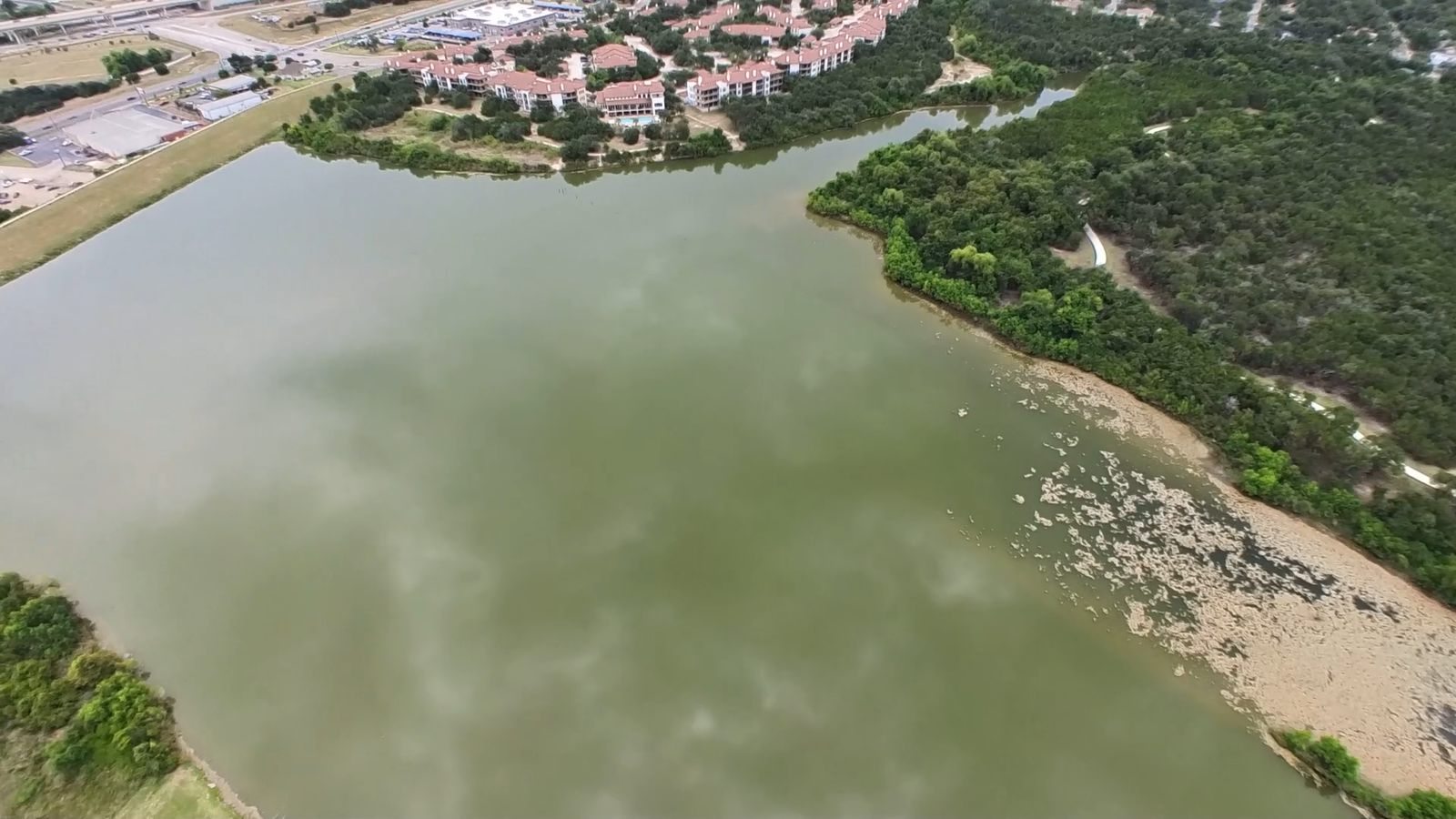
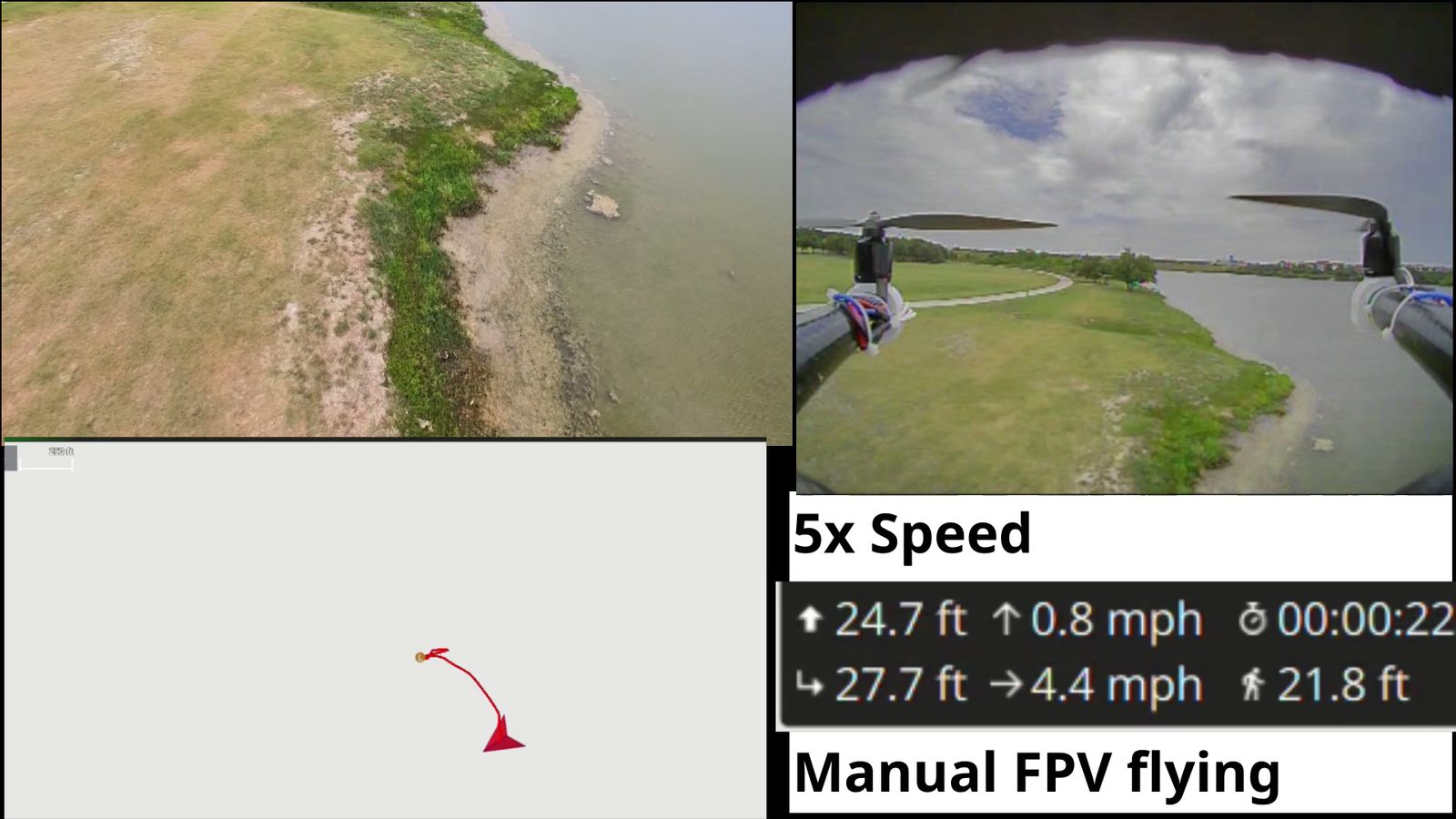
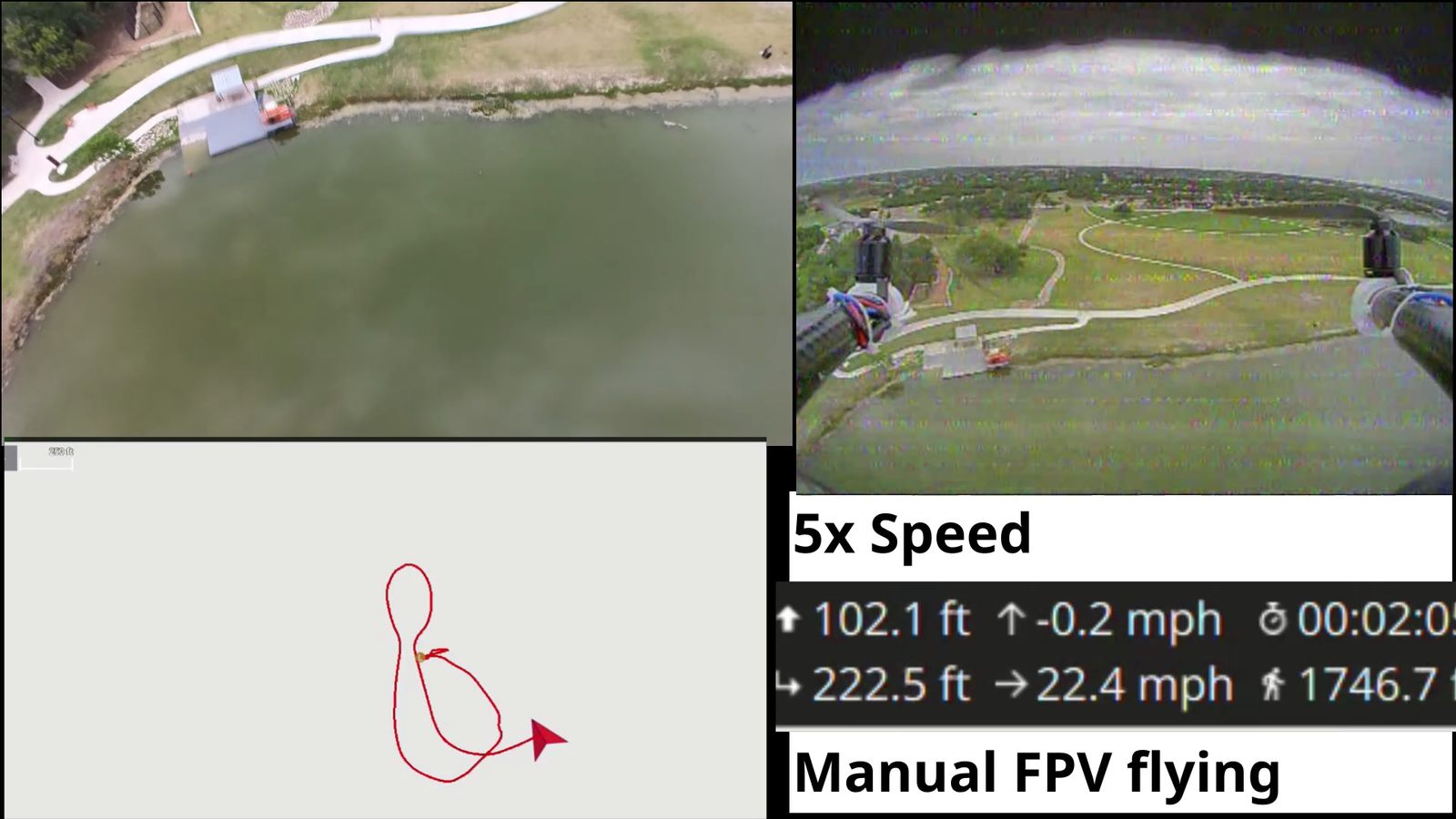
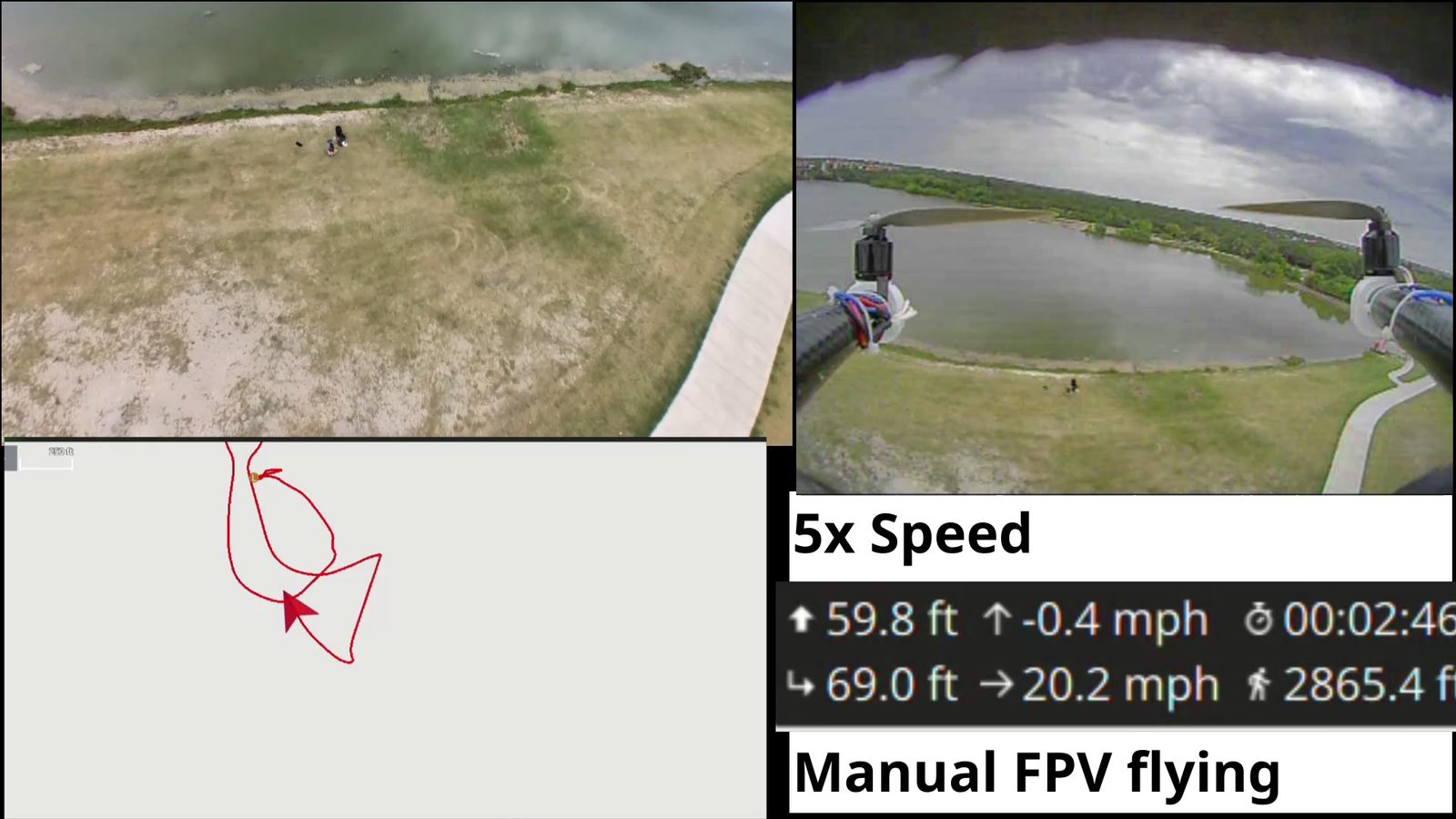
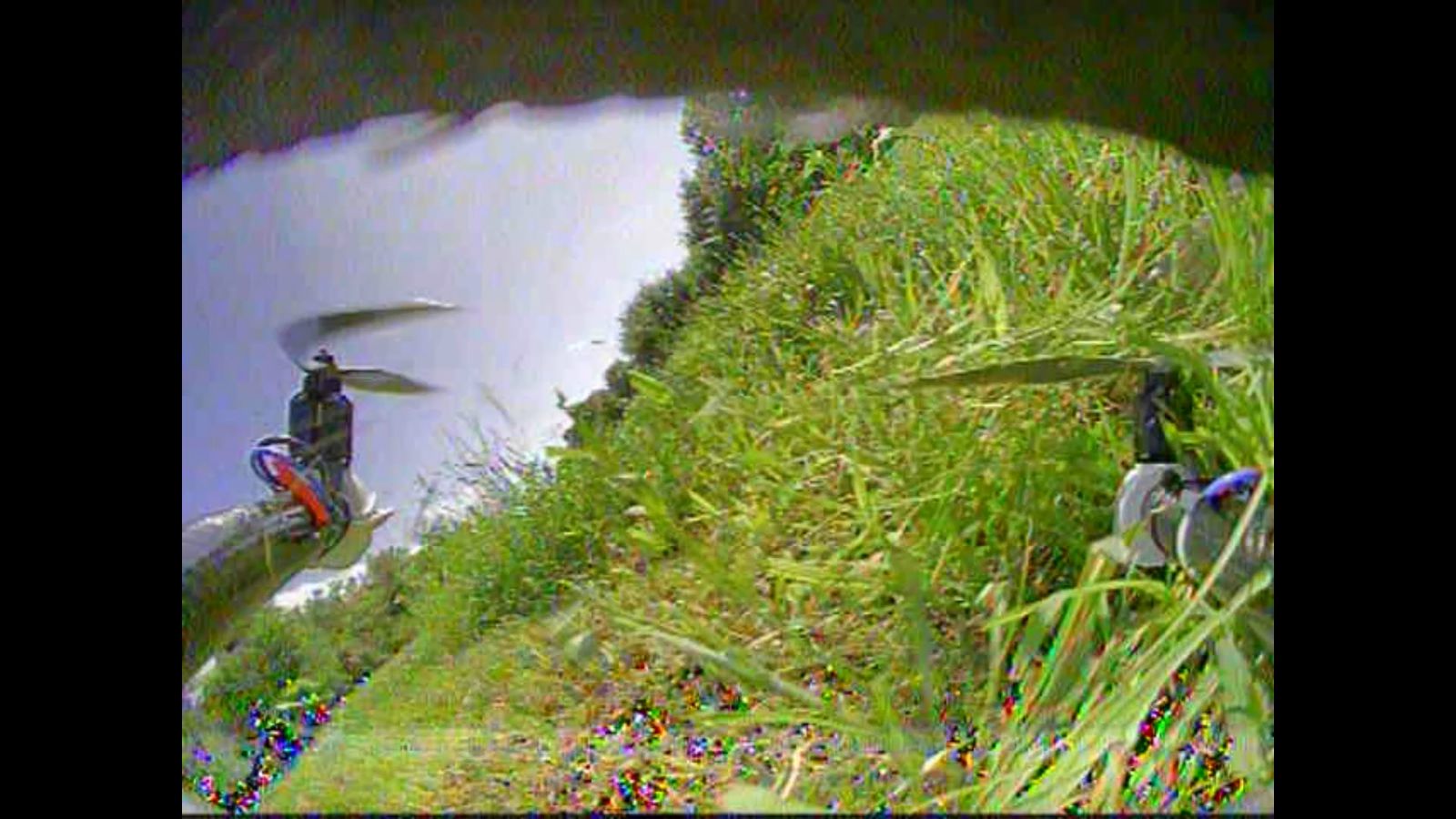
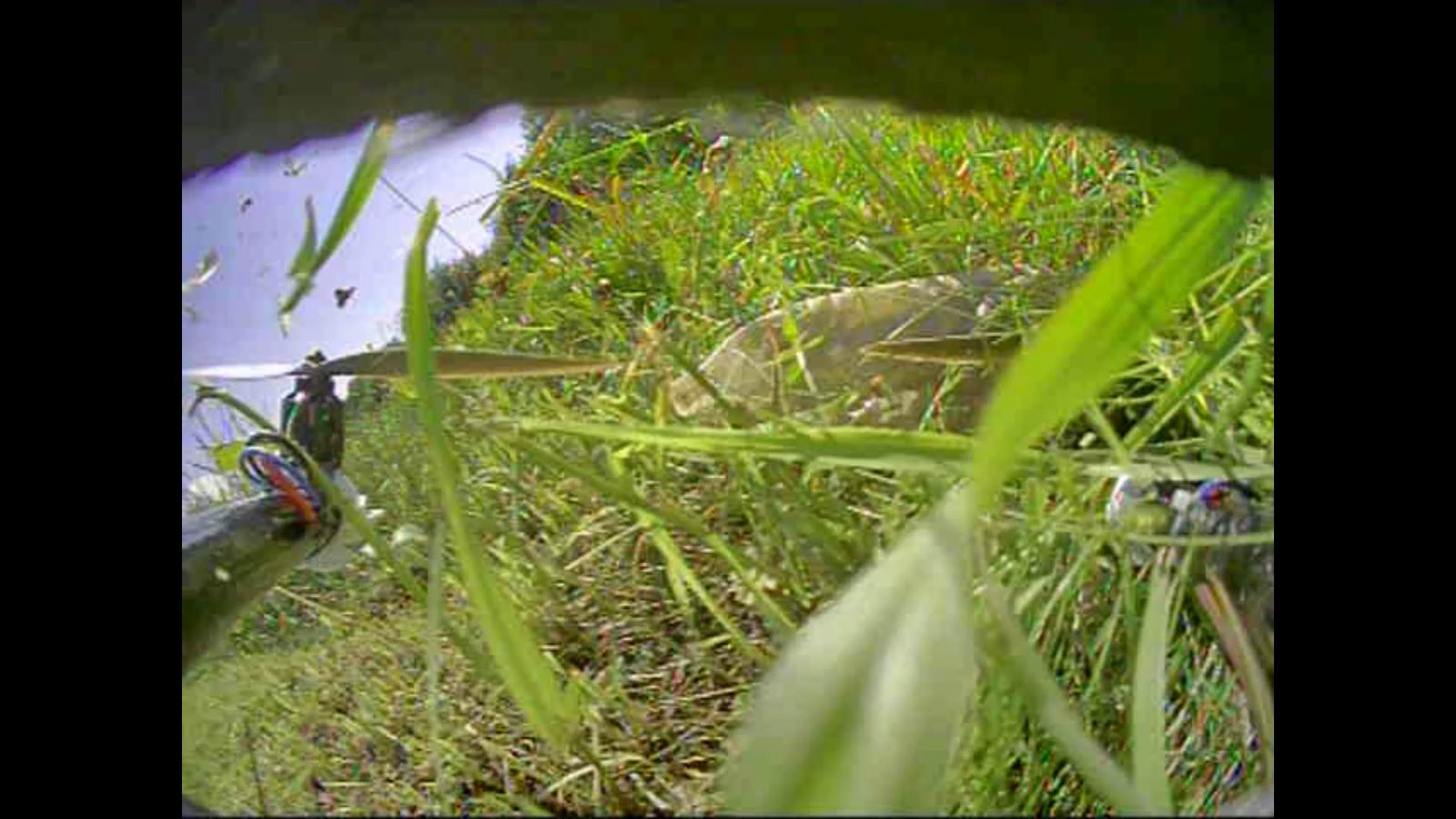
action shots from test flights
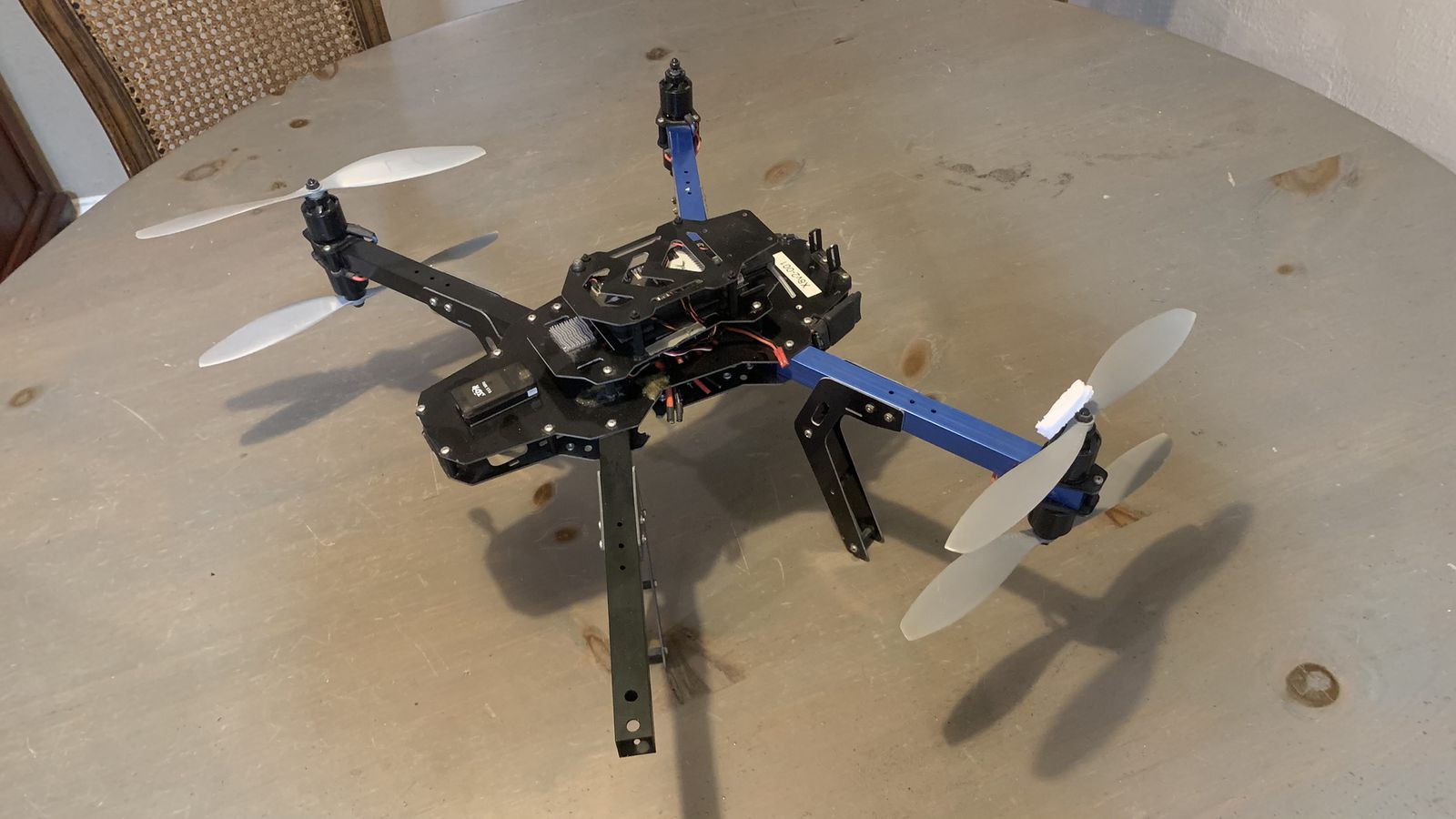
I salvaged a lot of the parts from an old wrecked drone I got on ebay for dirt cheap. It was originally an X 8 configuration, but two motors and some of the other parts were missing. Most of the parts are old 3DR / Mrobotics stuff. I couldn't find any specsheets or data on the motors/ESCs, so I had to collect my own dyno data to model the flight performance and settle on some design parameters.
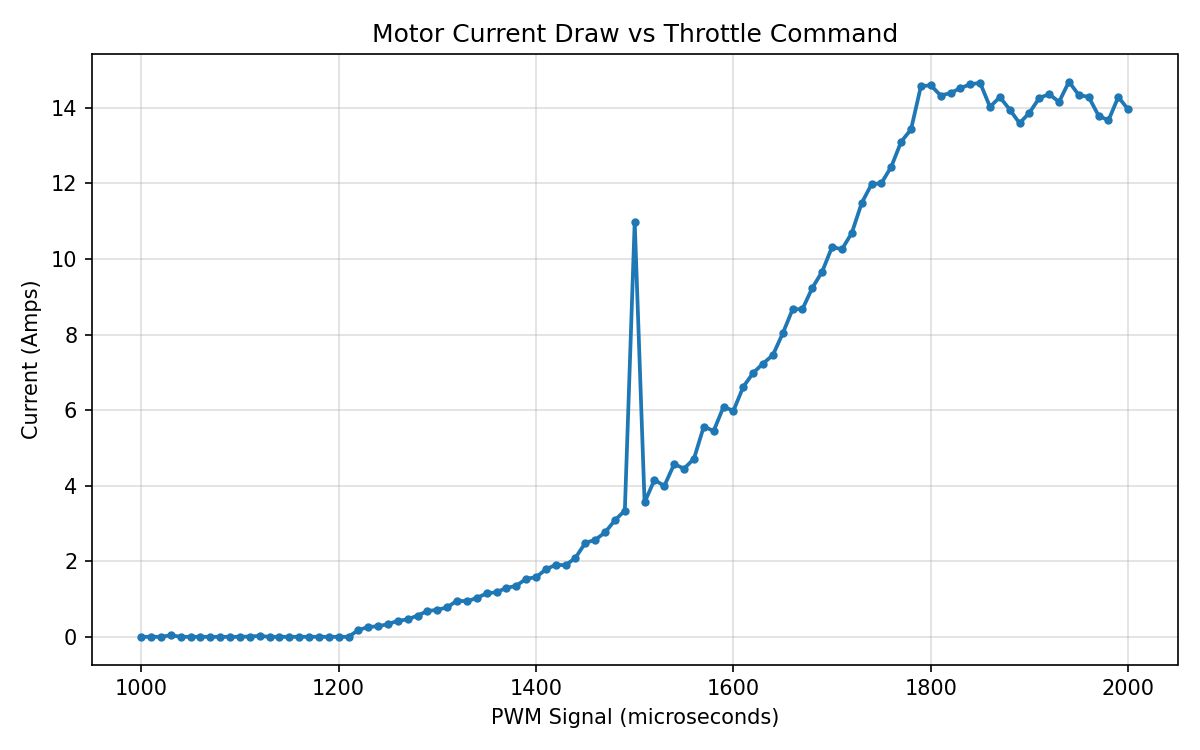
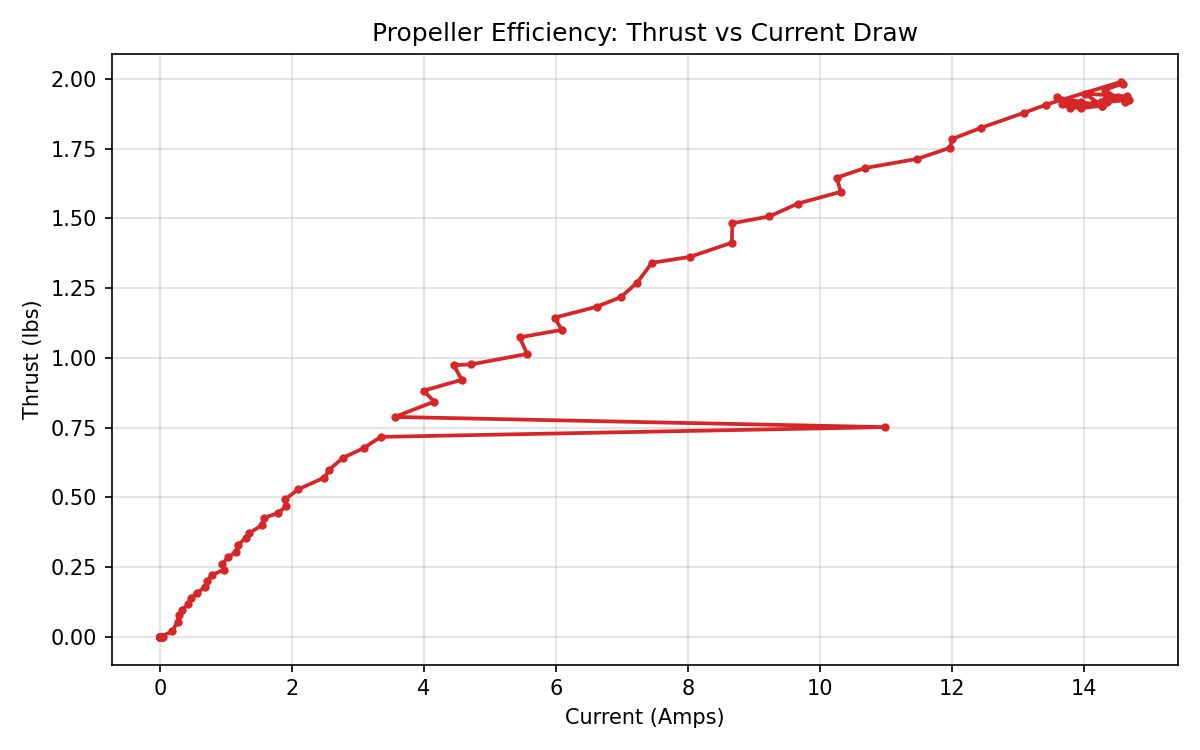
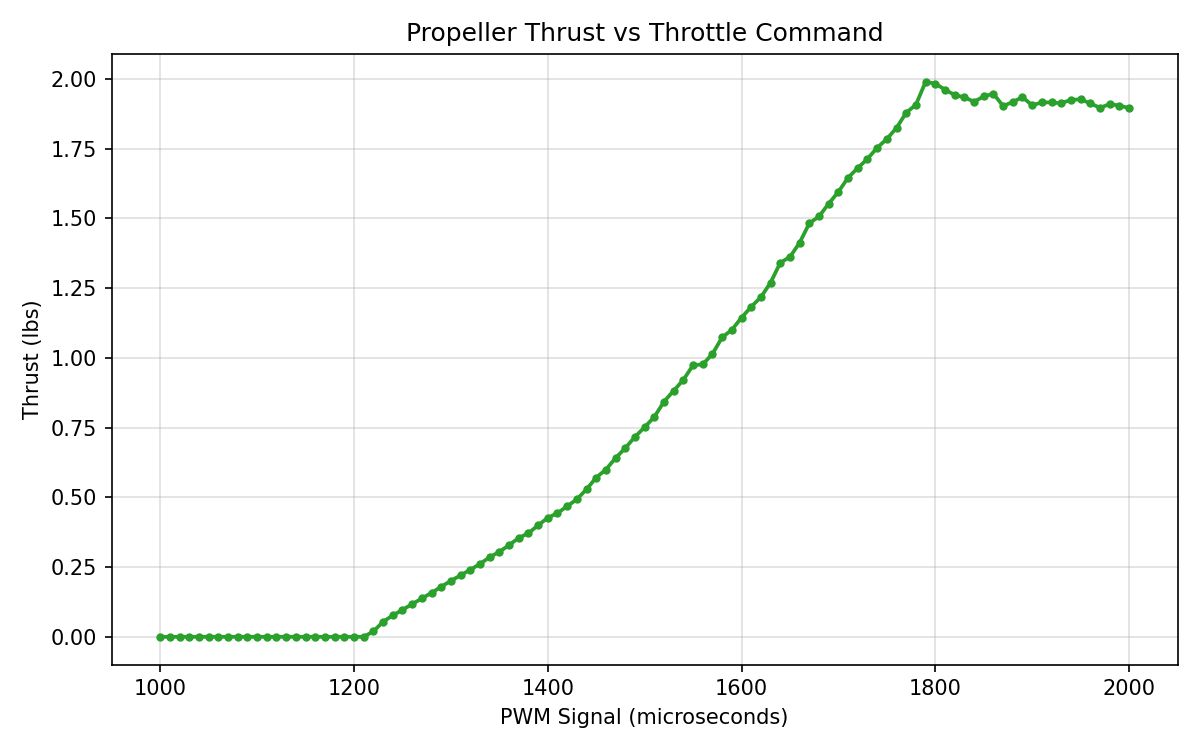
I plotted a thrust vs current draw curve to use as a starting point for making early design decisions around weight limits, power budget, etc. The plots above show the data collected by my dynamometer. This real data was used to predict the flight duration for various battery options of different capacities and weights. I was still designing the frame when I did this analysis, so I had a good estimate for its weight based on CAD and known material densities, plus I could add in the known weight of all the off the shelf components I planned to use.
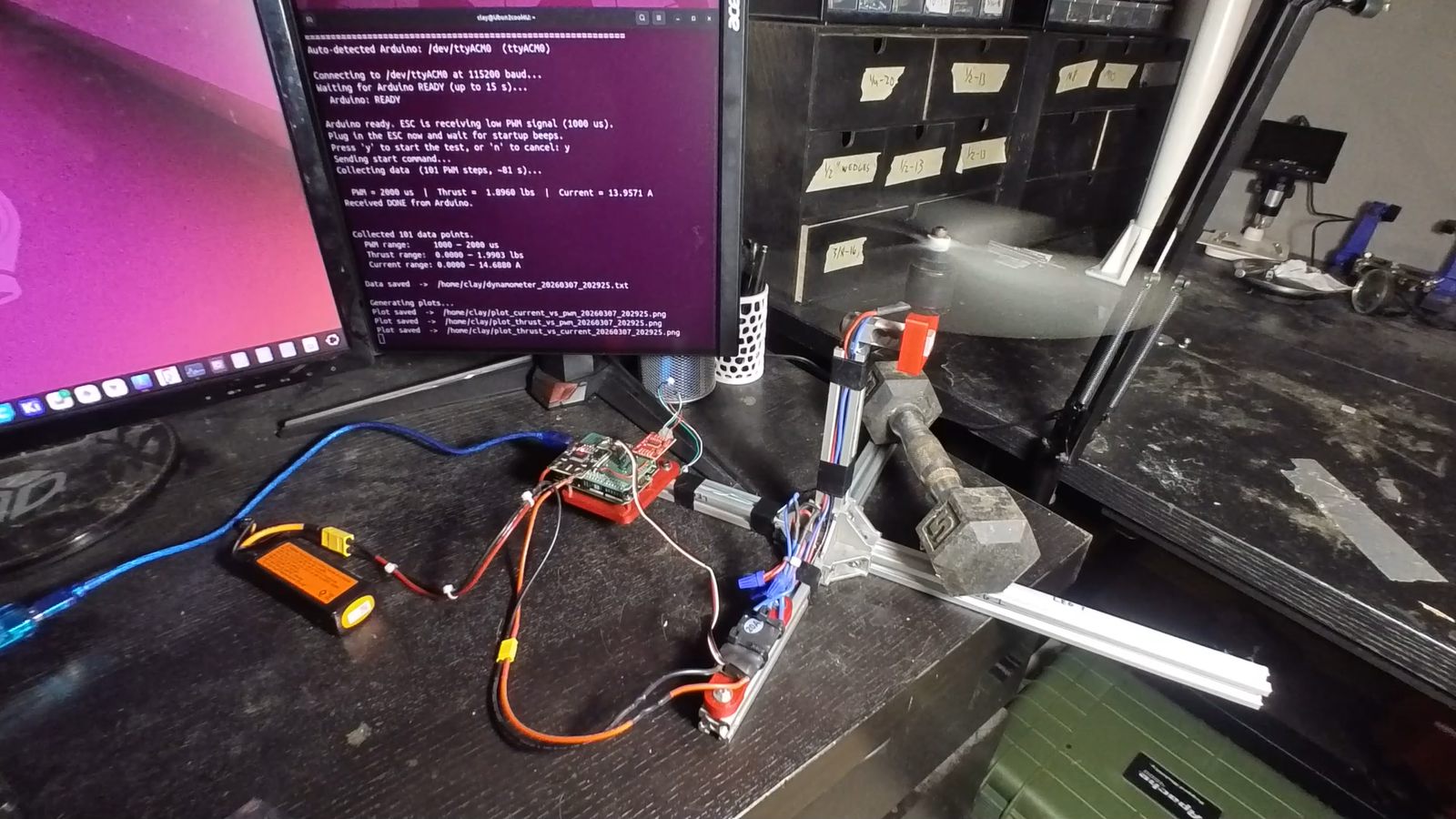
Here's a picture of the dynamometer testing setup. It slowly ramps the motor up throughout the entire PWM range of the ESC, constantly measuring thrust and current draw with an arduino. It outputs the data to a PC which generates the plots in python.
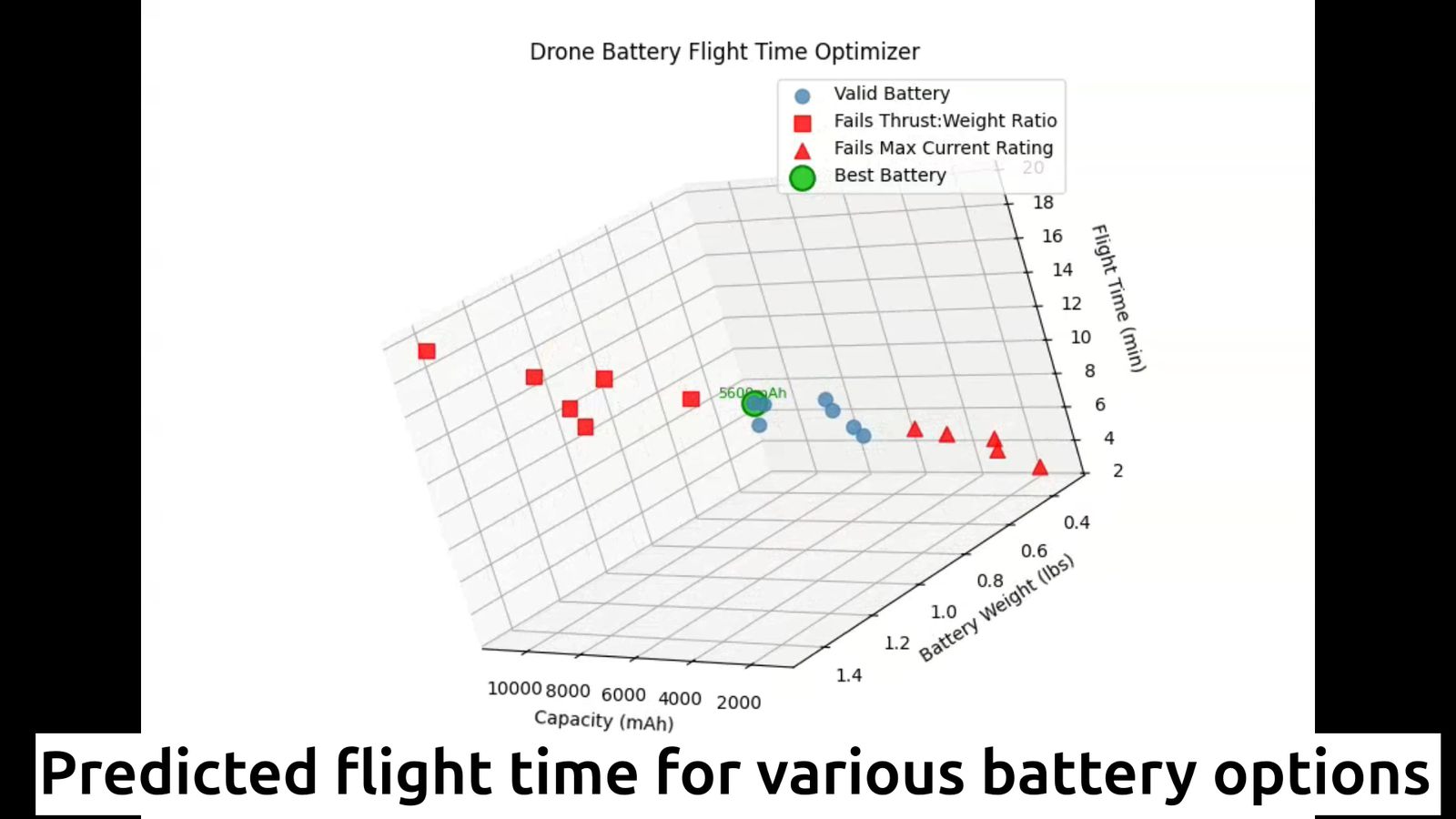
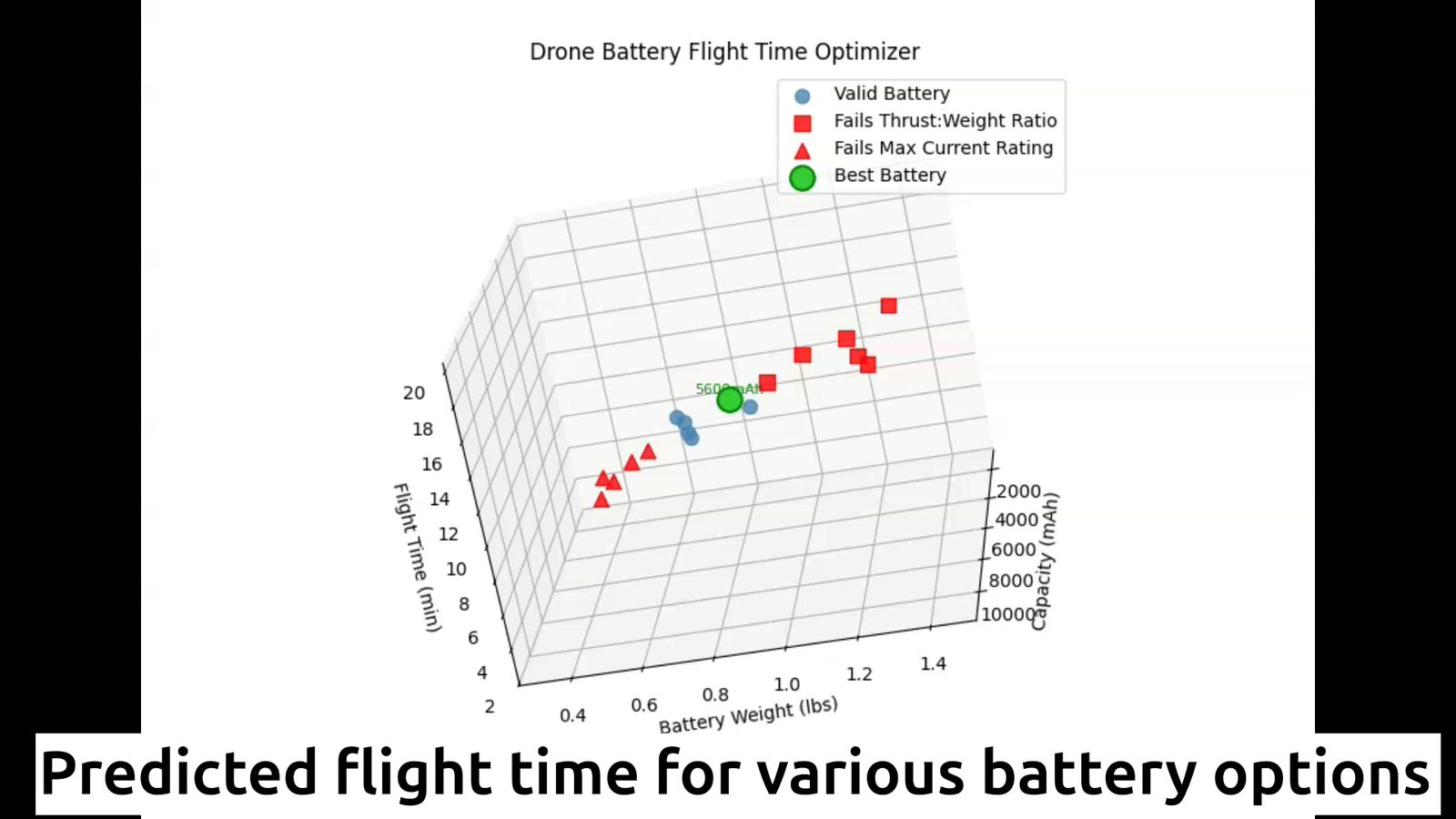
Results plotted from my optimizer based on dyno data. This drone is thrust limited, the frame is pretty heavy for the max motor power. This part of the graph is pretty linear, with most of the higher capacity batteries failing to meet a 2:1 thrust/weight ratio. I think if the frame were lighter and the motors more powerful, or perhaps up to 4s or higher voltage, the curve would be more parabolic. Increasing the battery size gives diminishing returns from the added capacity because the motors have to draw more current to lift the weight of a bigger battery. In some cases, this may pass a critical point where increasing the battery size actually reduces the endurance. In my case, I went with a 5600mAh because it gave the longest flight time. It was also the largest battery that still allowed for a 2:1 thrust/weight or better. All the batteries I consdiered were 3S, which is what I ran the dyno test on. In the future, I could do more dyno tests at different voltages or with different propeller sizes/pitches to see how that could improve the performance of this airframe. Optimizer code is in the github link
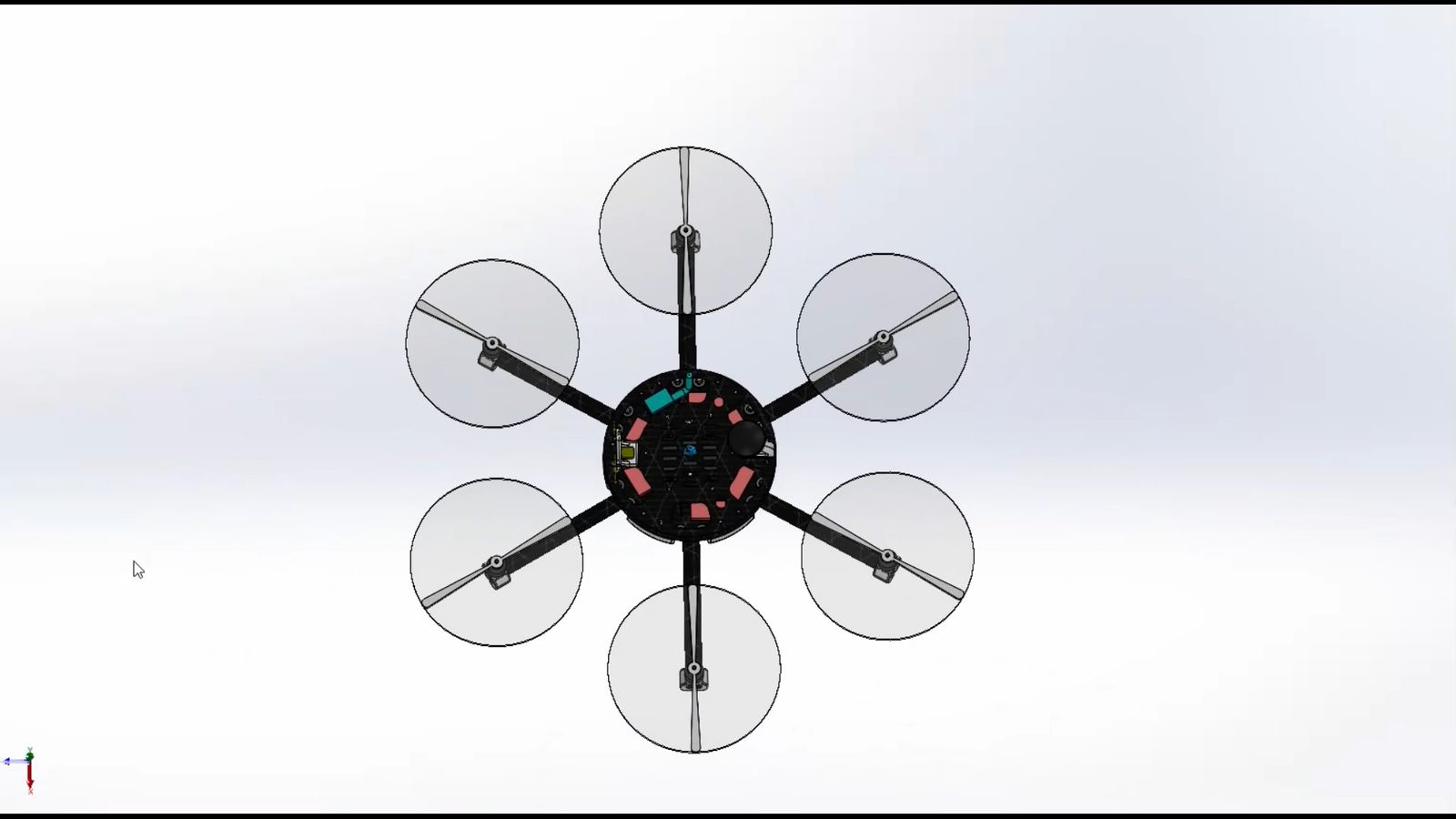
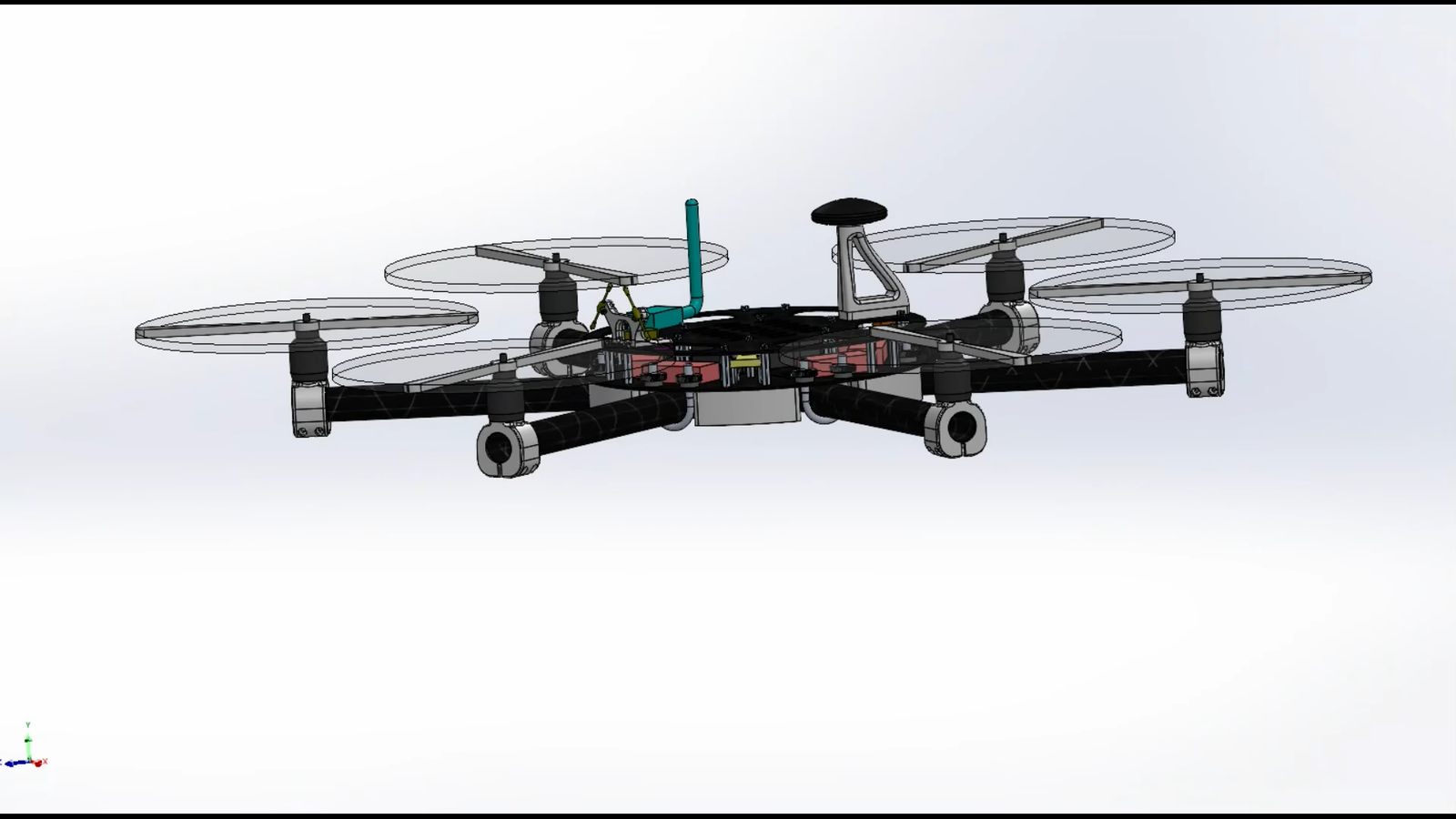
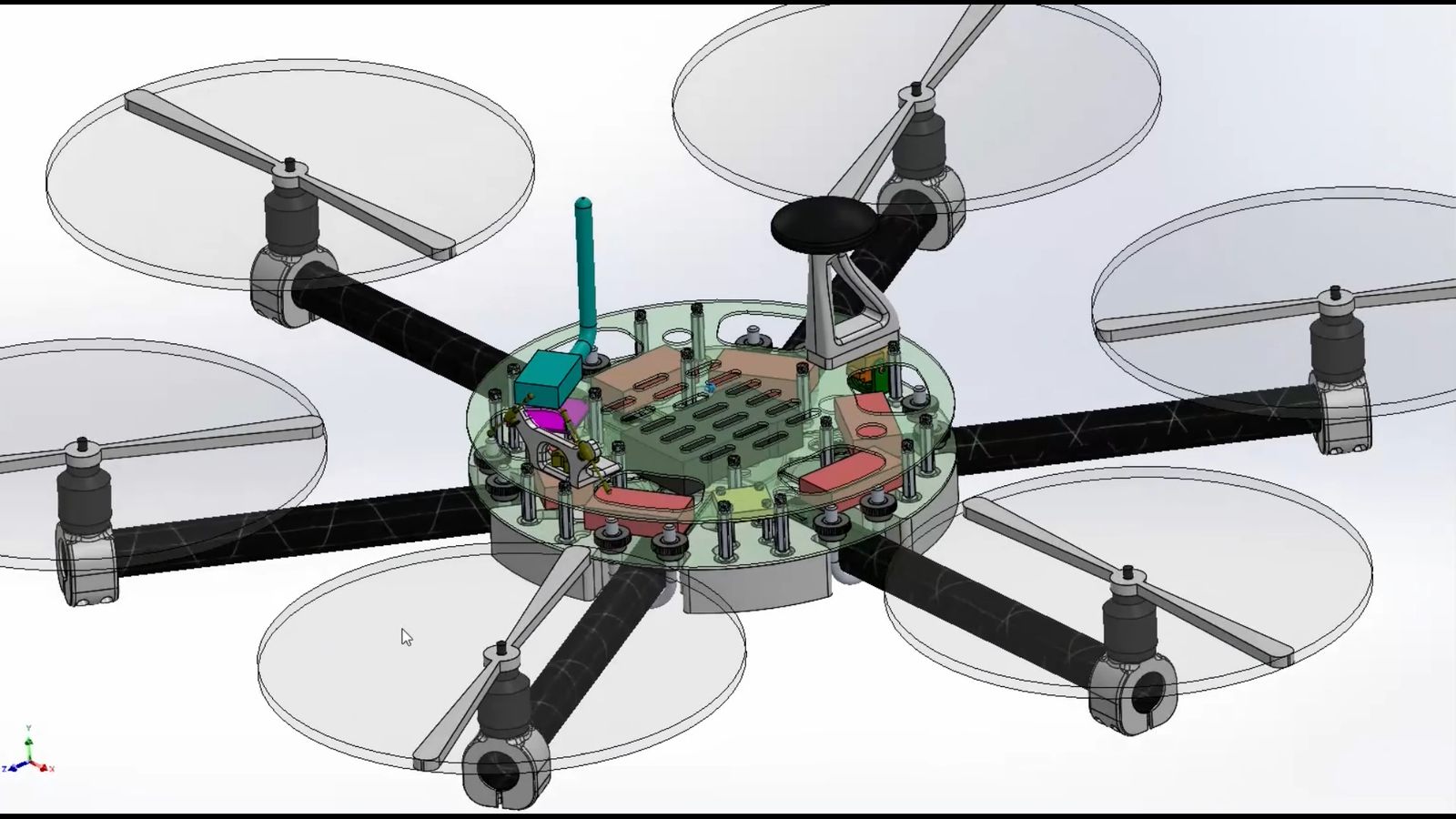
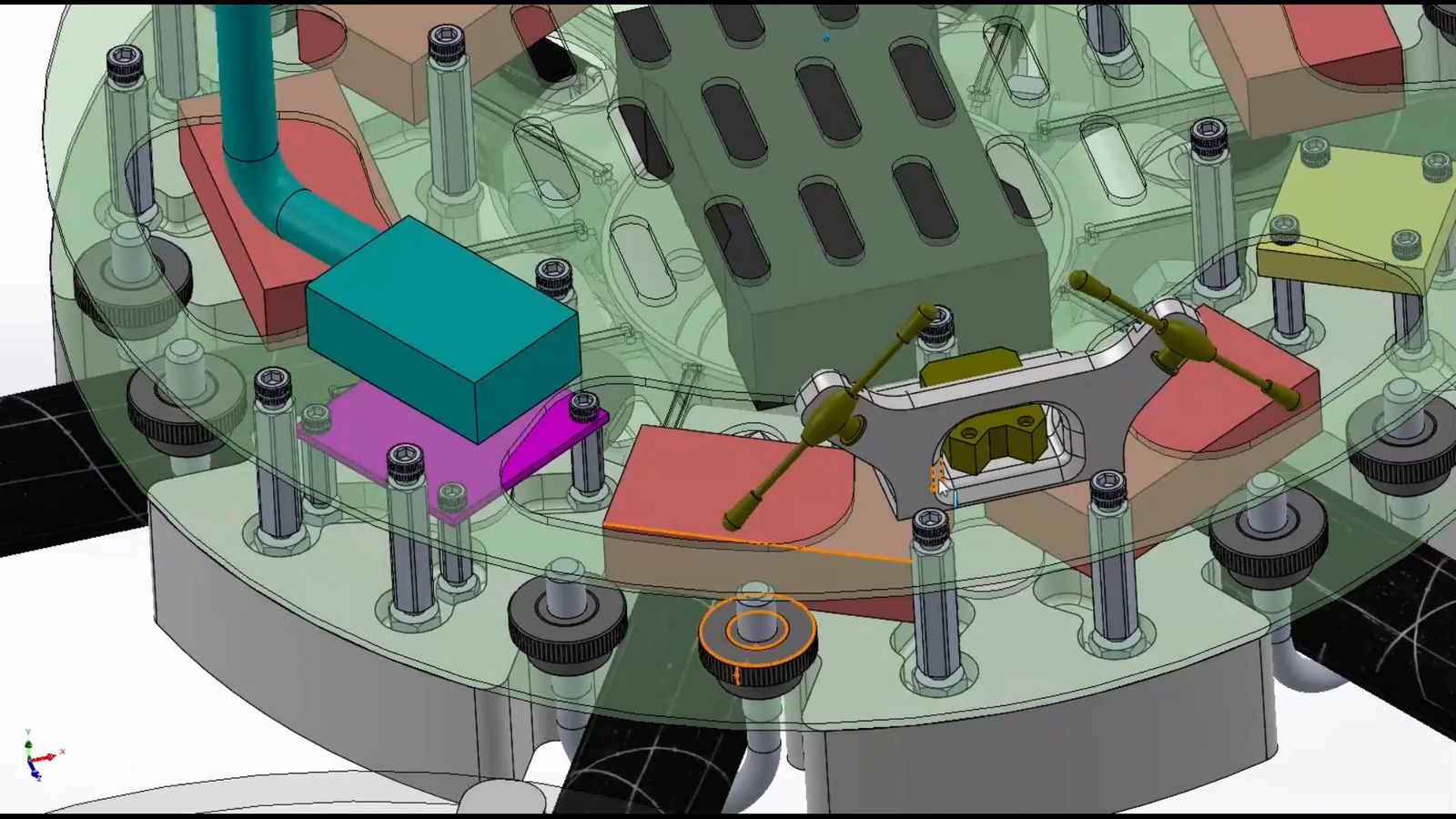
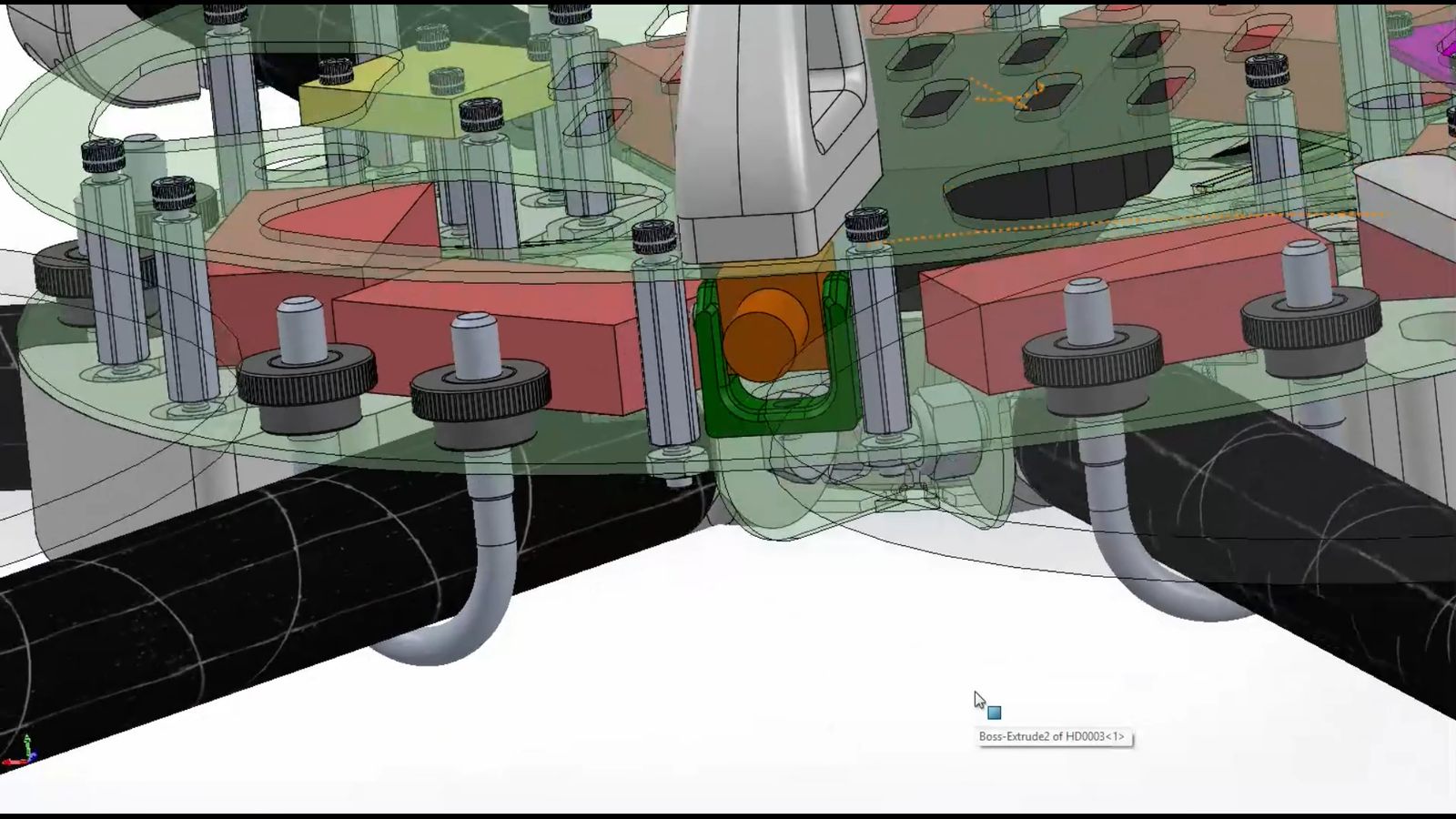
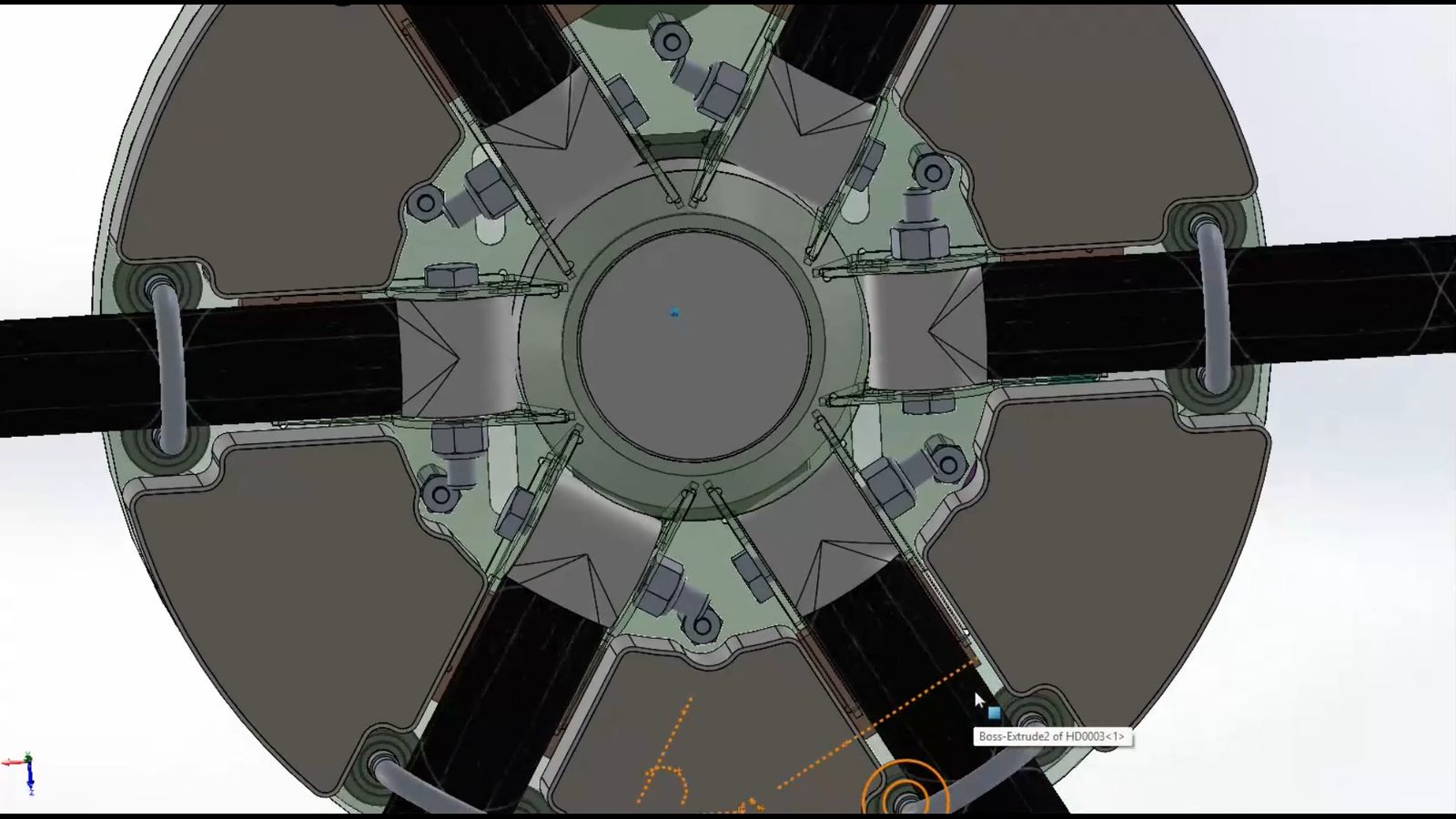
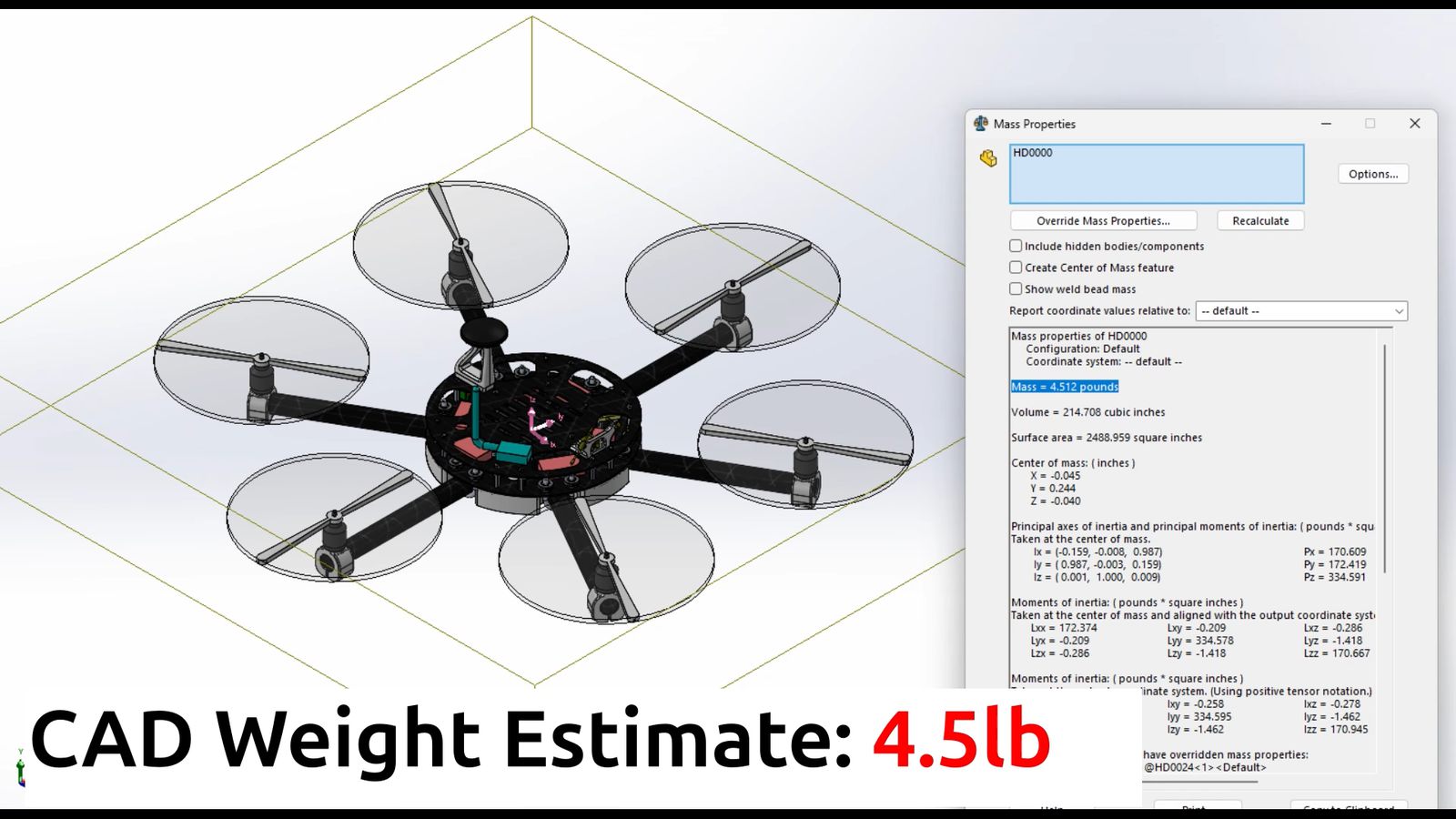
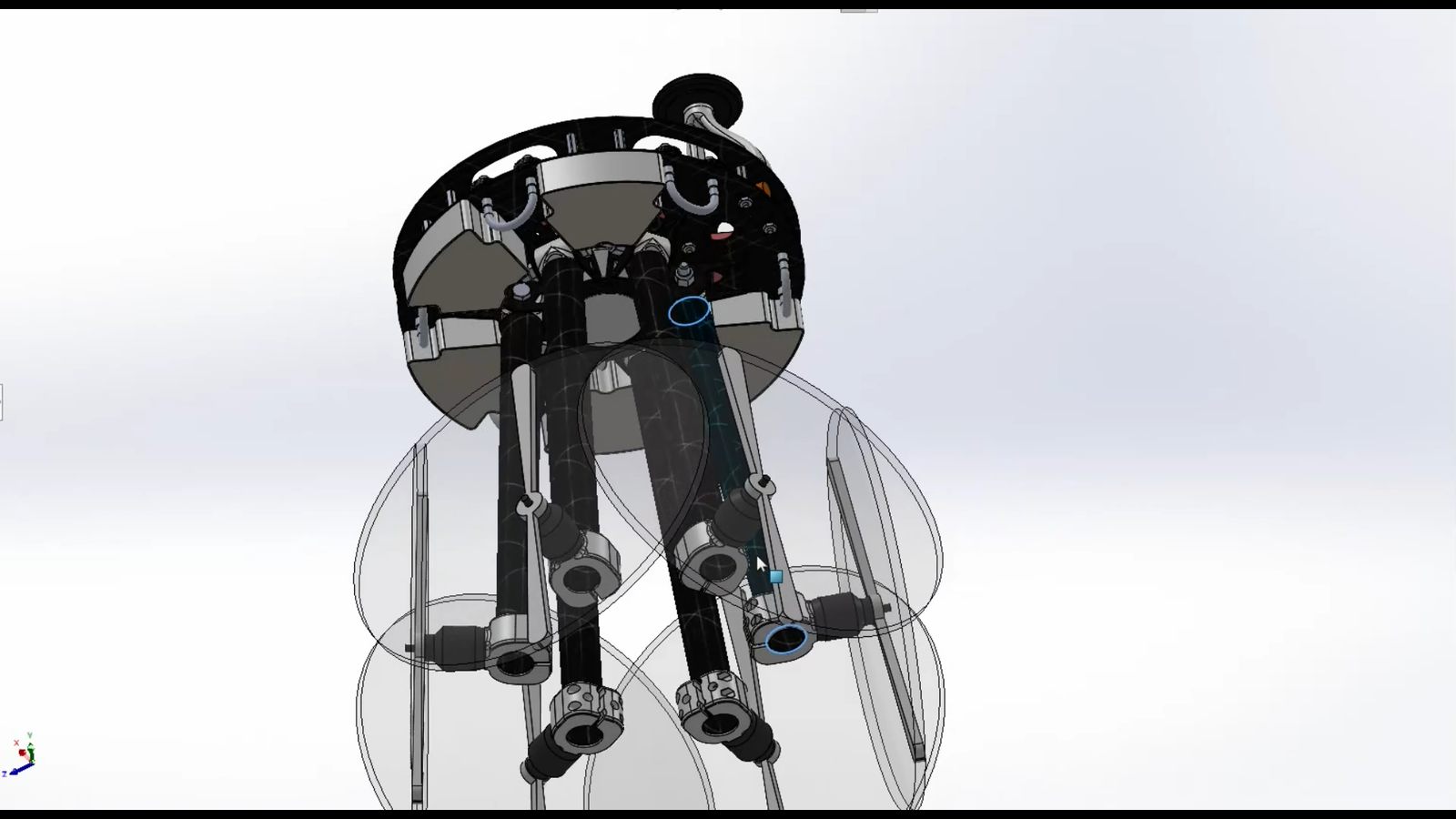
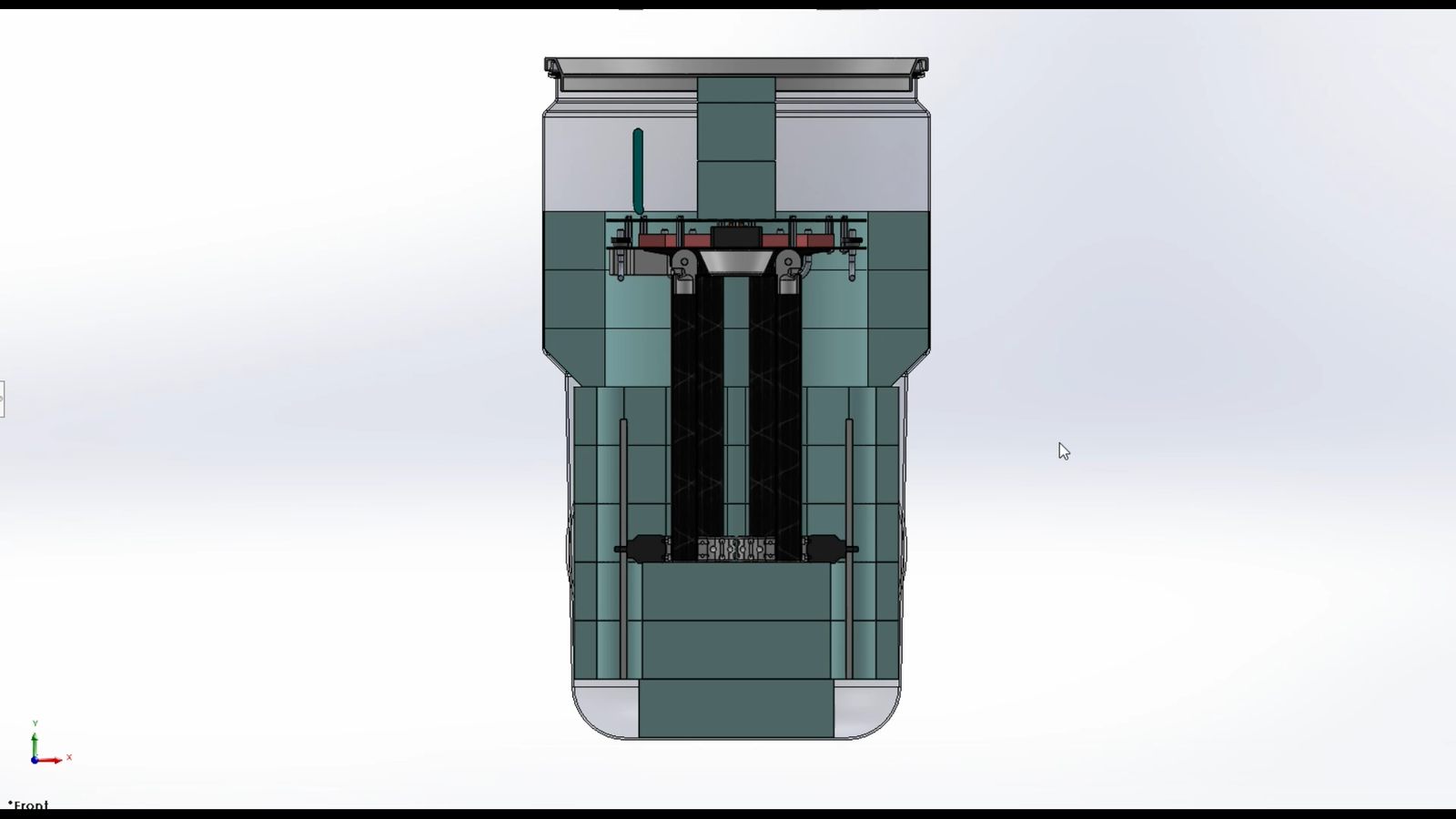
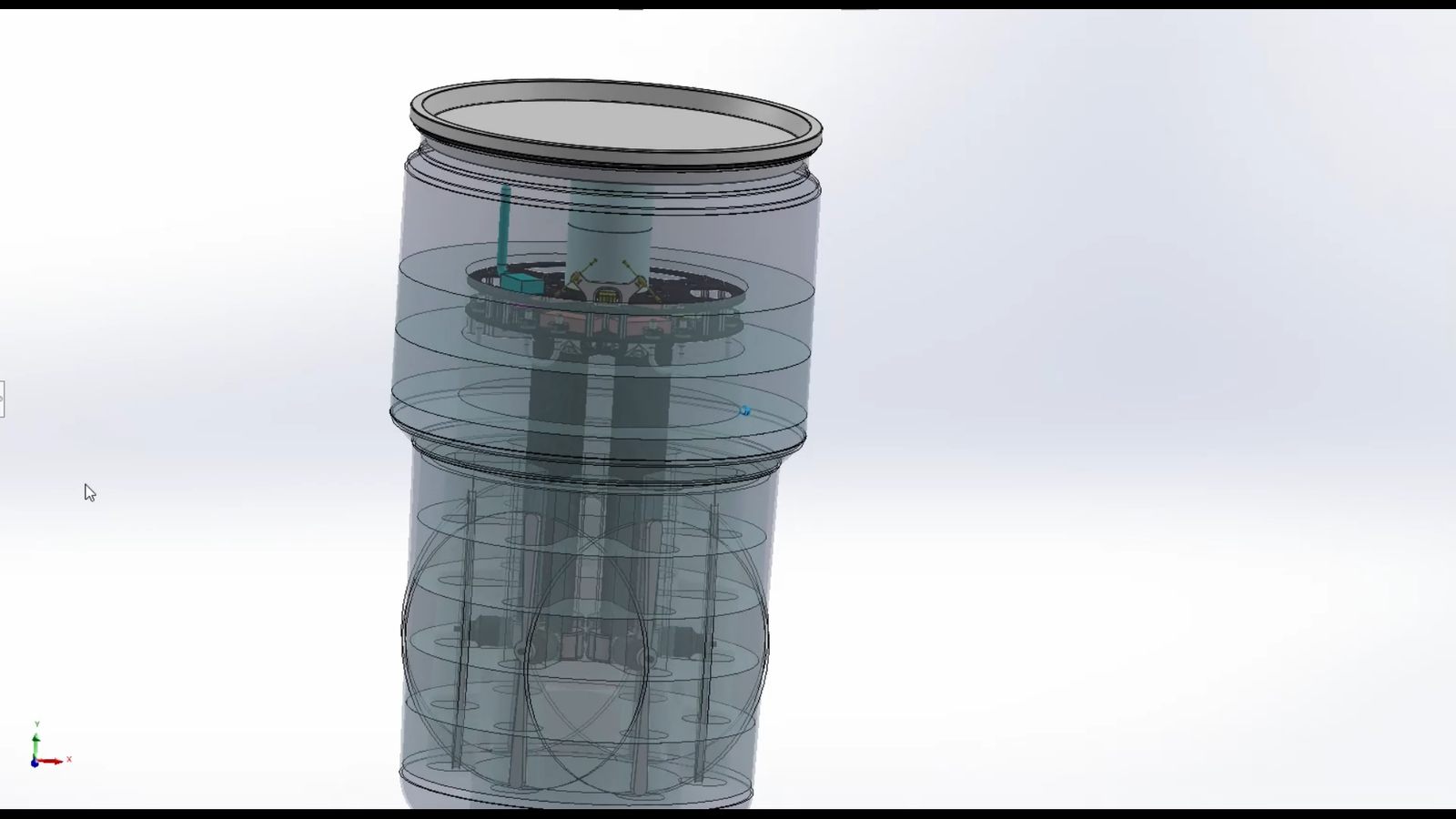
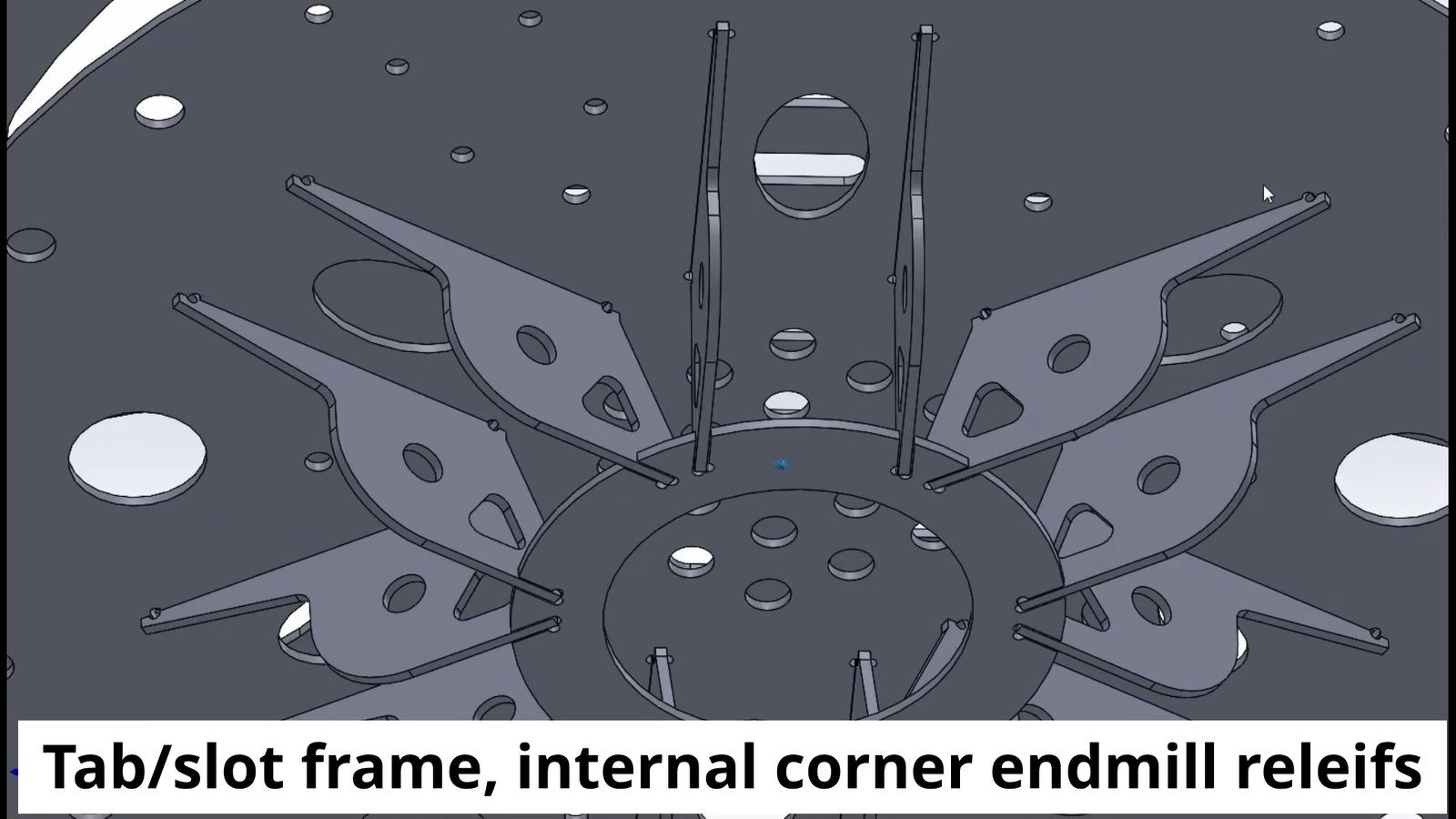
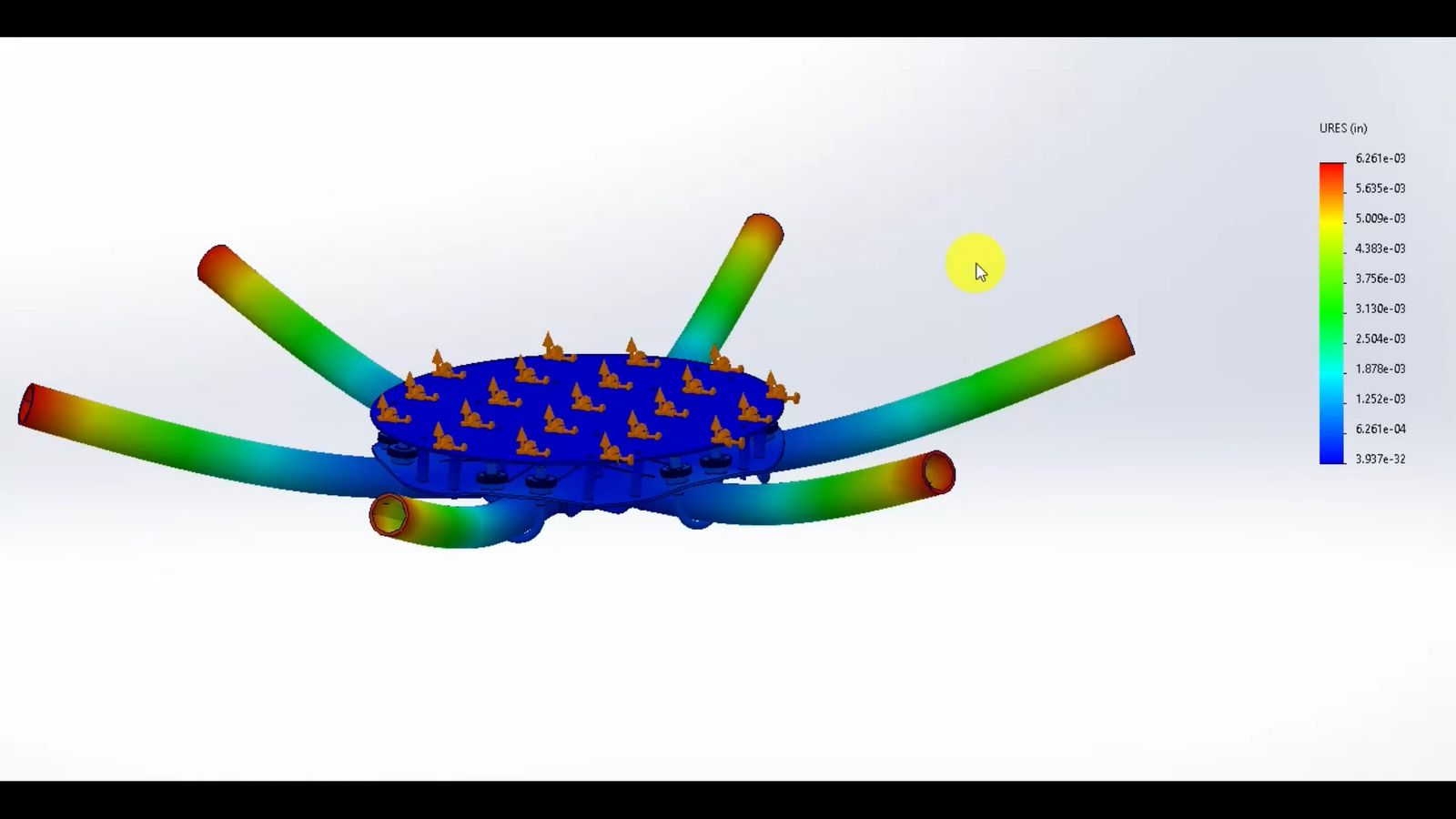
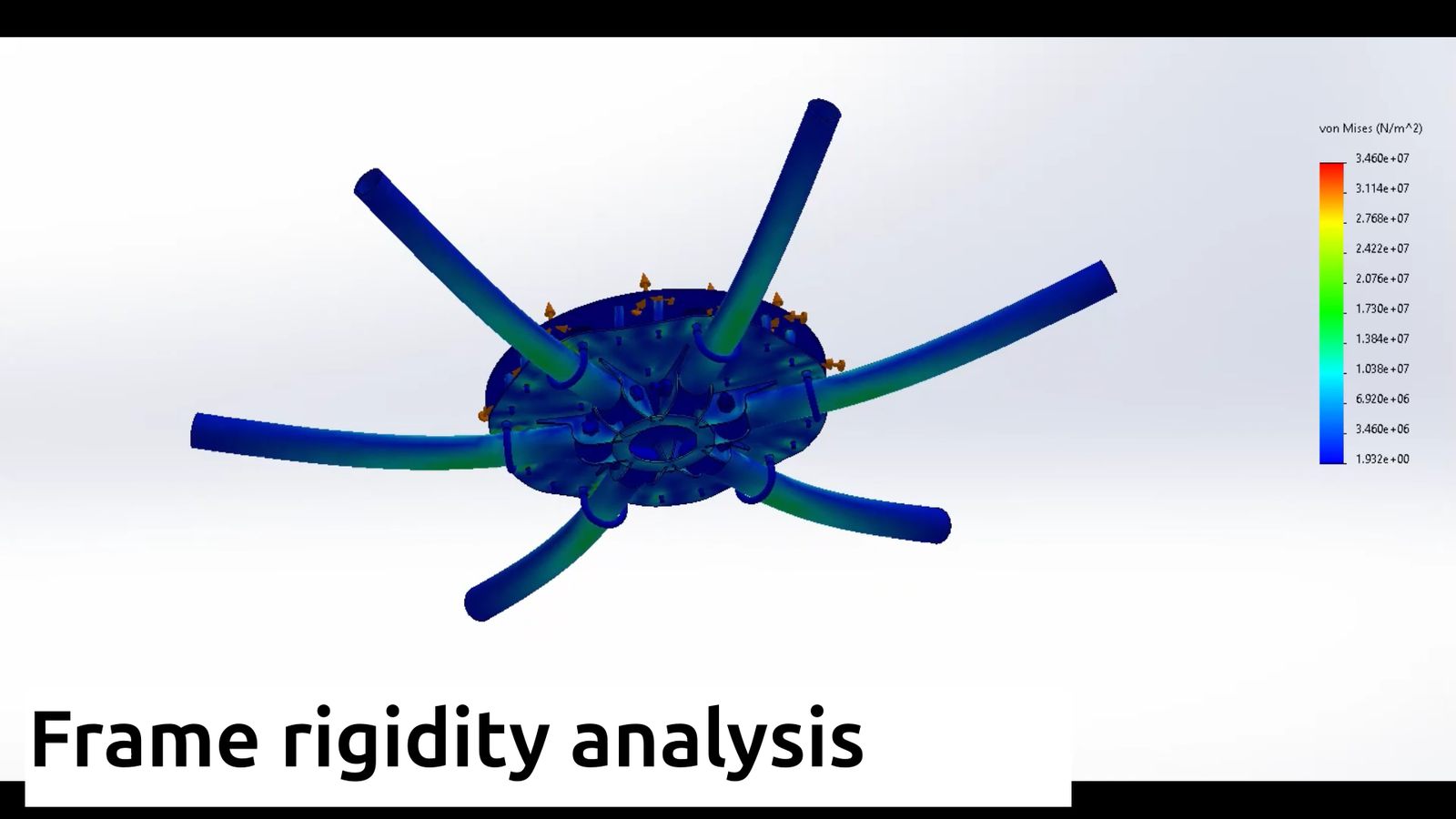
I made a pretty detailed CAD model before I started building the frame. This was helpful to keep a running weight estimate, adding in low resultion models of electonic off the shelf components with manually overriden mass properties to match manufacture specs or my own measurements of each component's weight. The real drone weight ended up being about 6 ounces heavier than predicted. This is likely because I didn't account for the weight of wires, zip ties, tape, and a few other minor things. I also ran some basic FEA on the model to make sure the frame and arms wouldn't flex too much under load. All the CAD is in the github link.
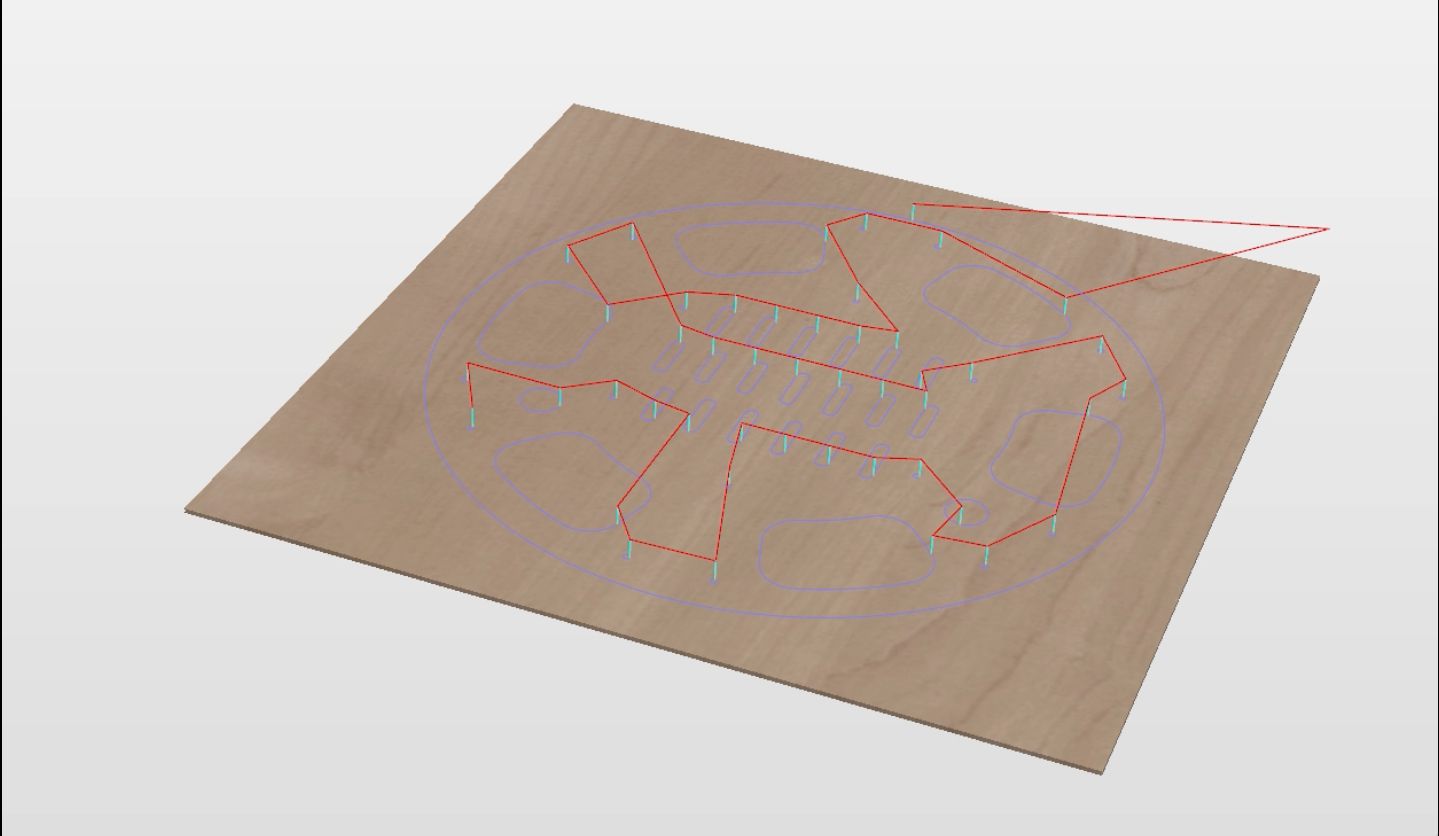
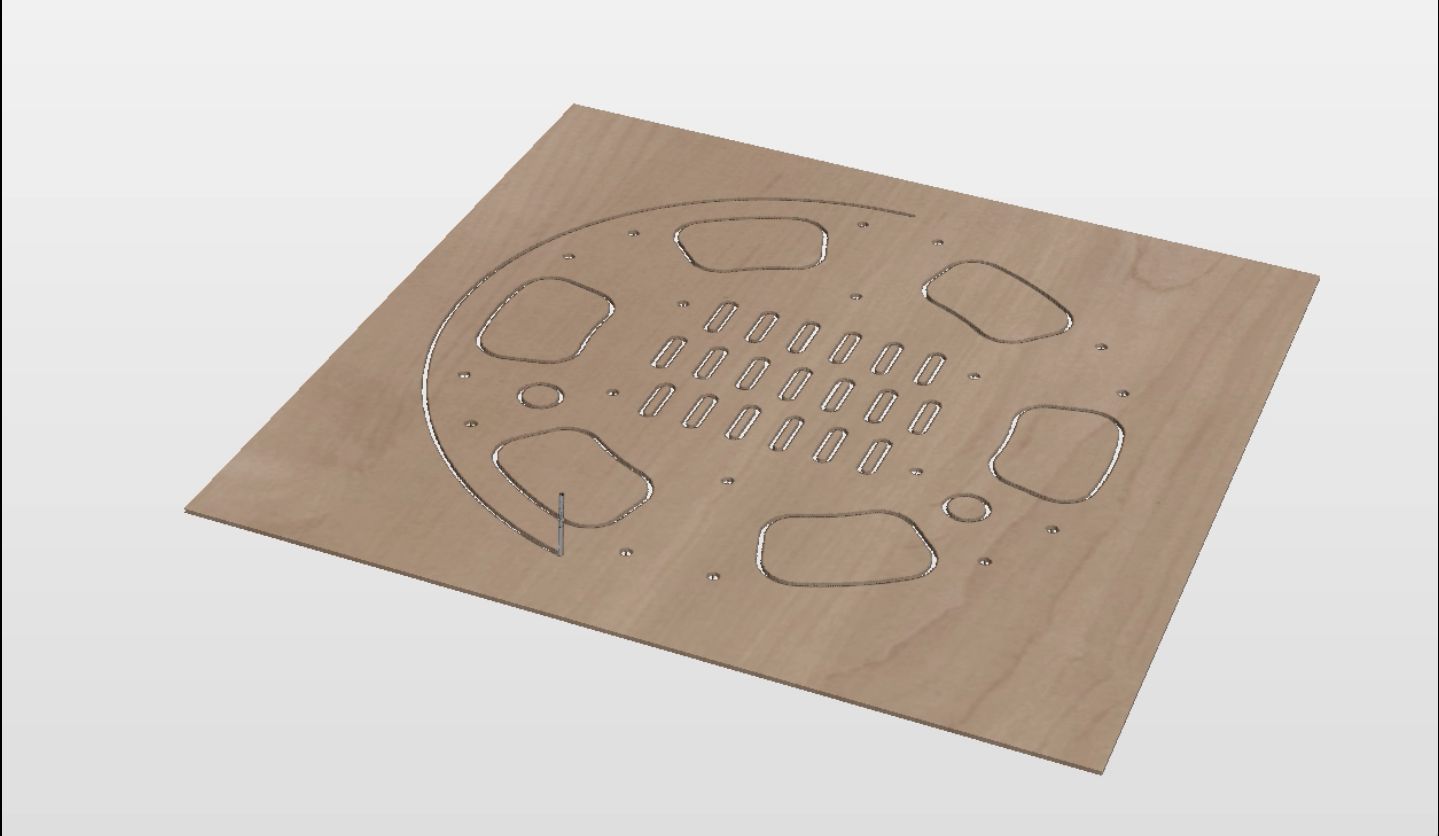
I used Vcarve to generate 2D toolpaths of the parts I made on my CNC router
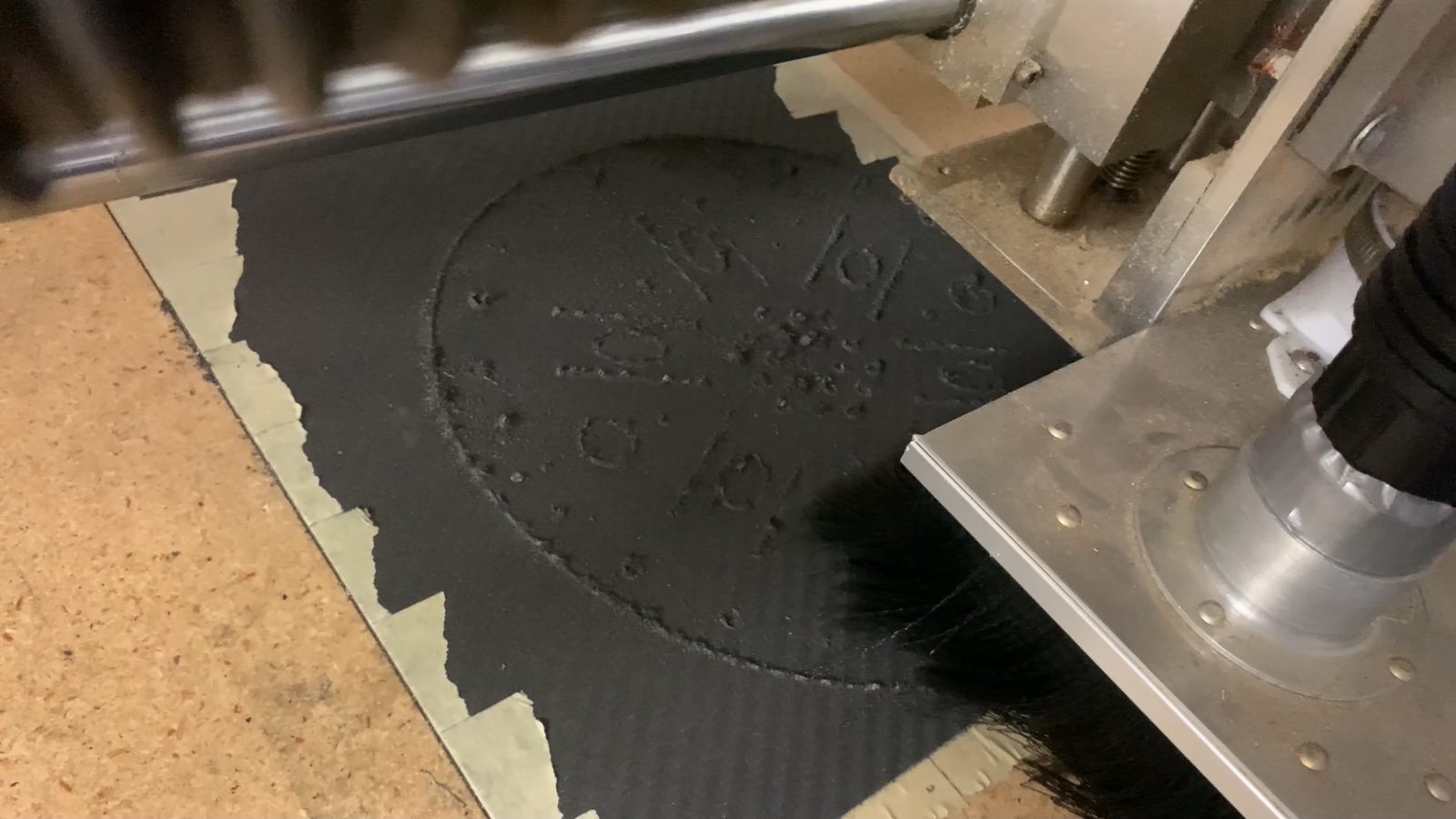
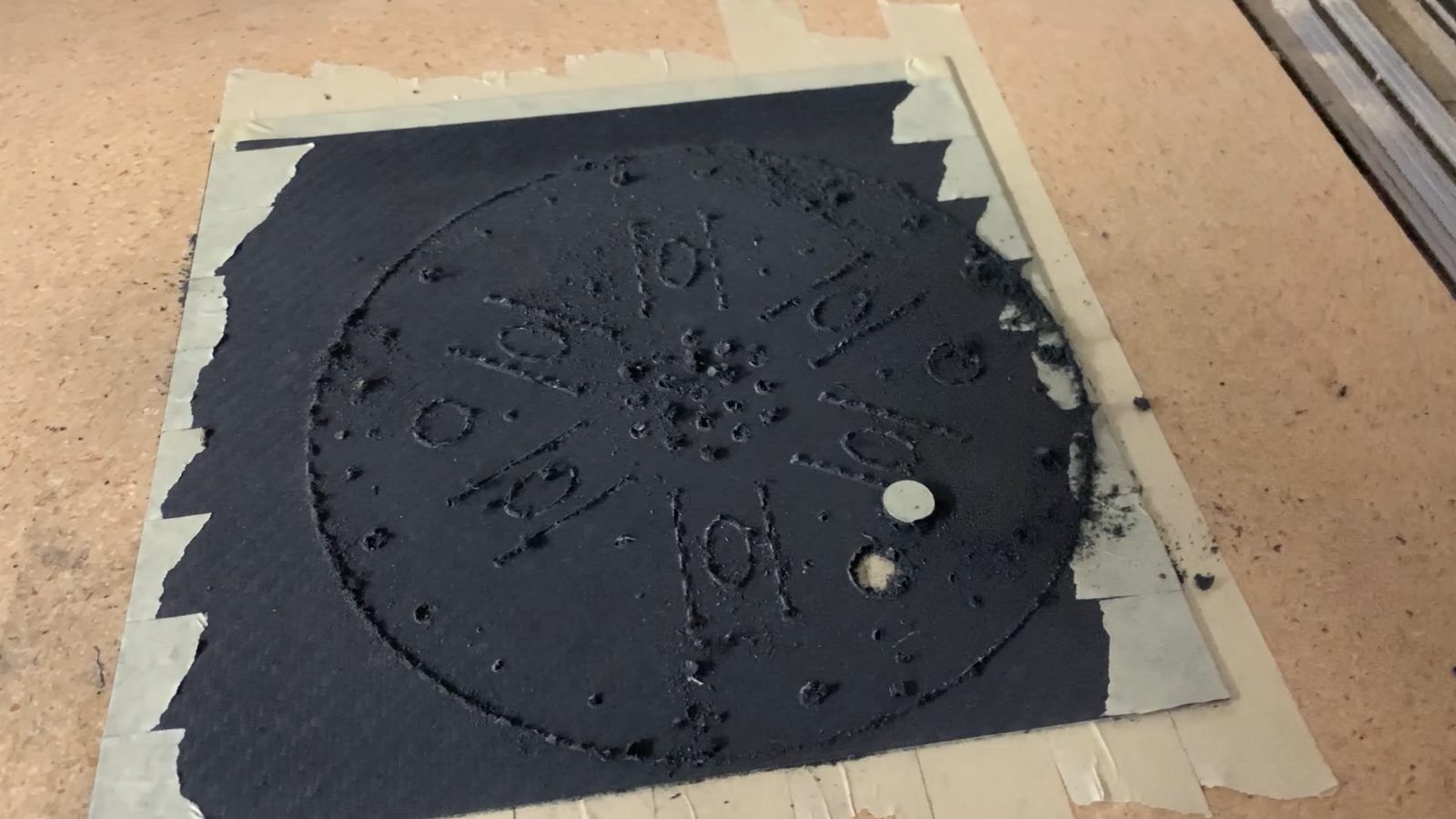
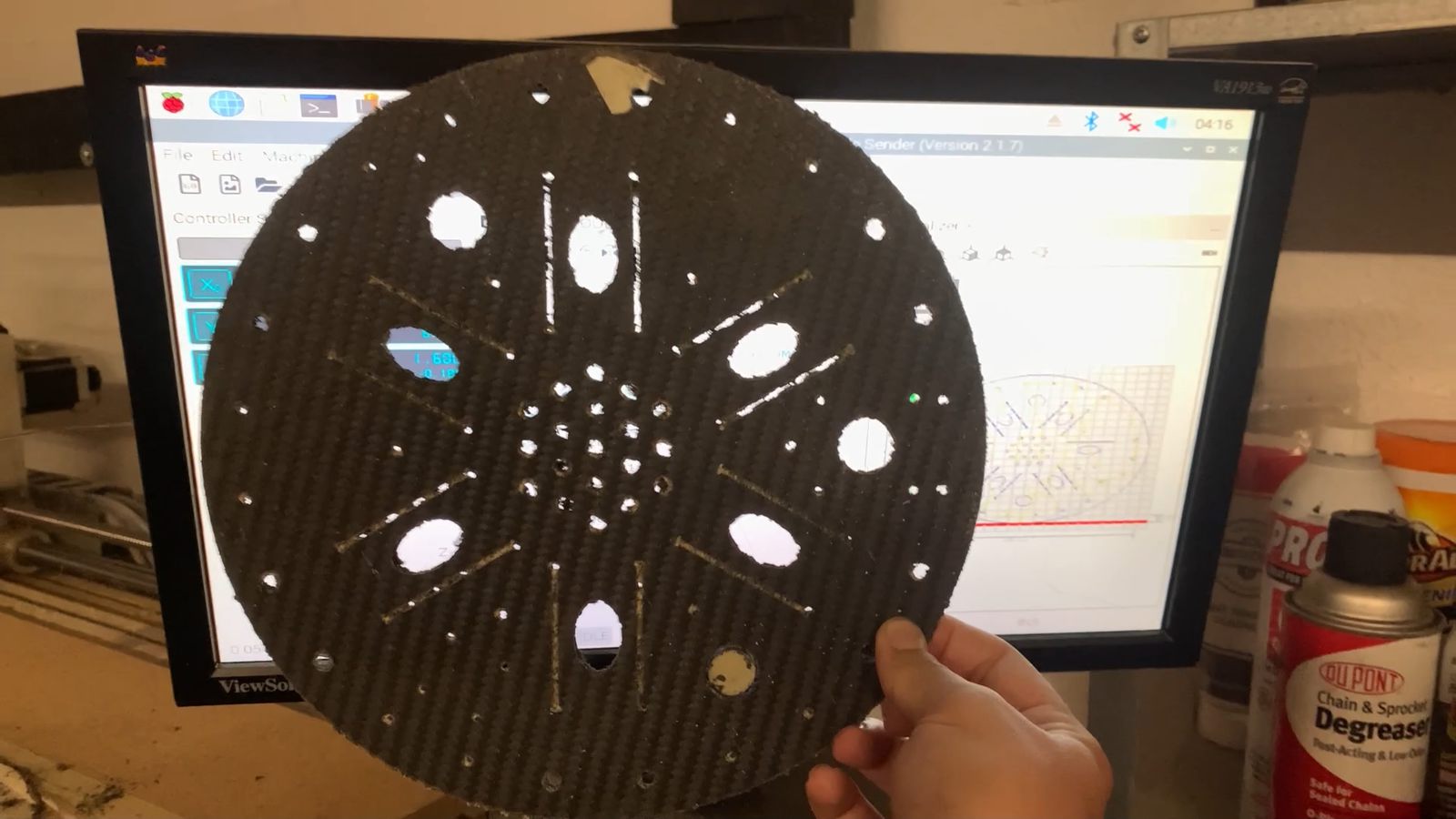
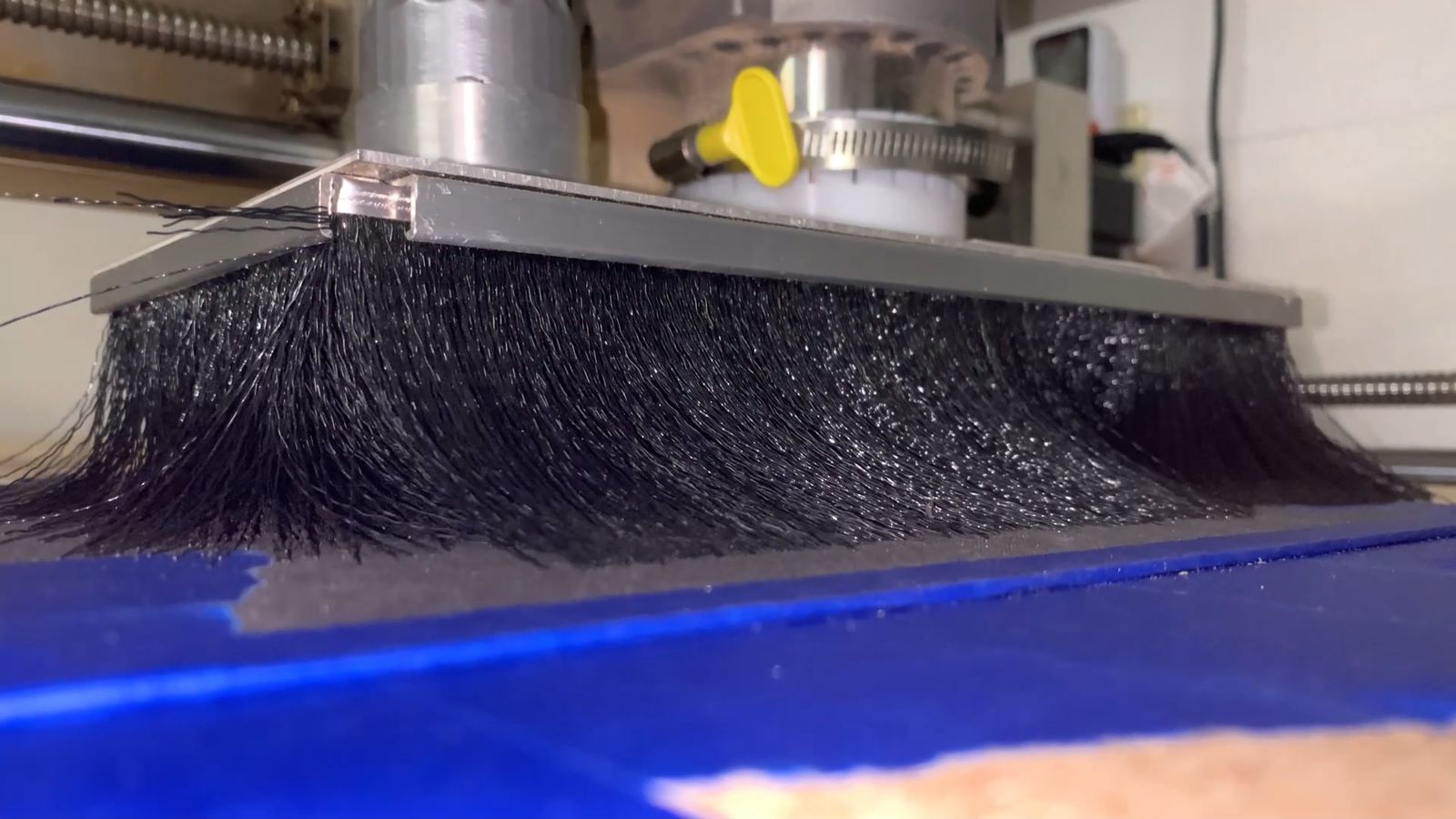
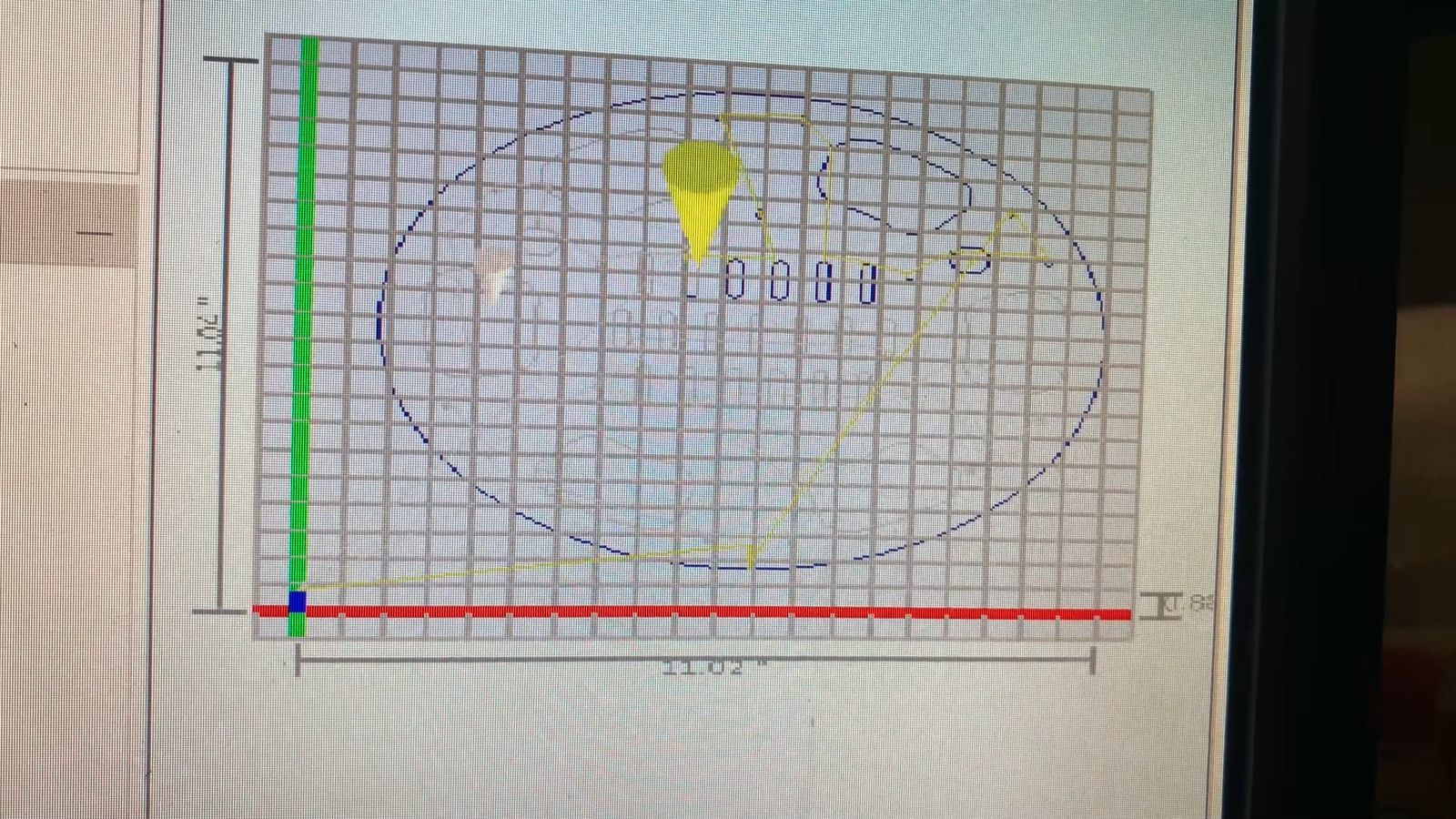
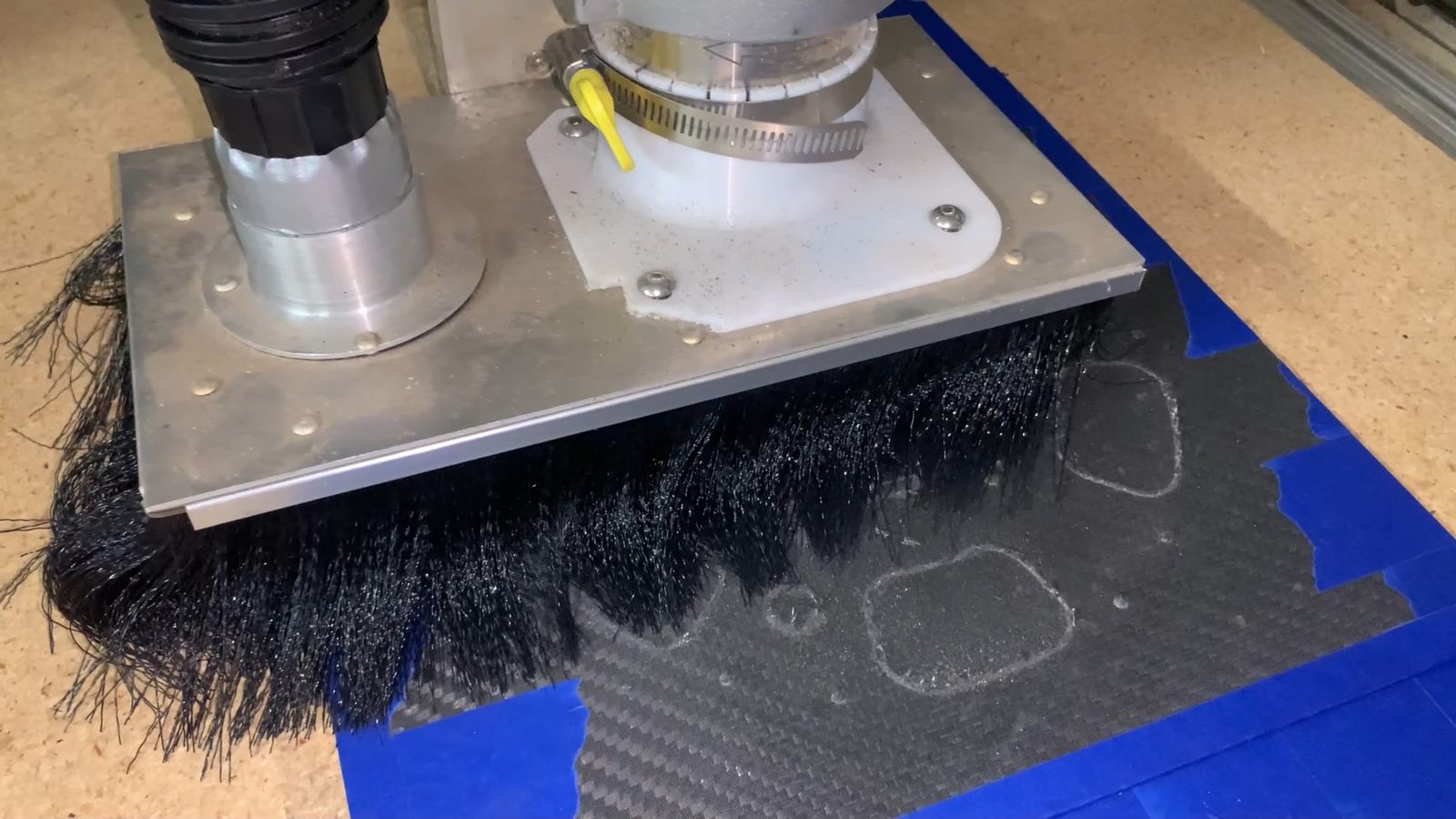
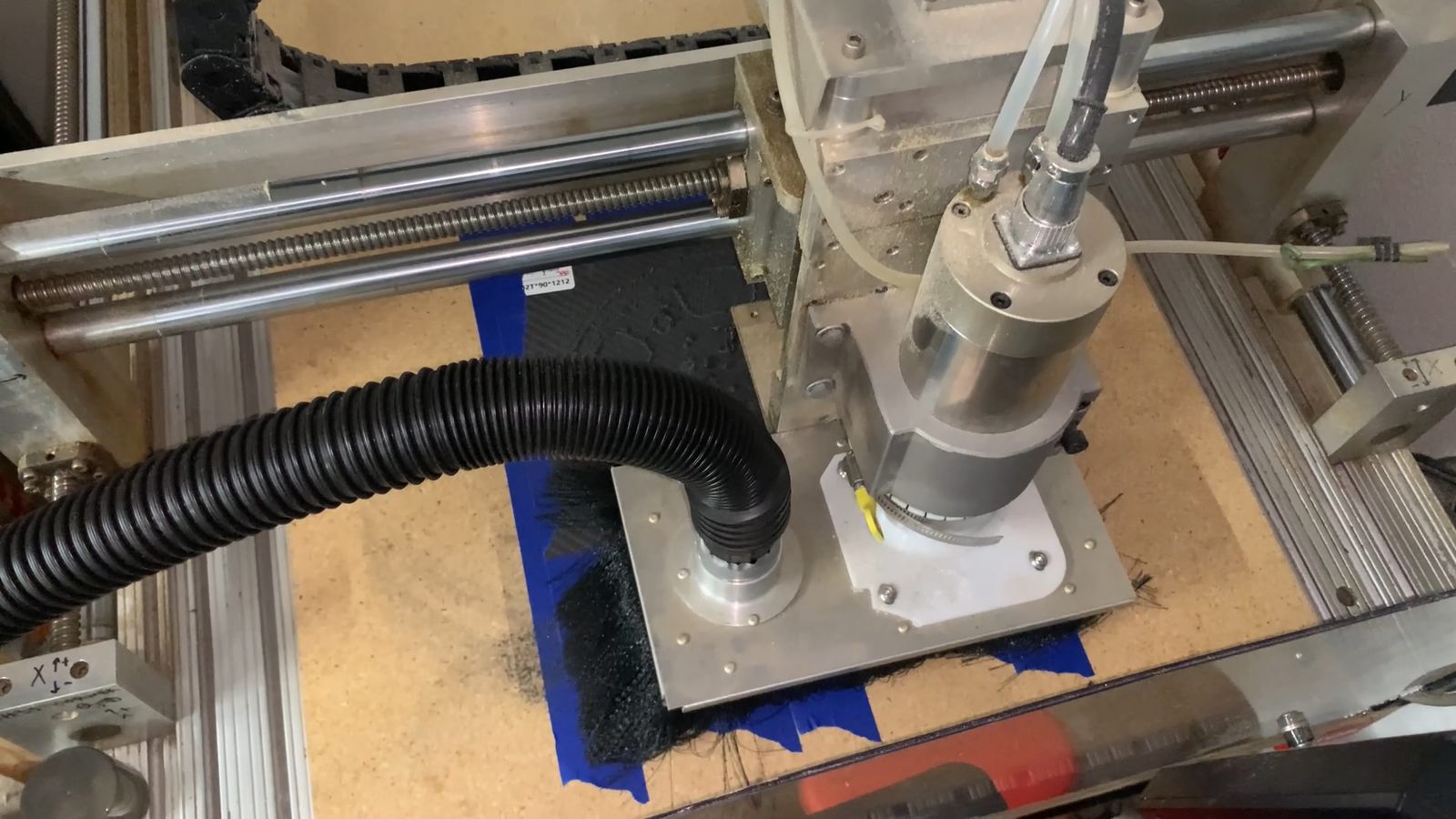
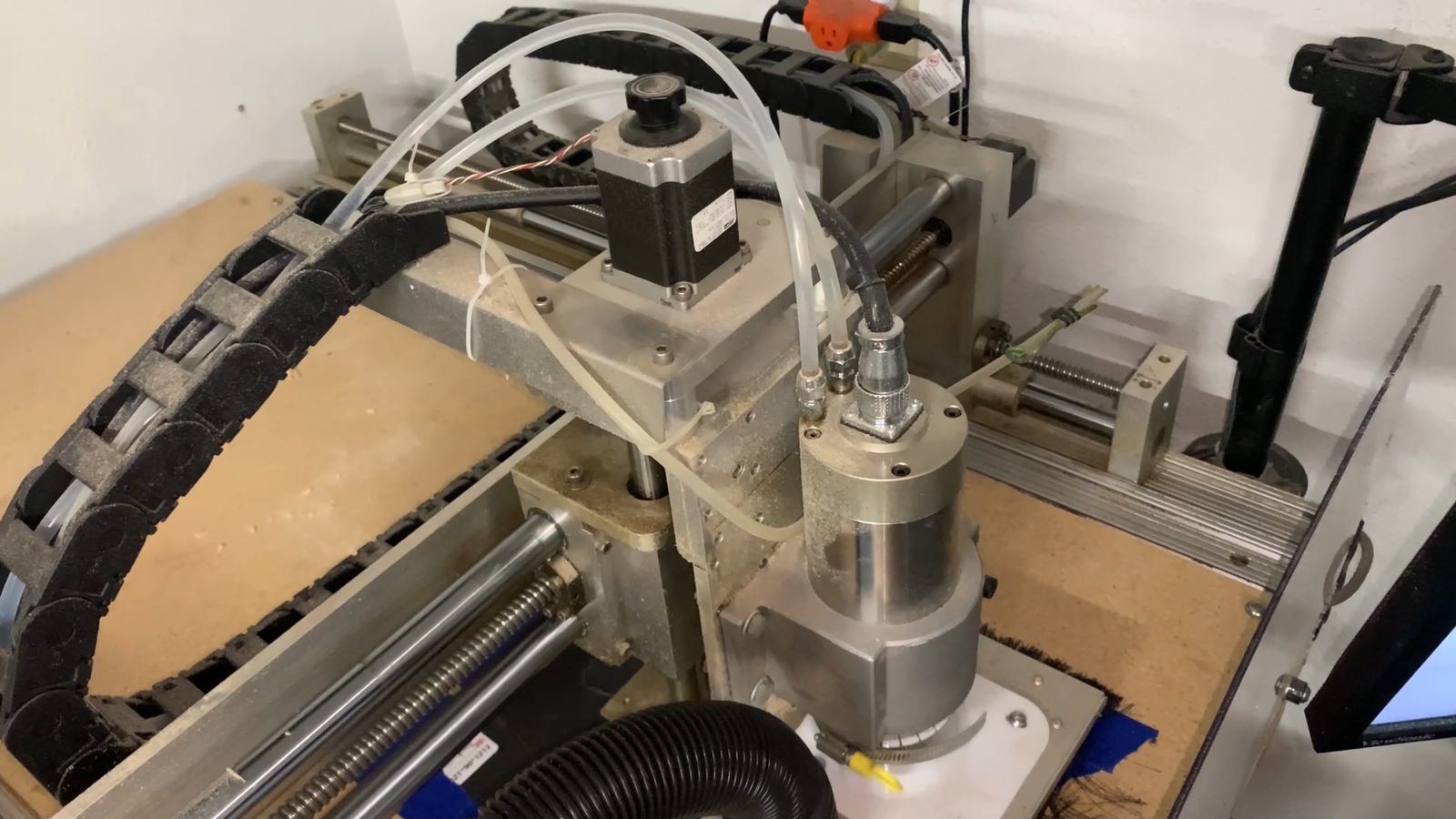
I cut out all the frame parts from 1/16" carbon fiber sheet on my CNC router. It's an old Dynastep TT from 2003 that I've done some upgrades to including a brushless liquid cooled motor, an arduino uno running GRBL for firmware interfacing with the stepper drivers, and a raspberry pi running universal gcode sender to operate it. Using dust shoe connected to a shop vac through a cyclonic separator to keep the dust under control. I wear a respirator or leave the room while it's running, this dust is pretty nasty. Got usable results, but the edges came out a little messy. I used a .0625" OD upcut carbide DLC coated endmill, but I think I could've gotten better results with a downcut or a more specialized tool for thin composite sheets.
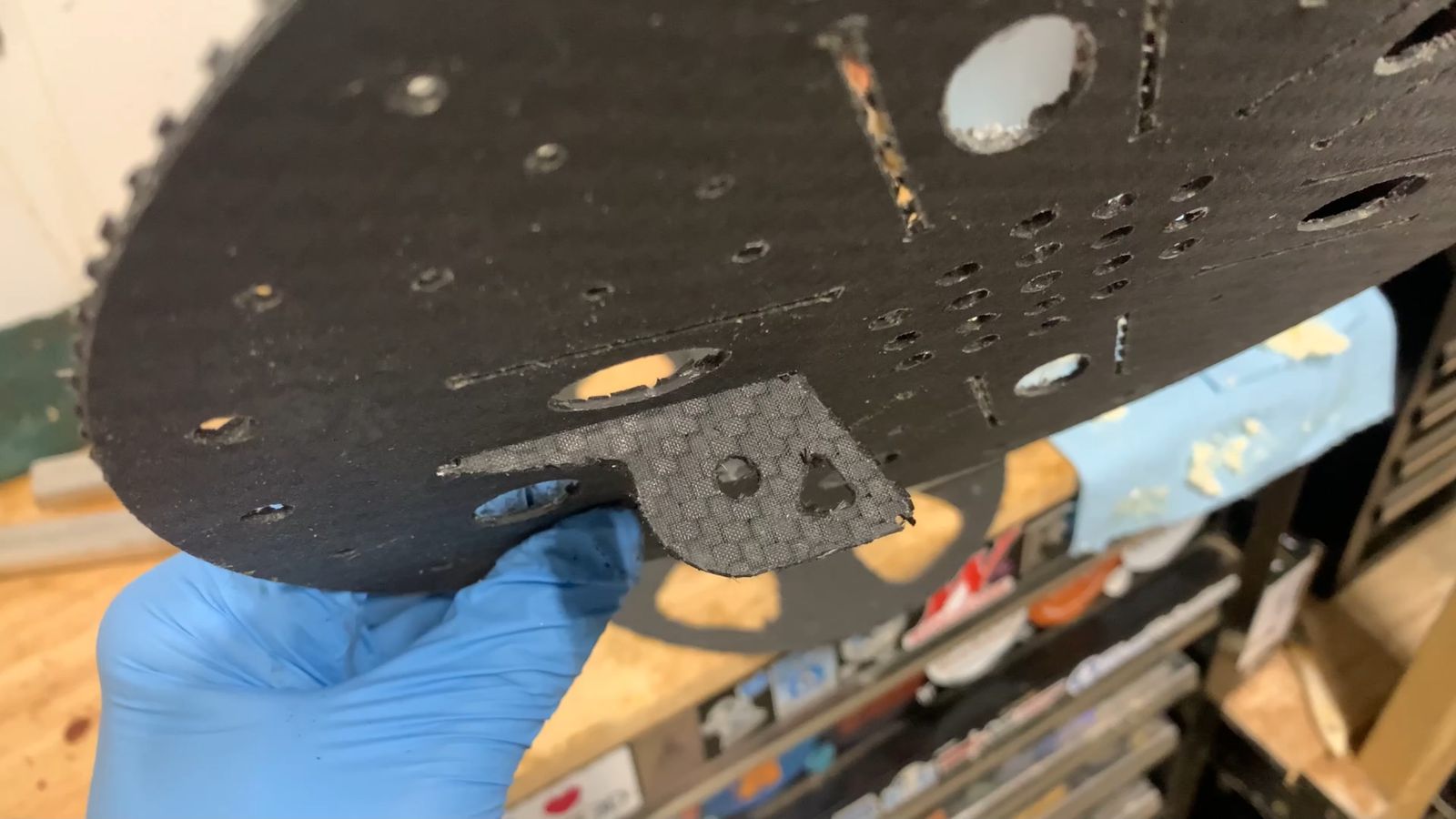
Tab and slot frame design, carbon sheets tightly fit together and are permanently bonded with DP420 epoxy.
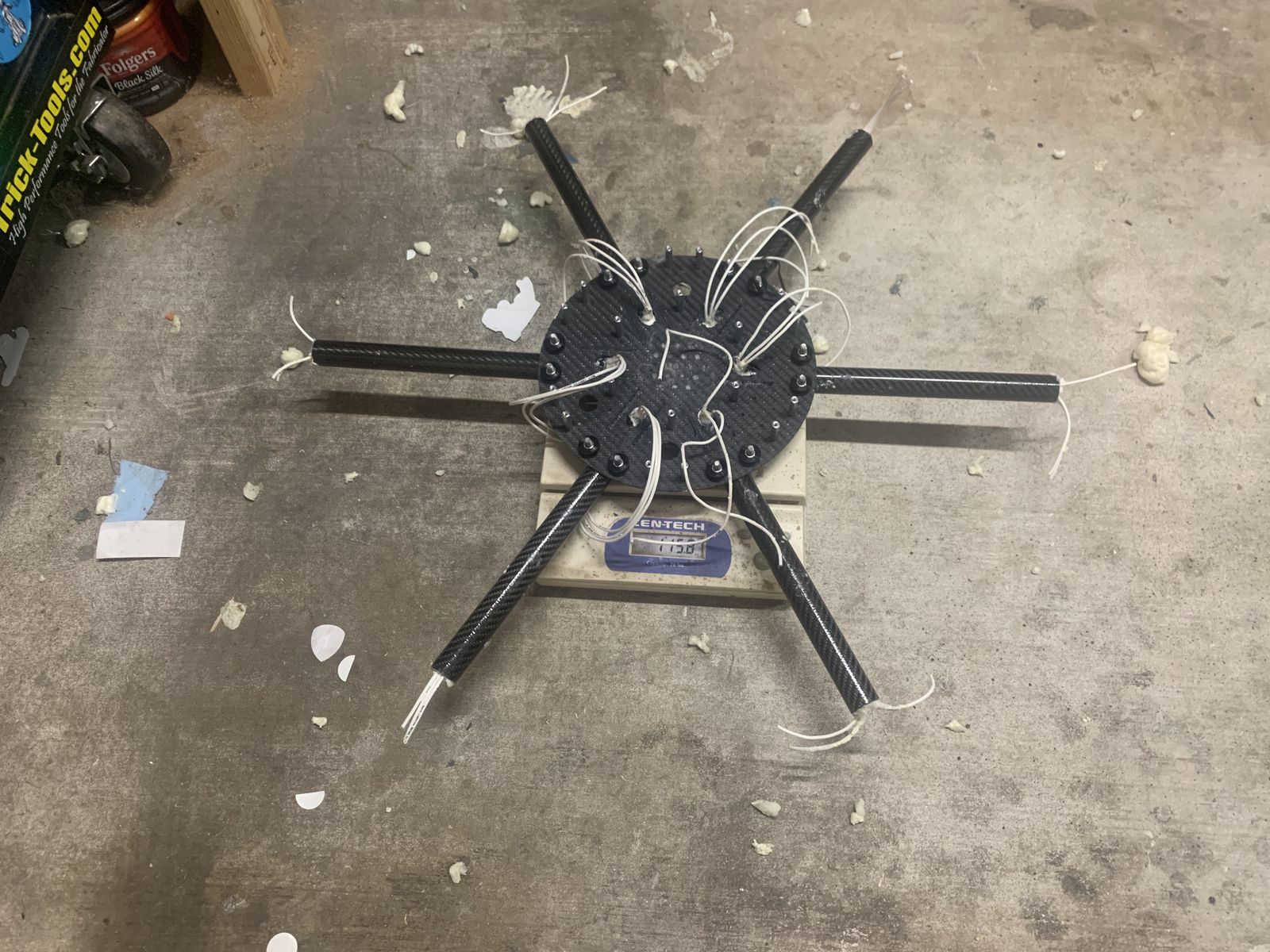
The complete frame assembly weighed around 2 pounds. Based on my maximum measured thrust per motor and a desired thrust:weight ratio of at least 2:1, I had around another 4 pounds to work with for all the electronics and battery. I went for the flat 6 hex drone fram because i wanted to use all 6 motors and this is the simplest setup that lends itself well to foldability.
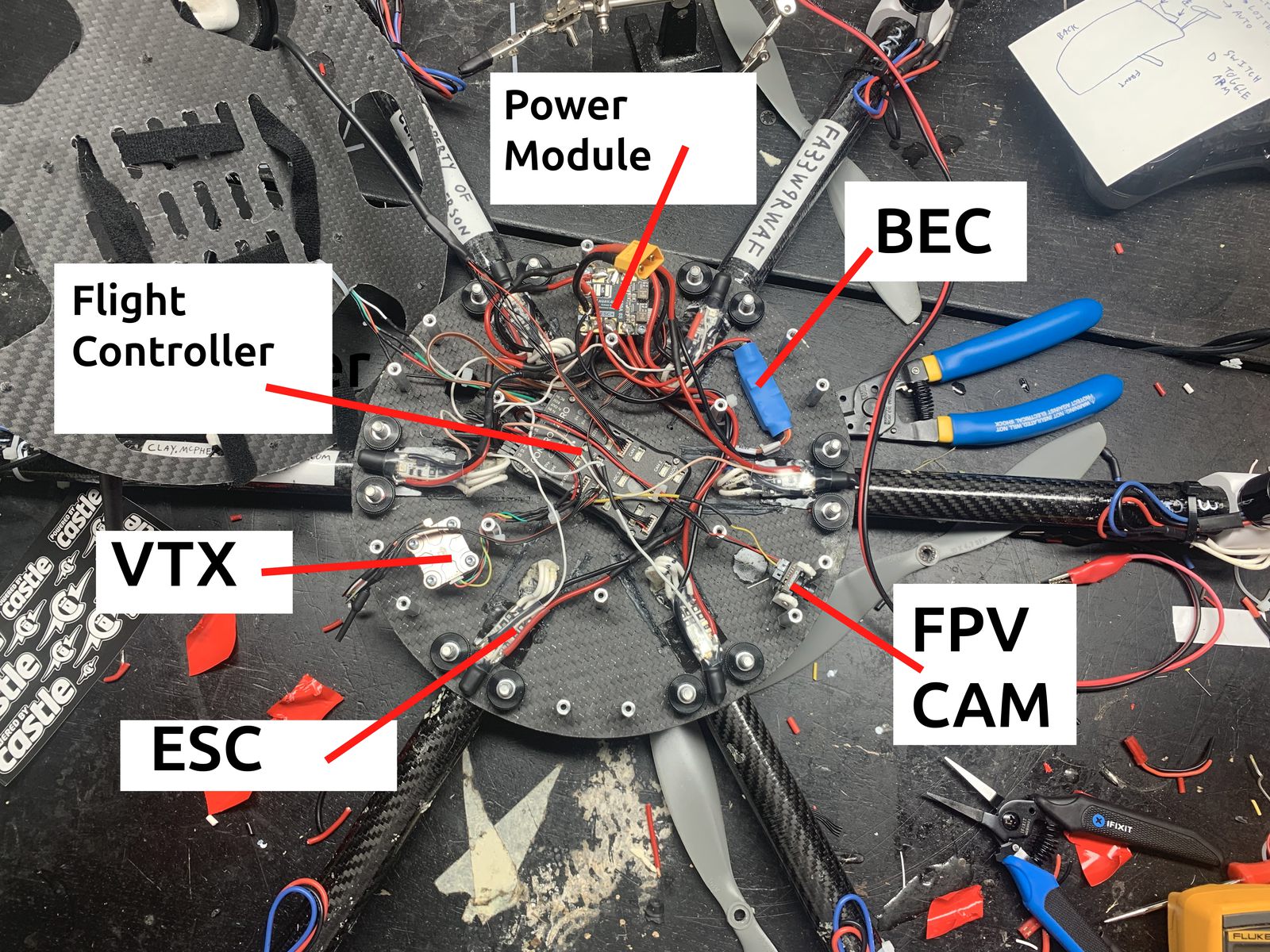
This image shows all the major components in the final wiring setup. A cover plate is bolted on above this which holds the antennas and the battery.
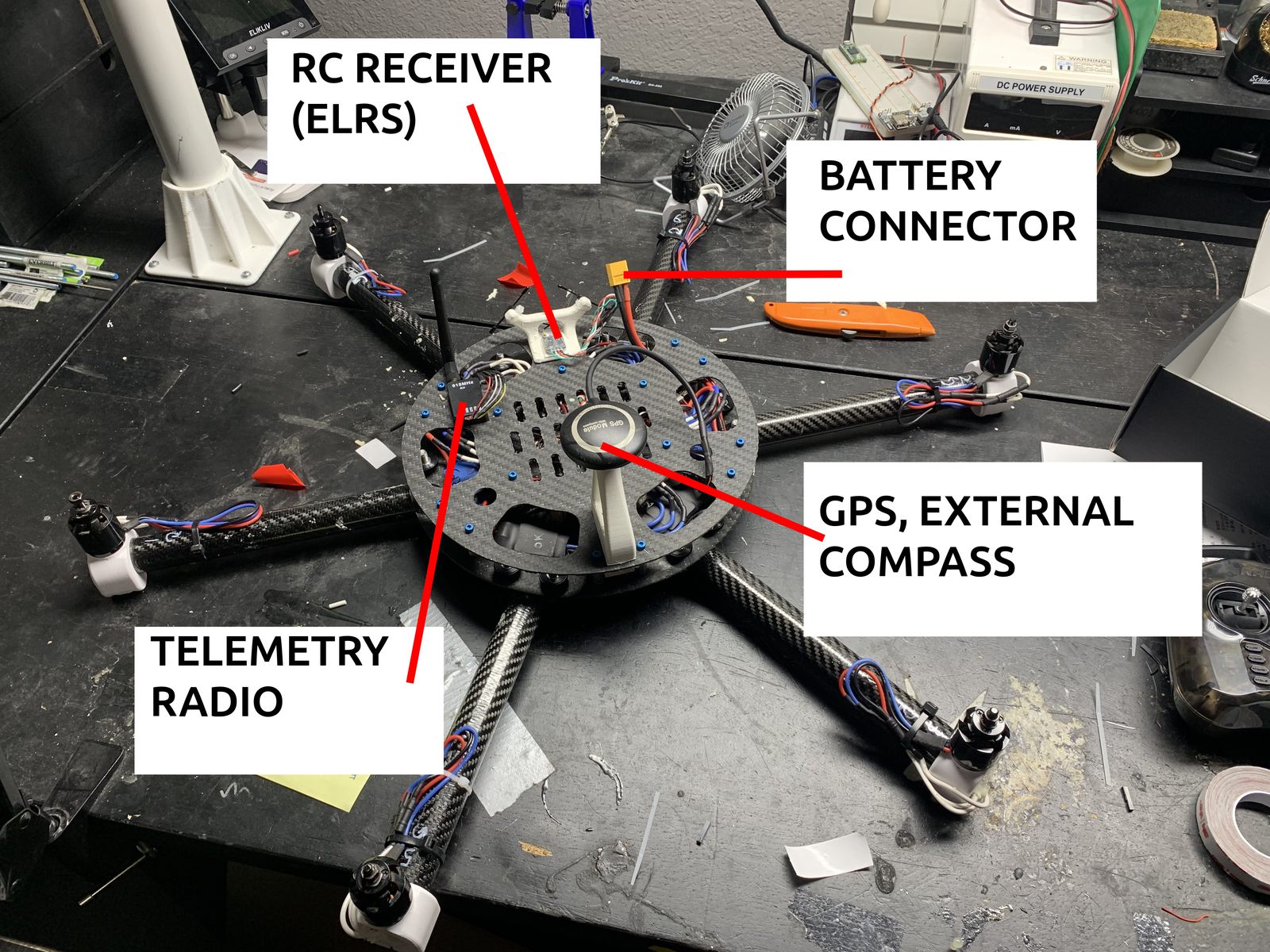
An overview of the major components mounted externally. Battery is strapped down through the slots in the center.
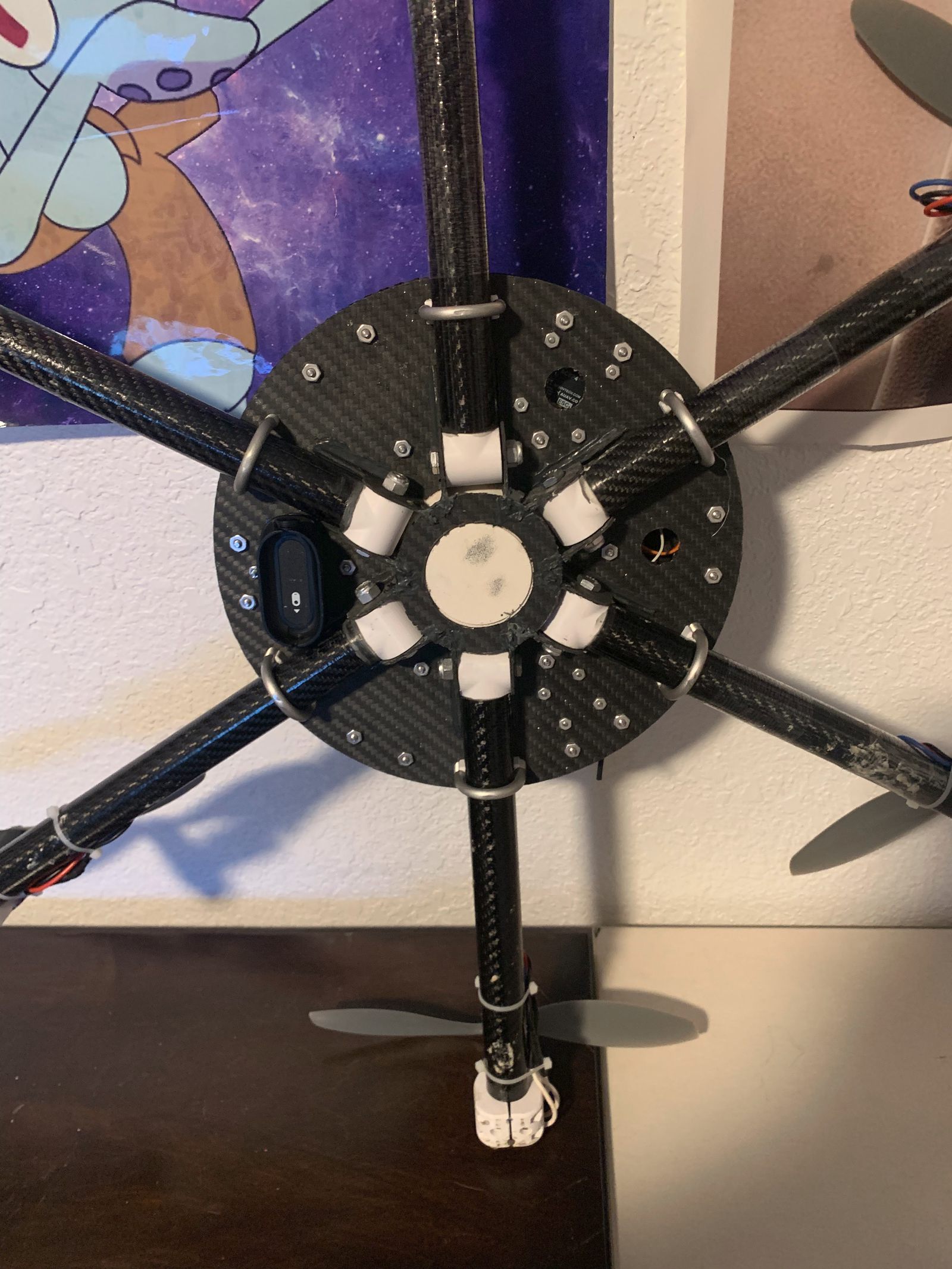
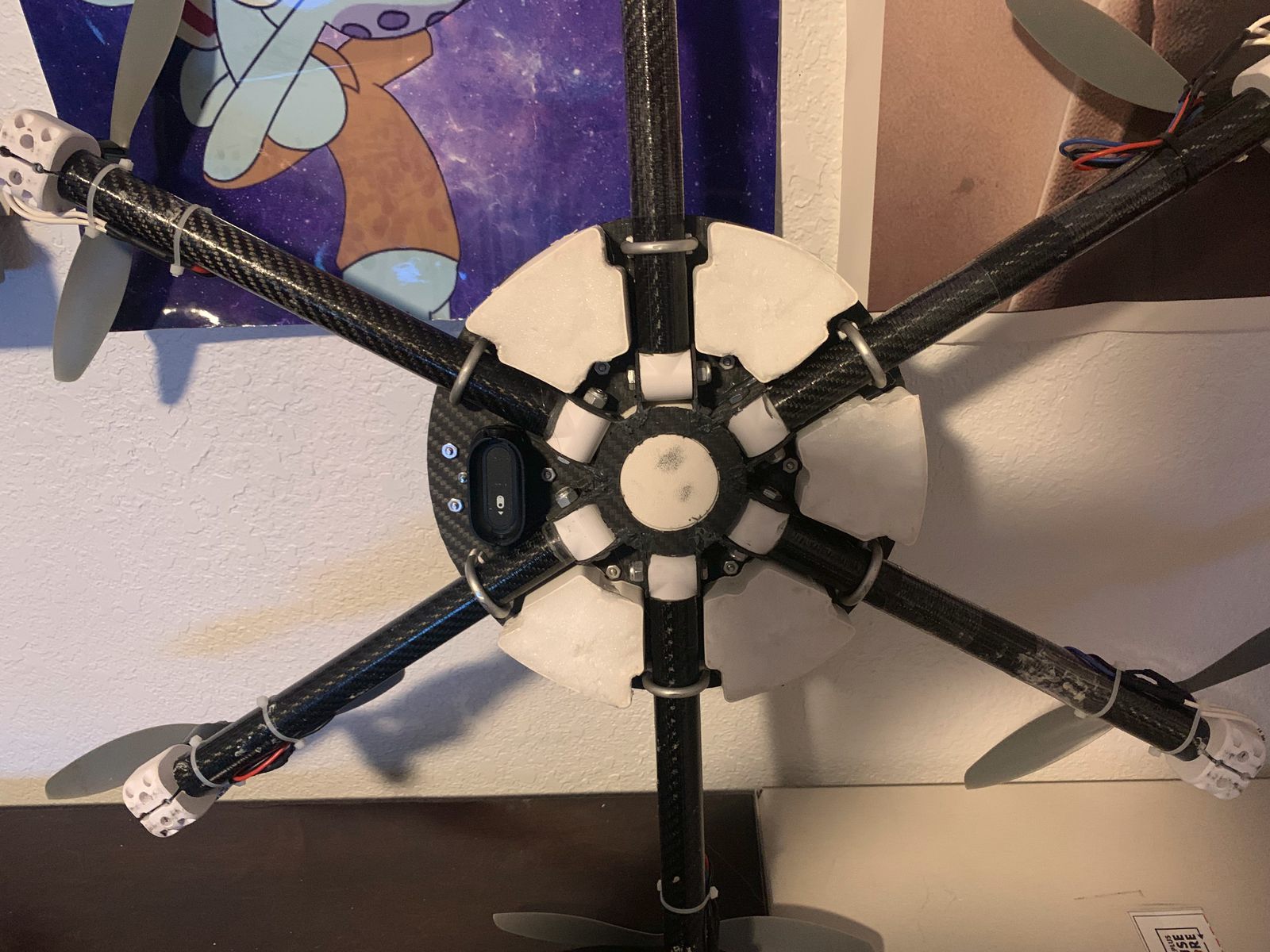
I added these floats for buoyancy in case the drone ever crashes in the water. It's not waterproof, but at least it won't sink. I calculated the displacement with CAD. These are shells 3D printed out of foaming lightweight PLA to easily fit in the complex geometry around all the bolt heads, fasteners, etc. They're filled with spray foam to be as lightweight as possible. The center between all the arm joints is also a foam filled LW-PLA print.
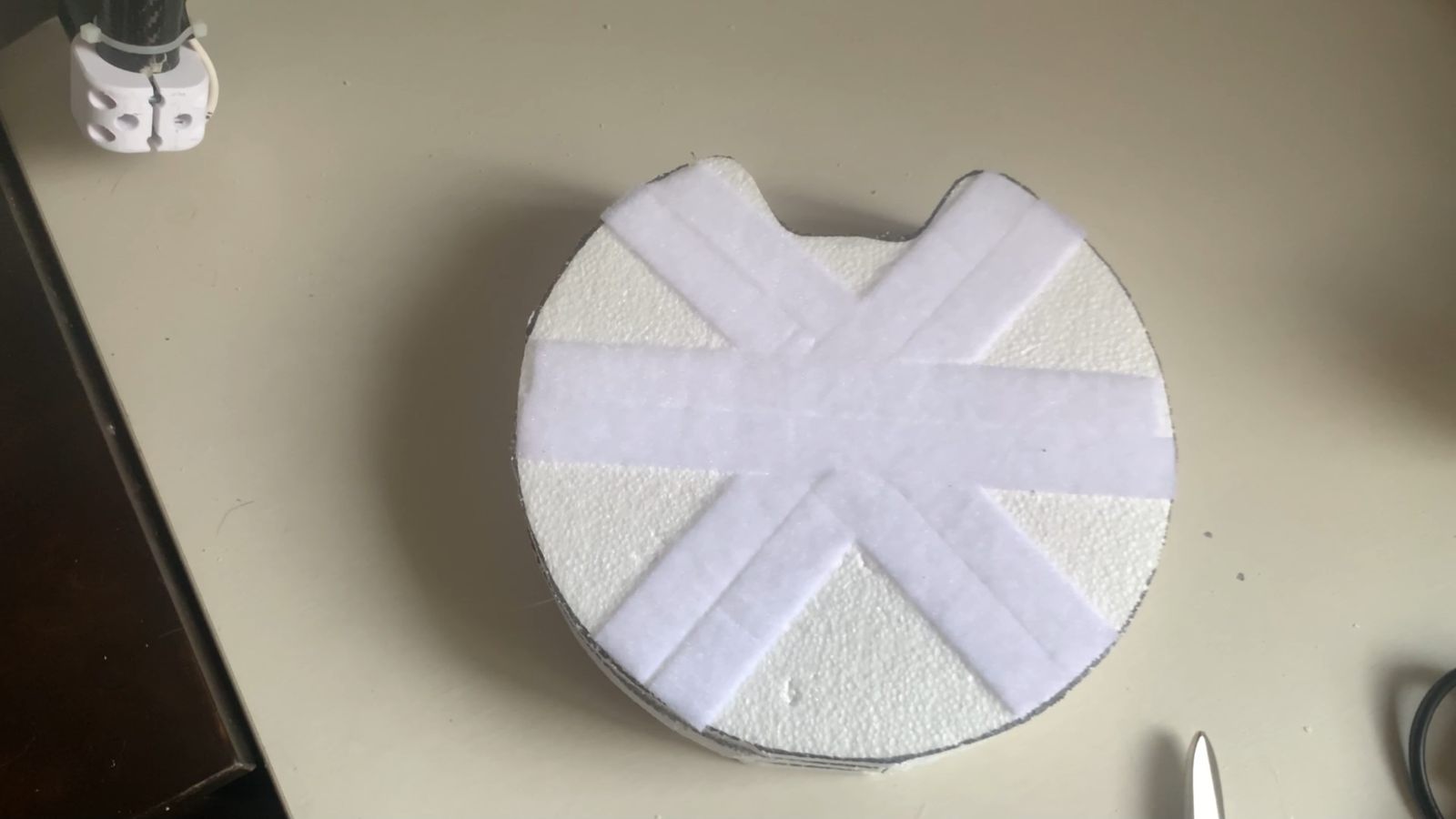
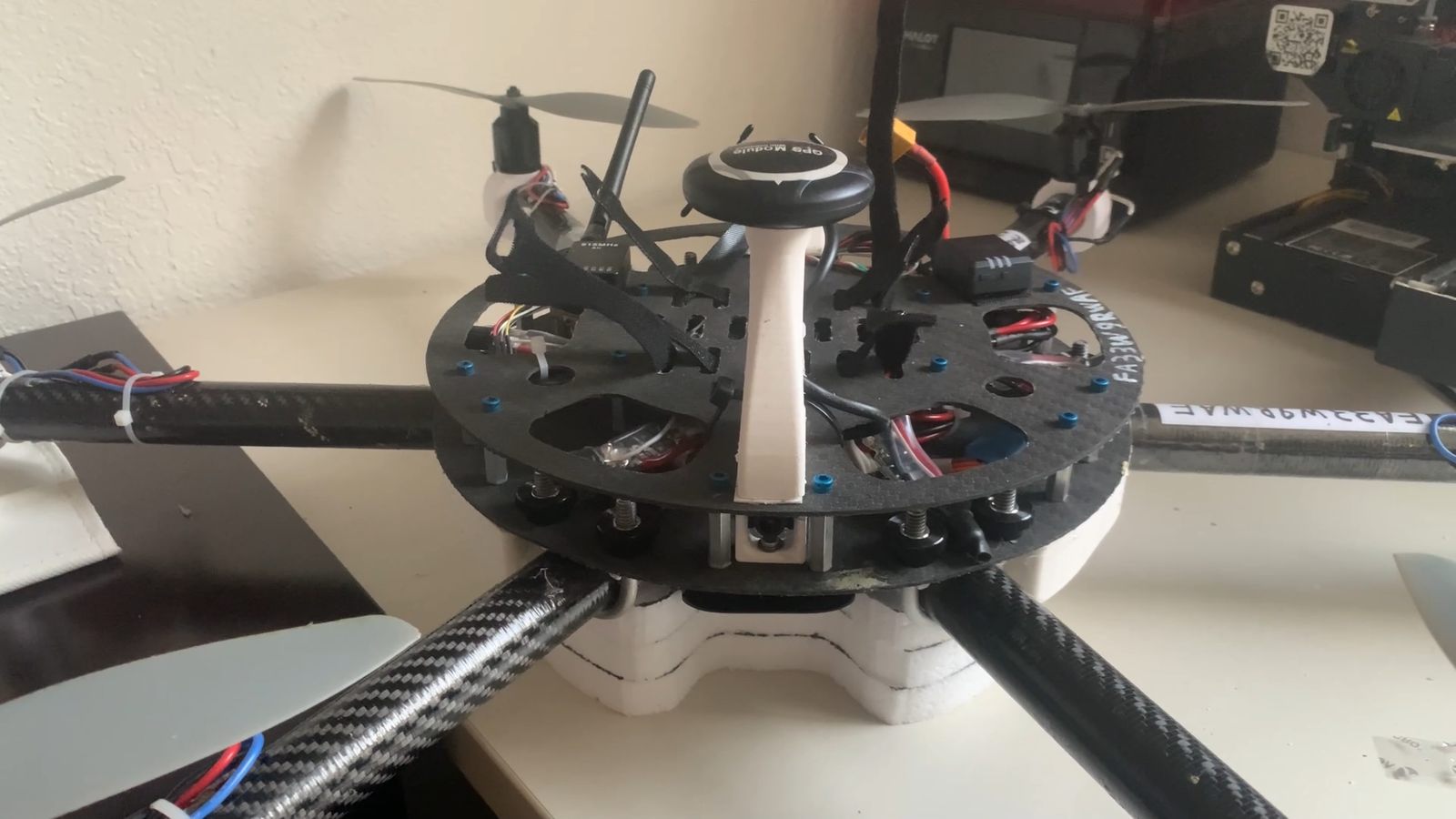
This larger float is cut from EPS foam. It's held on with velcro tape and I only attach it when I fly over water. with all the foam together, the calculated buoyancy safety factor is 1.24. I didn't include the buoyancy of all the small electronic parts because their volume is hard to estimate, but I did account for their weight. So I'm underestimating the actual buoyancy, and the real safety factor is higher.
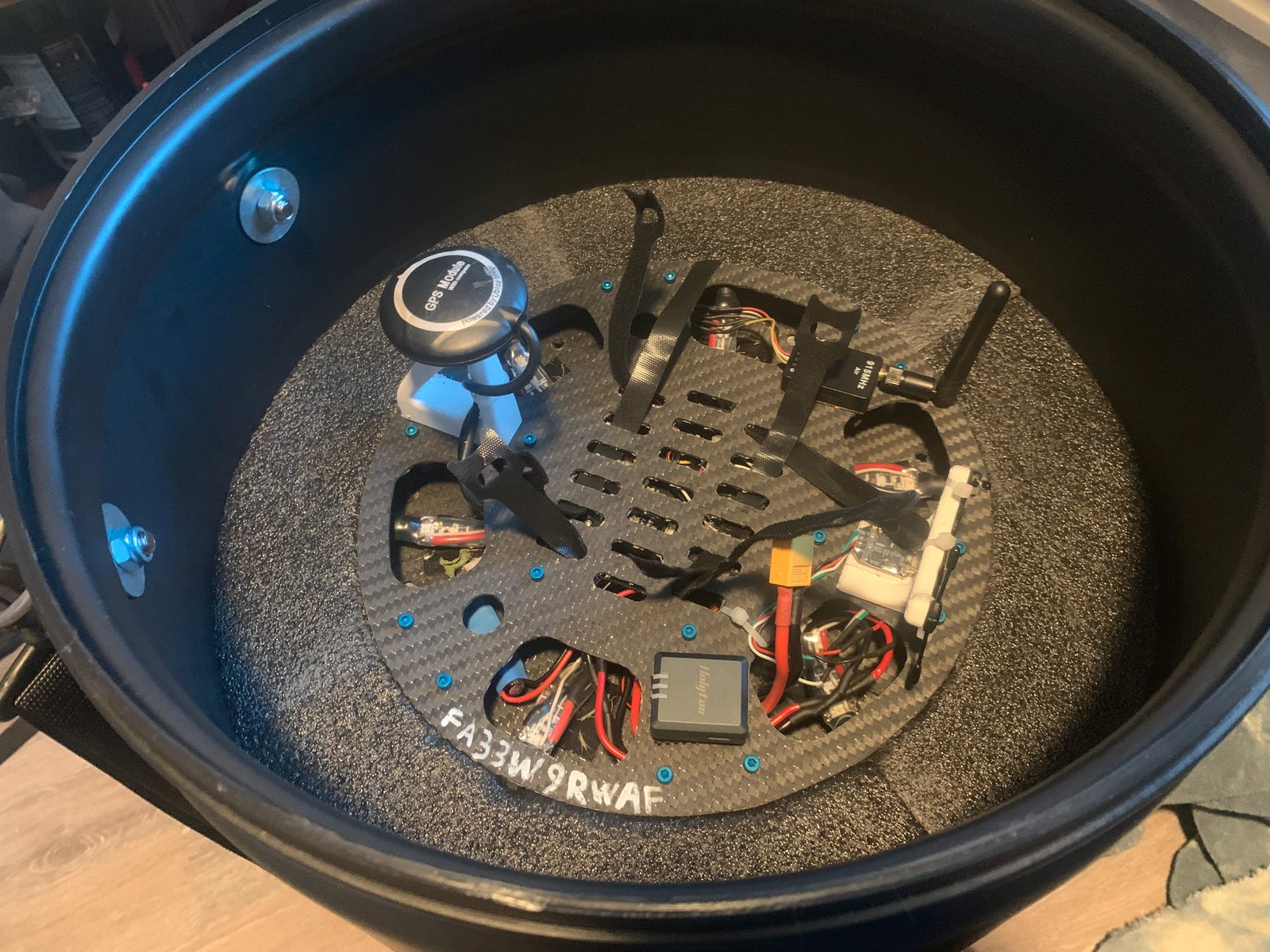
The drone folded up in its enclosure
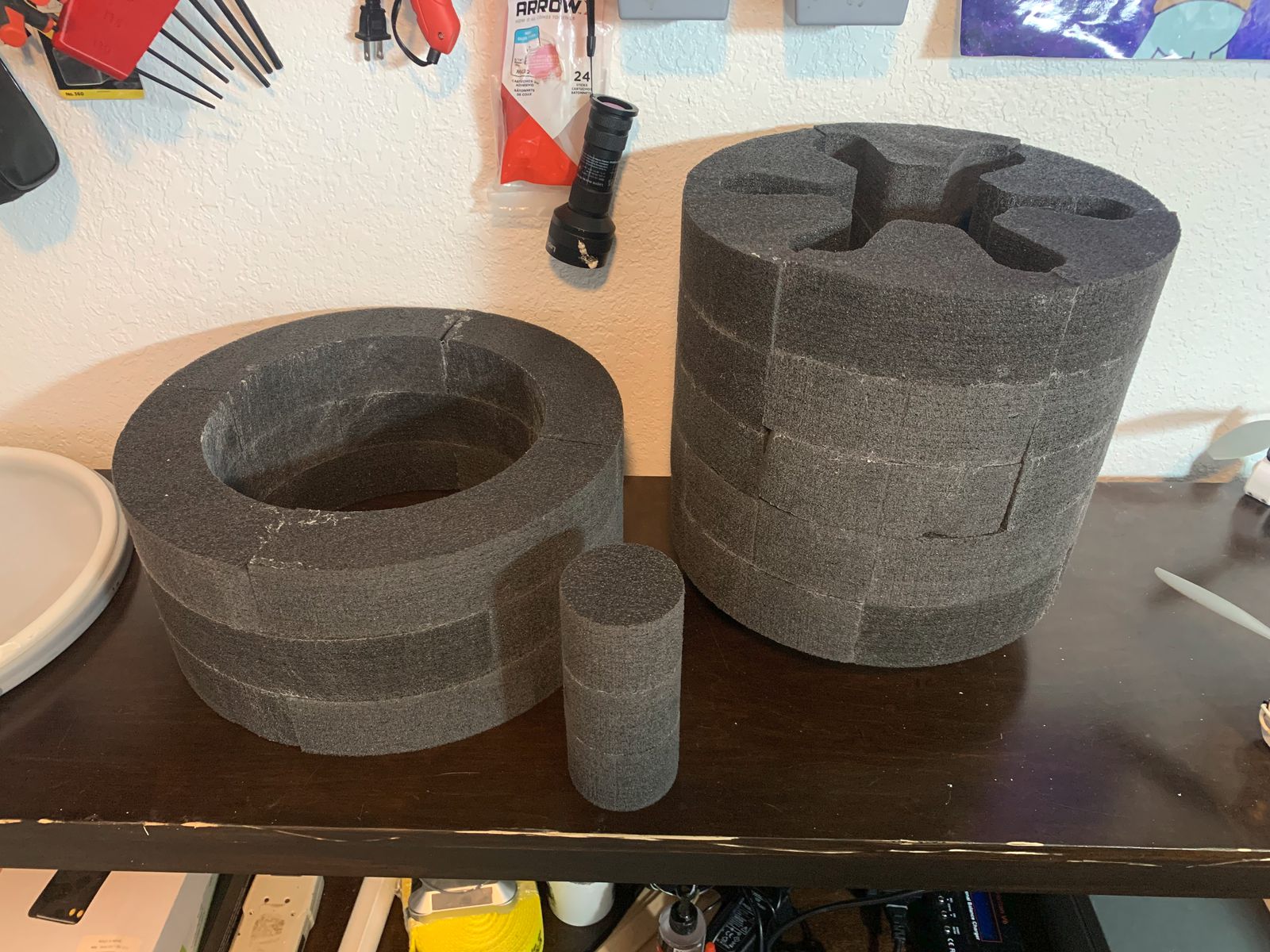
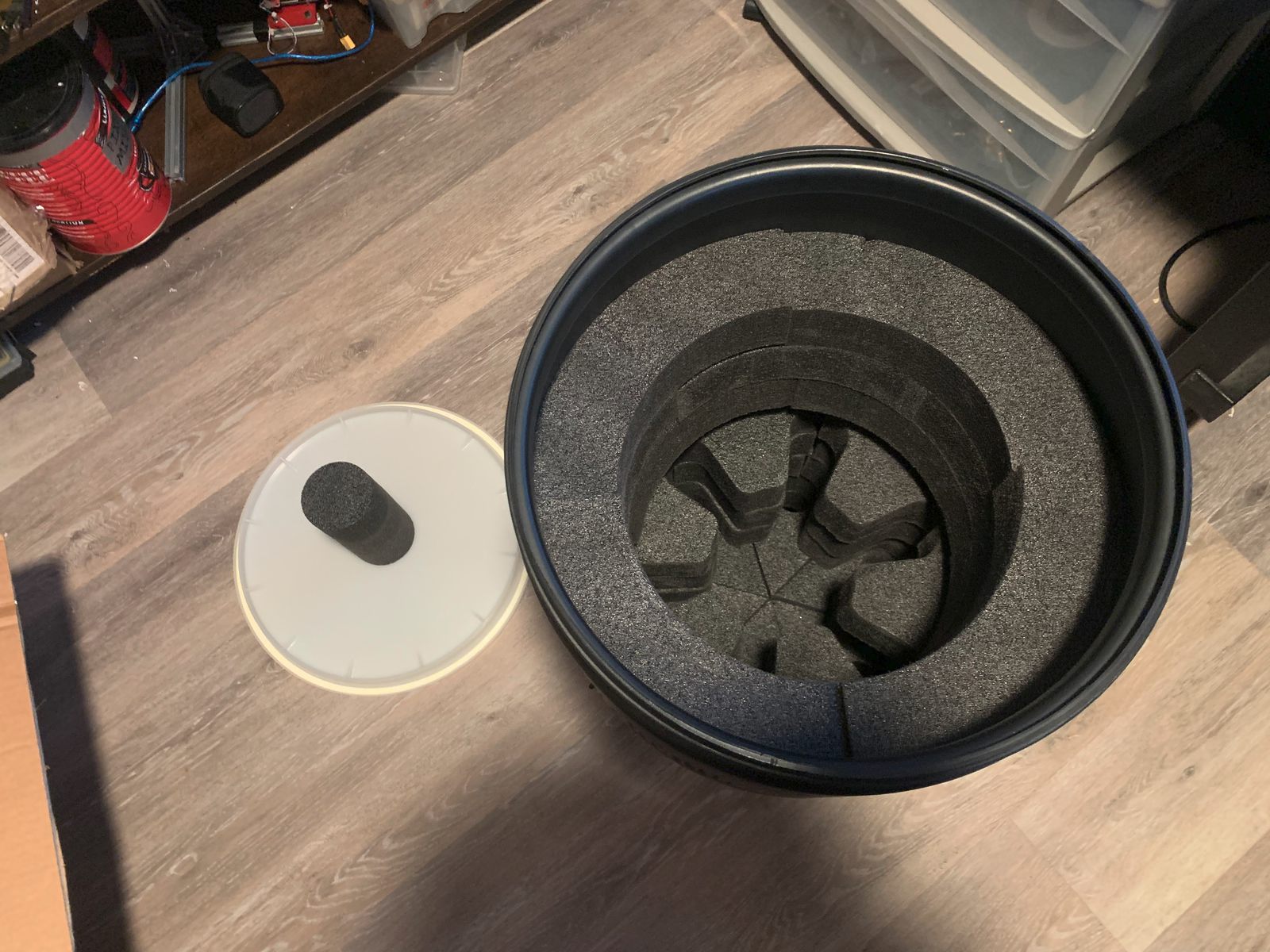
I made this transportation case out of an HDPE liquid chemical drum, some cut foam, and bolted on some backpack straps.
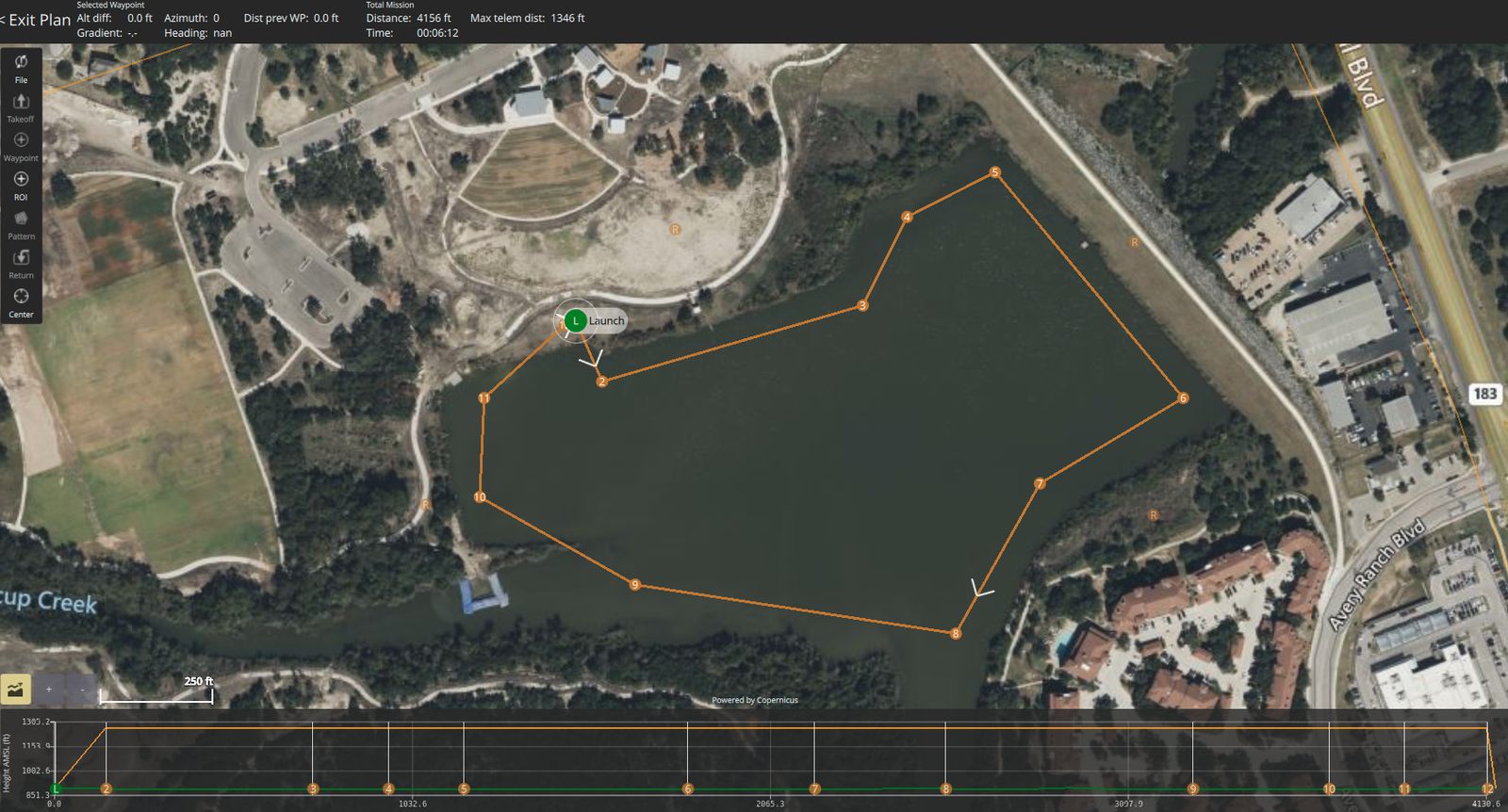
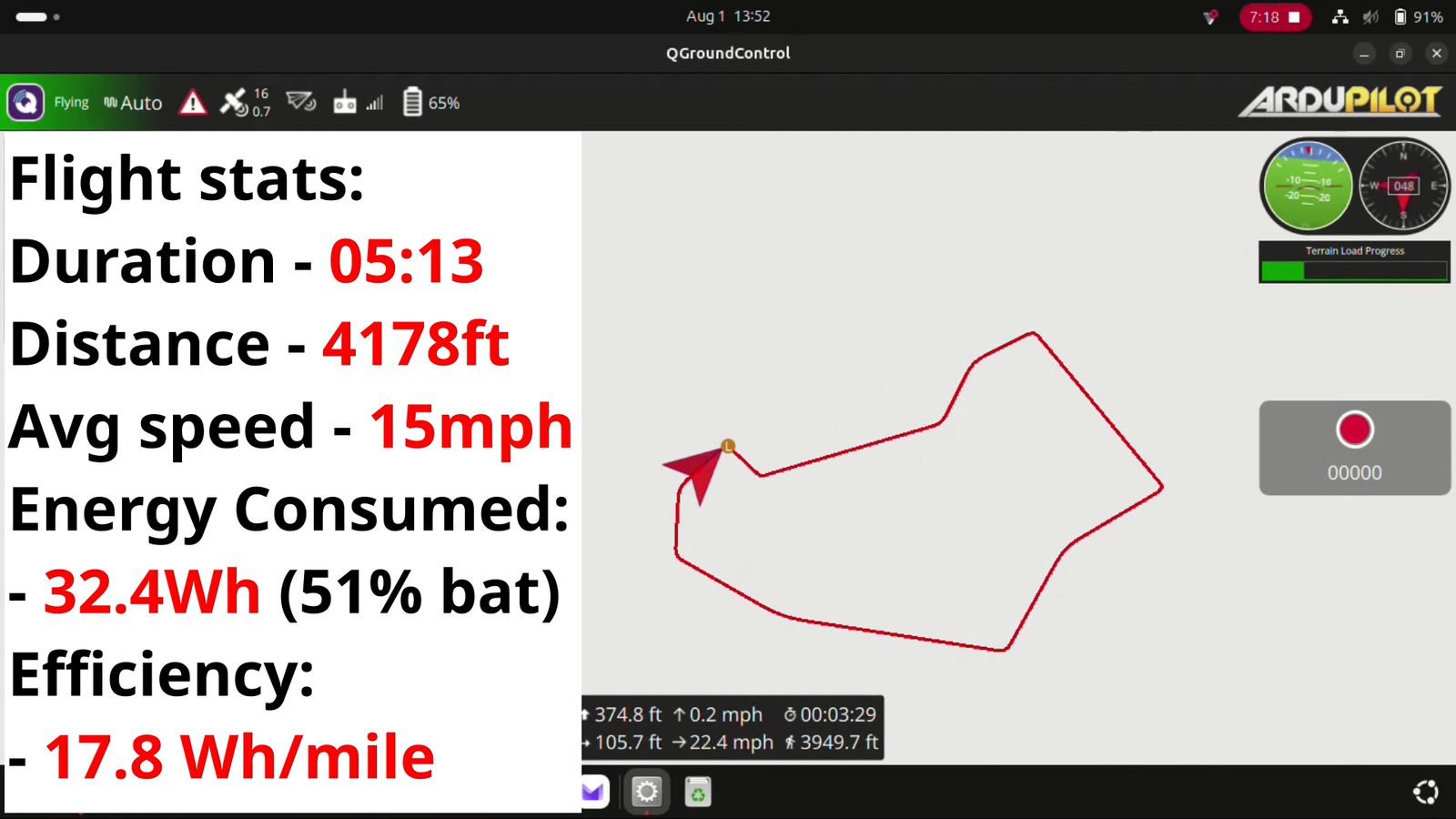
I used Qgroundcontrol as my ground station software. This screenshot shows an autonomous mission plan the drone successfully flew.